A group of living things
True spiders
Araneomorphae
The great majority of spiders, with fangs that pinch sideways like tweezers.
This branch is shown at about 300 million years ago; its age is a rough estimate.
You and true spiders meet in the Two-sided animals branch, shown at about 580 million years ago (on 11 November, in a calendar from life's shared ancestor to today).
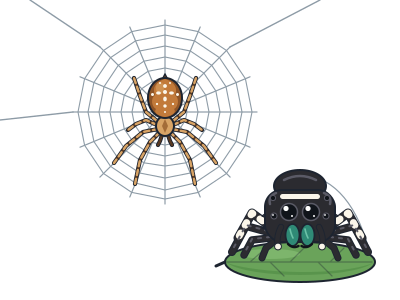
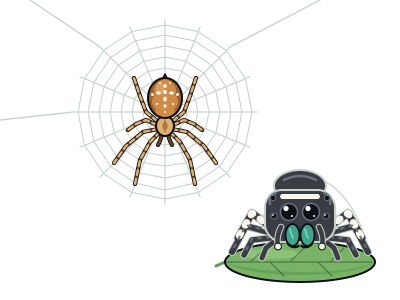
From the garden spider sitting in its round web to the jumping spider on a sunny wall, the spiders in your home and garden almost all belong here. About nine in every ten spider species are true spiders. What they share is the shape of their fangs. They don't stab straight down. Instead they angle inward and cross over each other, pinching like tweezers.
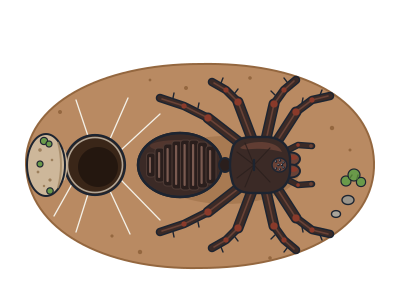
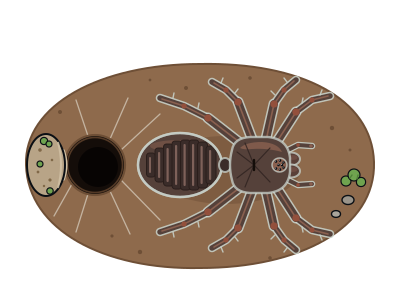
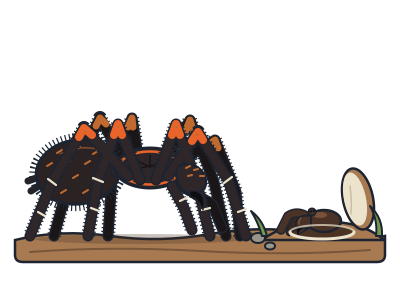
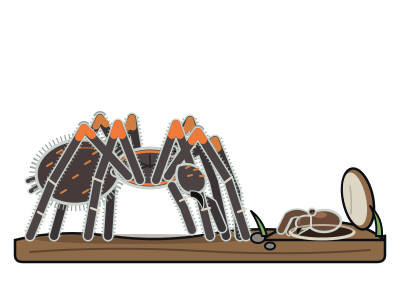
Their closest relatives on the tree are the tarantulas and trapdoor spiders. Those spiders are real spiders too, but their fangs strike downward like daggers, and they mostly live on or in the ground. Pinching fangs don't need a solid surface to push against. That means true spiders can grab prey from many angles: in webs, on plants and even in mid-air.
That trick has helped them spread almost everywhere. True spiders live in forests, grasslands, deserts, caves, gardens and houses, on every continent except Antarctica. Not all of them build catching webs. Jumping spiders form the largest spider family, with about 7,000 species. They stalk their prey and leap on it, using four pairs of eyes. The two big front eyes work like telescopes and can see colour.
Tougher than Kevlar
Darwin's bark spider from Madagascar spins silk more than twice as tough as any other spider silk known when it was tested, and over 10 times tougher than Kevlar. Its webs hang over rivers on bridge lines up to about 25 metres long.
A different way to breathe
Most true spiders breathe with one pair of leaf-like book lungs plus a pair of air tubes. Tarantulas and trapdoor spiders still have two pairs of book lungs, like the early ground-living spiders.
Short lives
In most true spider species, females usually live for only about a year. That is much shorter than many tarantulas and trapdoor spiders.
Inside true spiders
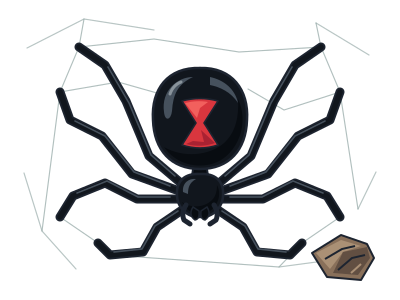
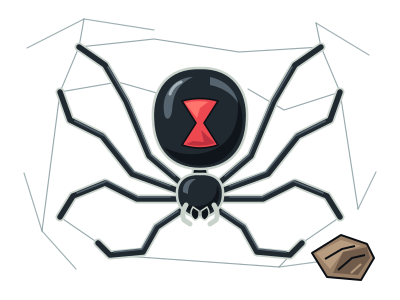
- Southern black widowA shiny black spider with a red hourglass and a strong nerve venom.
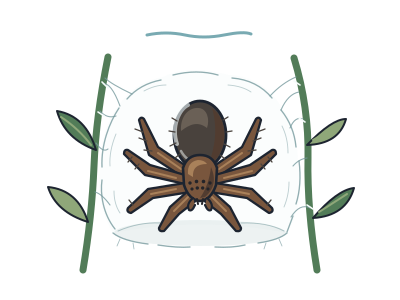
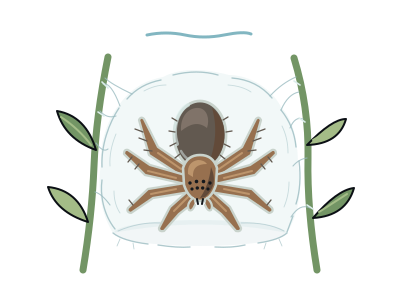
- Diving bell spiderLives underwater in a silk bubble of air that it fills from the surface.
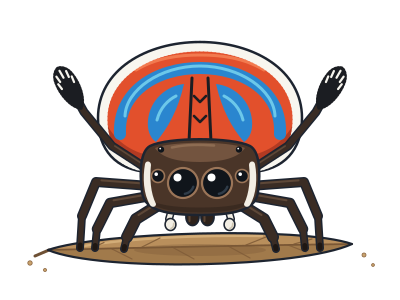
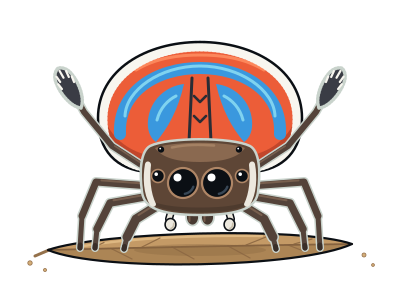
- Jumping spidersThe largest spider family, sharp-eyed hunters that leap onto prey instead of using webs.
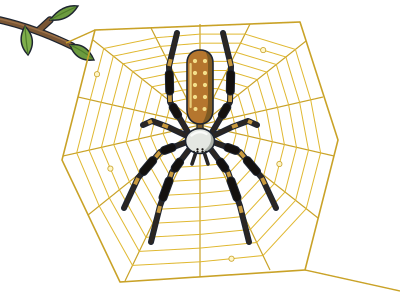
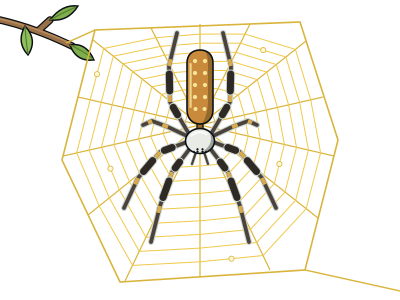
- Orb-weaversThe spiders that spin the classic round web with spokes and a sticky spiral.
- Carolina wolf spiderA hunter that runs prey down, and the mother carries her babies piled on her back.
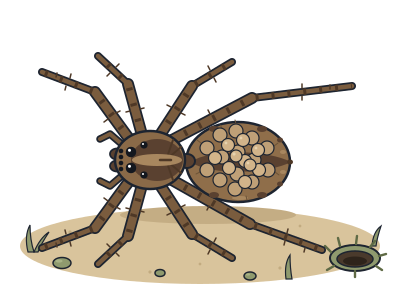
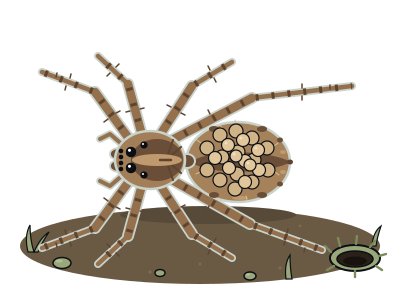
- Giant house spiderThe long-legged spider that sprints across the living-room floor in autumn.
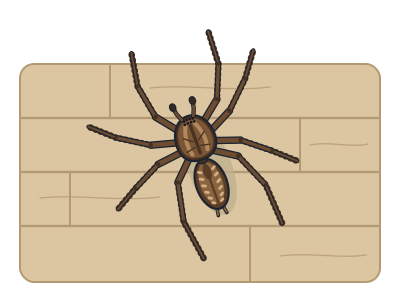
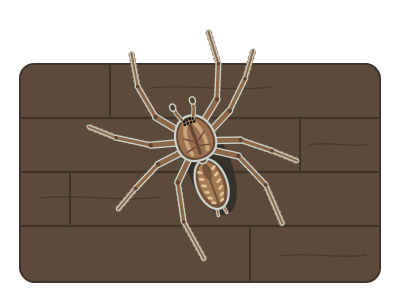
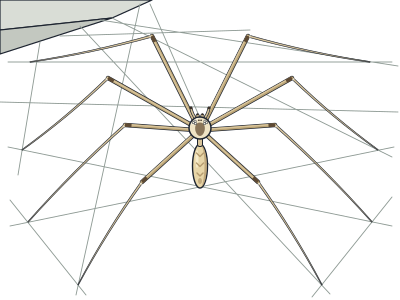
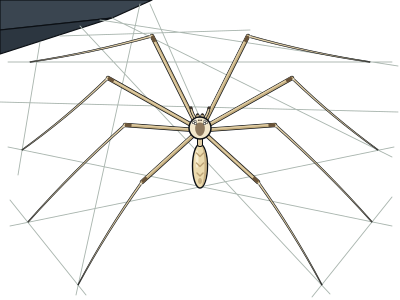
- Daddy long-legs spiderA spindly cellar spider that shakes its web into a blur when disturbed.
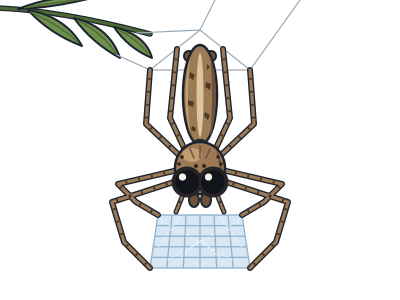
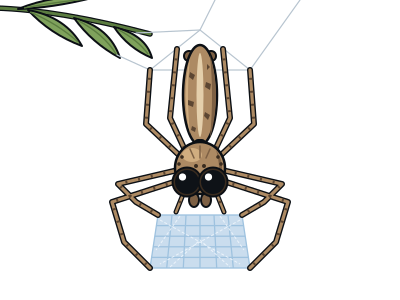
- Ogre-faced spiderHas two enormous night-vision eyes and holds a stretchy net to throw over passing insects.
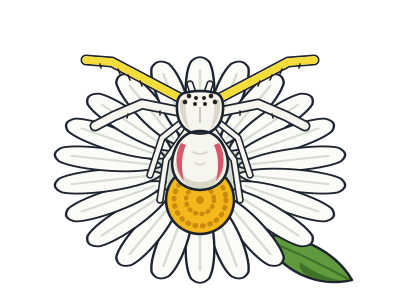
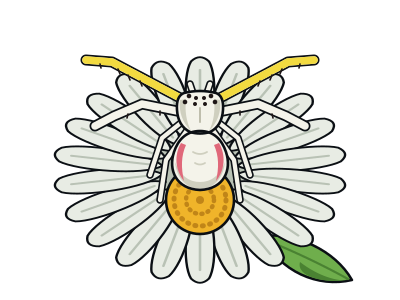
- Goldenrod crab spiderWaits on flowers and slowly changes between white and yellow to match them.