A species
Goldenrod crab spider
Misumena vatia
A flower-sitting spider that slowly changes between white and yellow
You and the goldenrod crab spider meet in the Two-sided animals branch, shown at about 580 million years ago (on 11 November, in a calendar from life's shared ancestor to today).
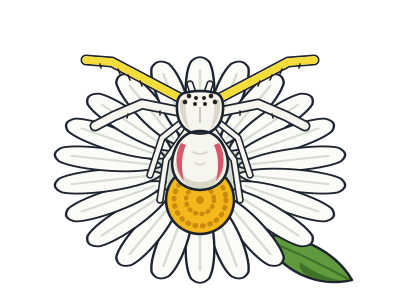
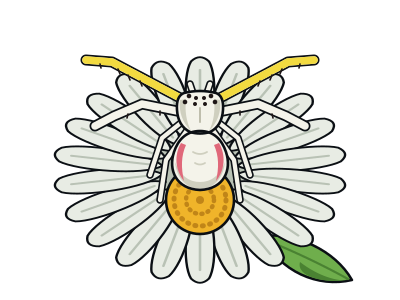
This little spider waits on flowers and slowly changes colour to match them. On yellow goldenrod it can turn lemon-yellow, and on a white daisy it can fade back to white. It is much slower than a chameleon. Turning white takes about a week, and turning yellow can take a few weeks, because the spider first has to make the yellow pigment.
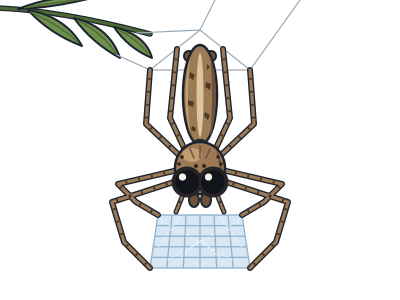
It is a true spider, a relative of the orb-weavers that spin round webs and of the jumping spiders. But this spider spins no web to catch food. Instead, it sits very still with its long front legs held open, like a crab's claws. When a fly, bee or butterfly lands, the spider grabs it and uses venom to stop it moving. It often catches insects bigger than itself.
The colour change depends on eyesight. Spiders that cannot see properly do not change colour. The change is easiest to see in females, which are about the size of a fingernail. Males are only about half as long and much darker, with reddish-brown and red-and-white markings.
Harmless to you
Its fangs are too weak to break human skin, and its venom is too weak to hurt large animals.
Small by skipping moults
Males moult two fewer times than females as they grow, which helps explain why they end up so much smaller.
Hidden to insect eyes
To us, a white spider on a pink flower is easy to spot. But many insects, such as bees, cannot see red the way we do, so they may still miss it.
Next to it on the tree
- Southern black widowA shiny black spider with a red hourglass and a strong nerve venom.
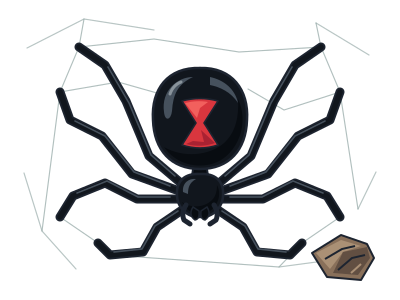
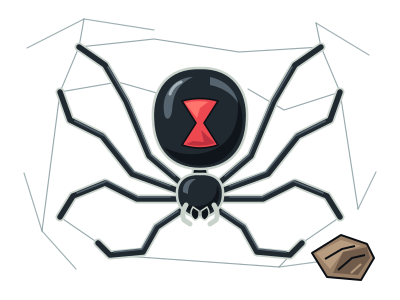
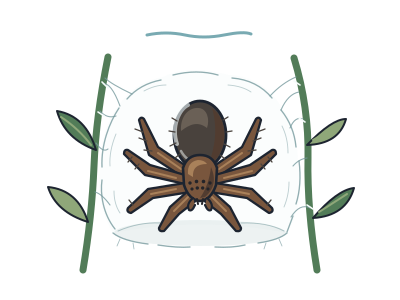
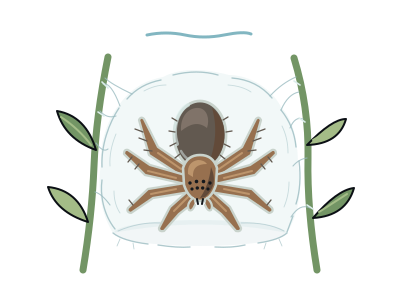
- Diving bell spiderLives underwater in a silk bubble of air that it fills from the surface.
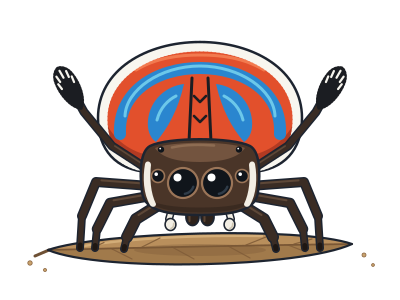
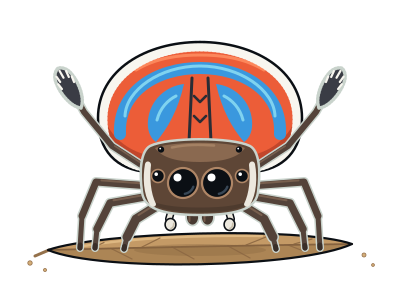
- Jumping spidersThe largest spider family, sharp-eyed hunters that leap onto prey instead of using webs.
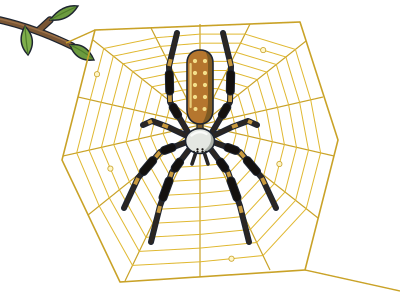
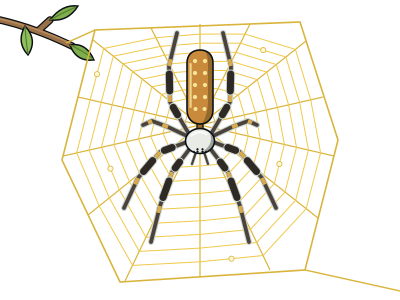
- Orb-weaversThe spiders that spin the classic round web with spokes and a sticky spiral.
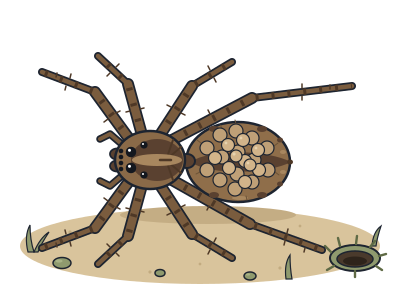
- Carolina wolf spiderA hunter that runs prey down, and the mother carries her babies piled on her back.
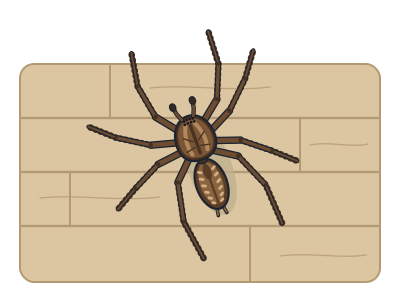
- Giant house spiderThe long-legged spider that sprints across the living-room floor in autumn.
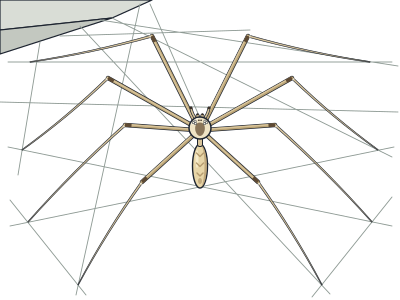
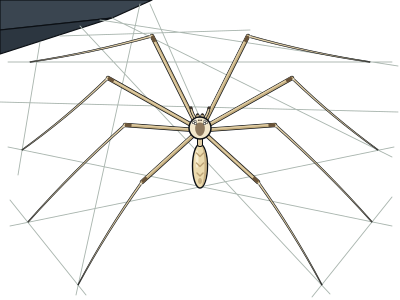
- Daddy long-legs spiderA spindly cellar spider that shakes its web into a blur when disturbed.
- Ogre-faced spiderHas two enormous night-vision eyes and holds a stretchy net to throw over passing insects.