A group of living things
Scorpions
Scorpiones
Eight-legged night hunters with pincers at the front and a sting in the tail
This branch is shown at about 300 million years ago; its age is a rough estimate.
You and scorpions meet in the Two-sided animals branch, shown at about 580 million years ago (on 11 November, in a calendar from life's shared ancestor to today).
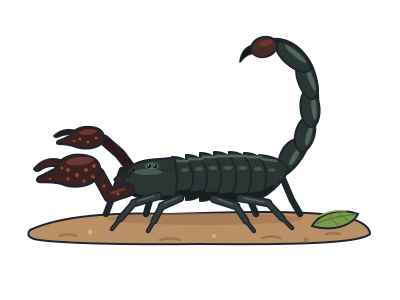
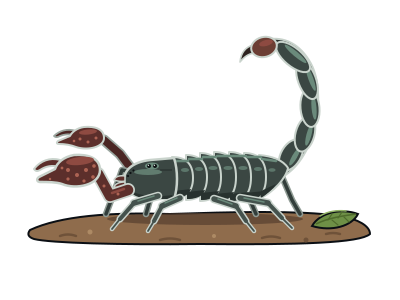
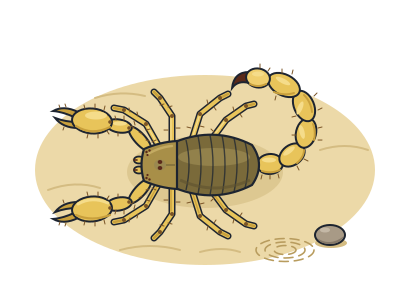
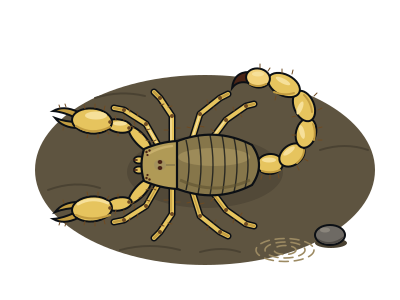
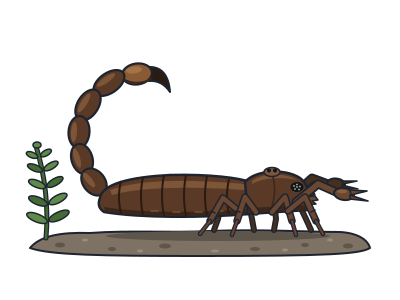
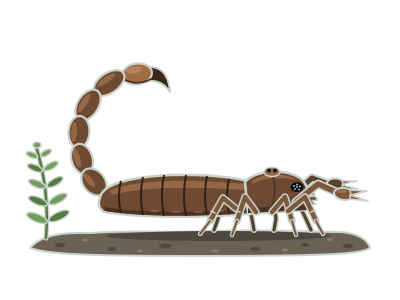
Scorpions are eight-legged hunters with a pair of grasping pincers at the front. They also have a narrow tail that curls up over the back. The tail has five bead-like segments and ends in a bulb with a curved sting. Scorpions are not insects. They are arachnids, on the same branch of life as spiders, and many genome studies place them close to spiders and whip scorpions.
More than 2,500 kinds have been described. Most come out at night to hunt insects and spiders. Some wait in ambush by their burrows, and others roam through bark and leaf litter. A scorpion cannot swallow solid food. It tears its prey into small pieces with tiny front jaws, pours digestive juices over them and sucks up the liquid.
They are more caring parents than many people expect. All known scorpions give birth to live young. The mother carries her pale babies on her back for days or weeks. They usually stay until they have shed their skin for the first time.
Most scorpions are not deadly to people. Only about 25 species can kill a person. The big emperor scorpion of West Africa grows to about 20 cm long, but its sting is usually mild. It mostly uses its huge claws to hold its prey.
Glow in the dark
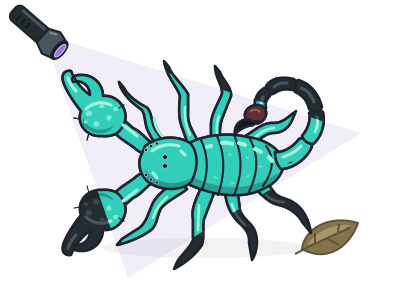
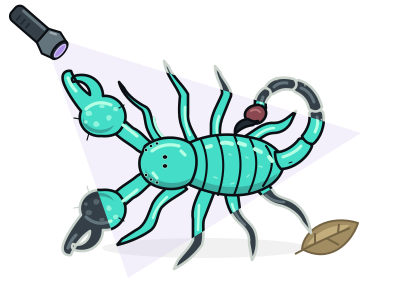
Under ultraviolet light, scorpions glow blue-green. Scientists use this to find them at night. The glow comes from chemicals in their hard outer covering.
Lungs like books
Scorpions breathe with four pairs of book lungs. Each one is made of about 140 to 150 thin, air-filled flaps, stacked like the pages of a book.
Slow living
Scorpions use energy very slowly. Some species can go up to a year without food, and some can live for about 25 years.
Inside scorpions
Next to it on the tree
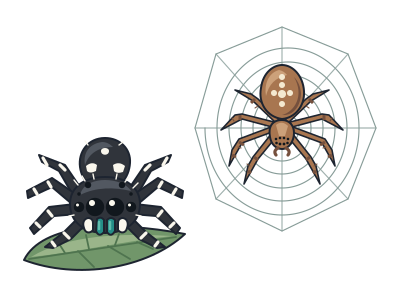
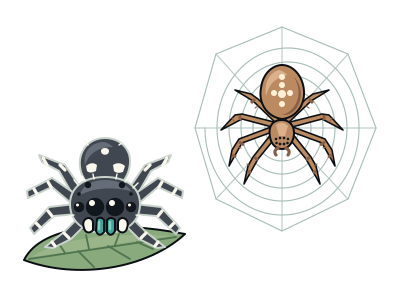
- SpidersEight-legged hunters that spin silk; about 50,000 species, nearly all of them predators.
- PulmonoscorpiusA giant land scorpion of the coal-swamp age, as long as a forearm.
- VinegaroonA whip scorpion with no sting that sprays a vinegar-smelling mist from its tail.
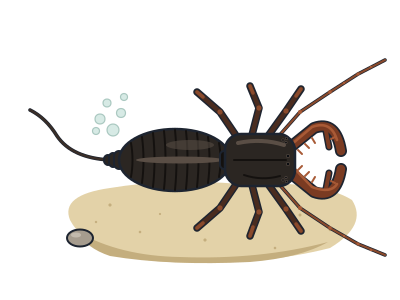
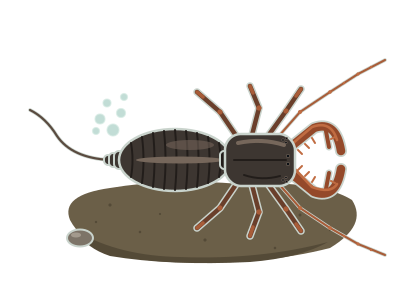
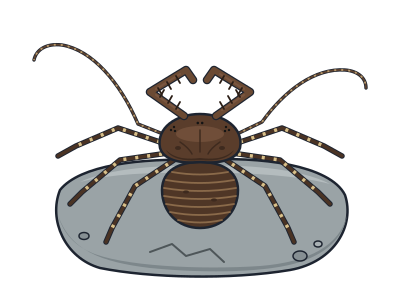
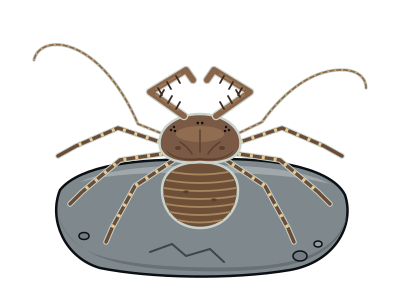
- Tailless whip scorpionA flat arachnid that walks sideways and feels its way with two extremely long, whip-like legs.