A species
Tailless whip scorpion
Damon diadema
A flat, sideways-scuttling arachnid that feels its way through the dark with two long whips.
You and the tailless whip scorpion meet in the Two-sided animals branch, shown at about 580 million years ago (on 11 November, in a calendar from life's shared ancestor to today).
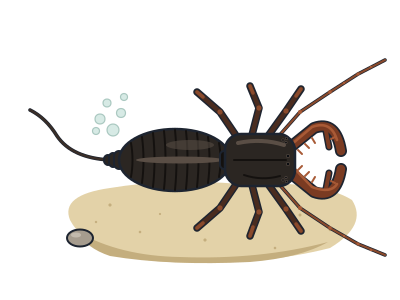
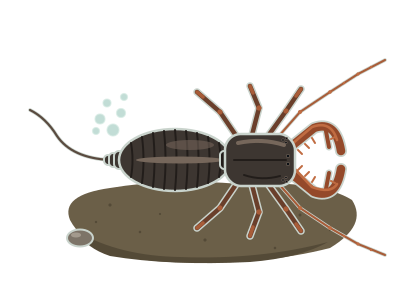
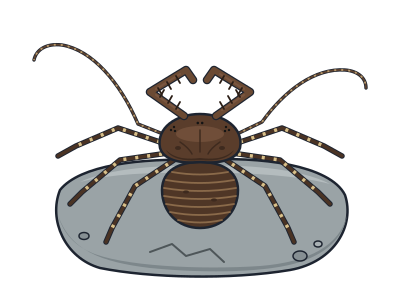
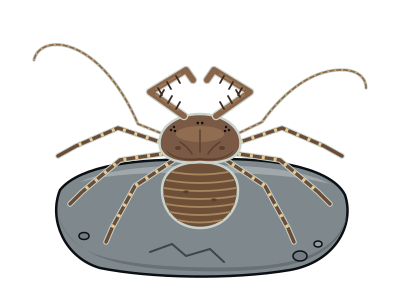
Picture a flat, dark arachnid scuttling sideways like a crab while it sweeps two long, thread-thin whips through the dark. Those whips are really its front legs. They are about three to four times longer than its other legs and covered in sensitive hairs, so they work like an insect's feelers. That means it has eight legs but walks on only six.
Despite its name, it is not a scorpion. It has no tail and no sting. It is not a spider either, though it is a close relative. Spiders, these animals and vinegaroons belong to one branch of the arachnid family. These animals, vinegaroons, scorpions and most spiders all breathe with book lungs.
It lives in East Africa, and it is also recorded from Yemen, across the sea. By day it hides in caves, in rock cracks and under fallen logs. Its flat body lets it slip into very narrow gaps. At night it hunts insects and other small animals, grabbing them with a pair of strong, spiny arms near its mouth. It has no venom fangs, no silk and no sting, so it is harmless to people.
It also has a surprisingly gentle family life. Mothers often stroke their young with their whips. Brothers and sisters stay together in groups for many months. Only as they near adulthood, at about 12 to 14 months old, do they start to turn on each other.
Upside-down moult
To shed its old skin, it hangs upside down beneath a surface and lets gravity help pull it free. It has to do this again and again as it grows.
A free ride
A mother carries her eggs in a sac under her belly for about three months. After they hatch, the babies ride on her back until their first moult.
An ancient design
Fossil whip spiders go back about 315 to 305 million years, to the Carboniferous period. That is older than the dinosaurs.
Next to it on the tree
- SpidersEight-legged hunters that spin silk; about 50,000 species, nearly all of them predators.
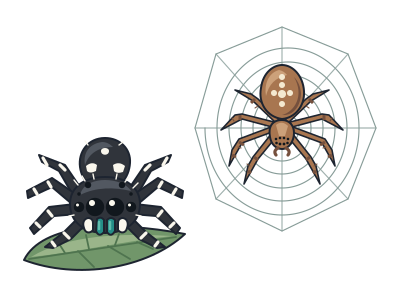
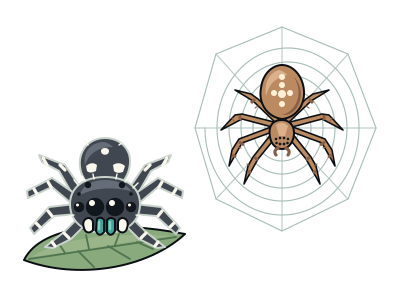
- ScorpionsEight-legged hunters with grasping pincers and a curled tail ending in a sting.
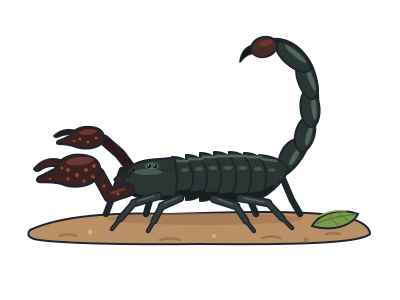
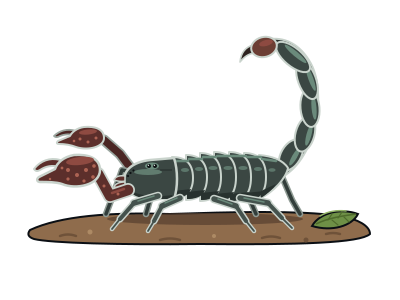
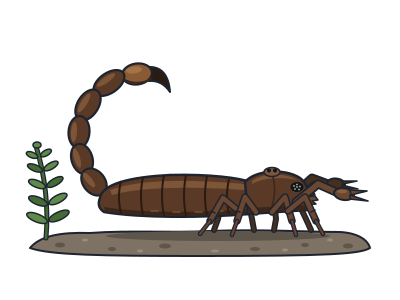
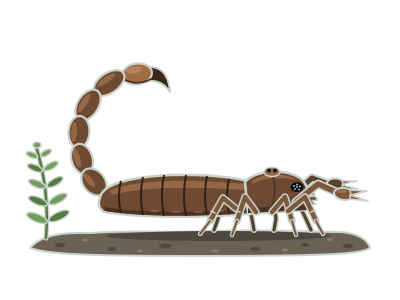
- PulmonoscorpiusA giant land scorpion of the coal-swamp age, as long as a forearm.
- VinegaroonA whip scorpion with no sting that sprays a vinegar-smelling mist from its tail.