A species
Emperor scorpion
Pandinus imperator
A spider relative with a blue-green glow
You and the emperor scorpion meet in the Two-sided animals branch, shown at about 580 million years ago (on 11 November, in a calendar from life's shared ancestor to today).
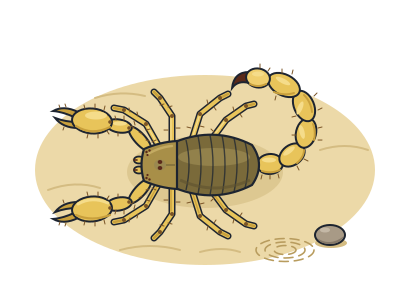
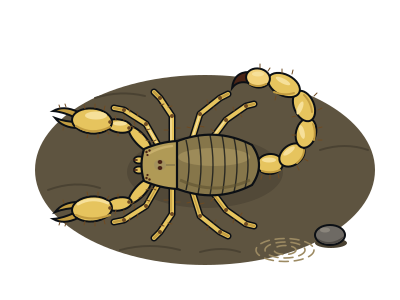
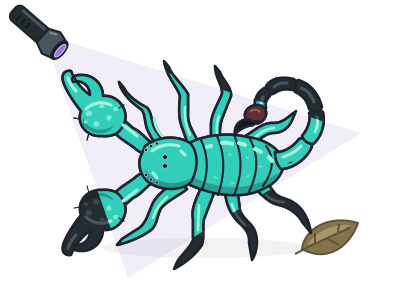
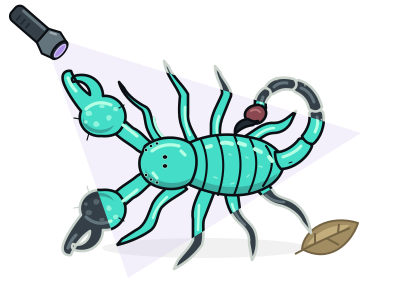
Under ultraviolet light, an emperor scorpion glows bright blue-green, like most scorpions. In ordinary light, its body is shiny black. The glow comes from chemicals in its hard outer covering, not its venom. Darkness alone does not switch it on: the striking colour needs ultraviolet light.
Despite its pincers and curved sting, this animal belongs alongside spiders, ticks, mites and harvestmen. They are all arachnids, rather than insects. An emperor scorpion has eight walking legs. Its two large pincers are separate body parts, not another pair of legs. That makes its outline quite different from a spider’s, despite their family connection.
Adults usually overpower their prey with strong pincers, while young emperor scorpions rely more on their stings. Their food includes insects such as termites and other joint-legged animals. Females give birth to live young rather than laying eggs outside their bodies. The newborns climb onto their mother’s back, where she protects them.
Combs that sense
Two comb-like structures underneath the body help it investigate the ground. These are usually larger in males.
Sometimes sharing space
Emperor scorpions can live together. Groups of up to about 15 have been reported.
Trade is controlled
International trade in this species is controlled. Collection for the pet trade is a conservation concern.