A species
Daddy long-legs spider
Pholcus phalangioides
The spindly ceiling-corner spider that turns into a blur when you touch its web.
You and the daddy long-legs spider meet in the Two-sided animals branch, shown at about 580 million years ago (on 11 November, in a calendar from life's shared ancestor to today).
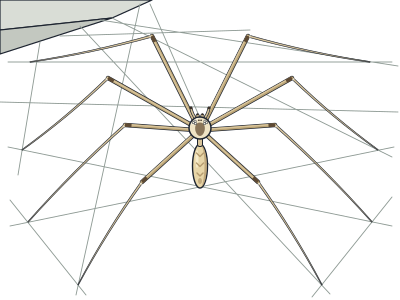
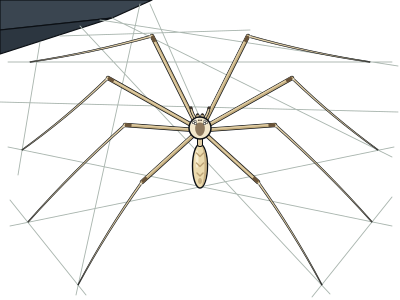
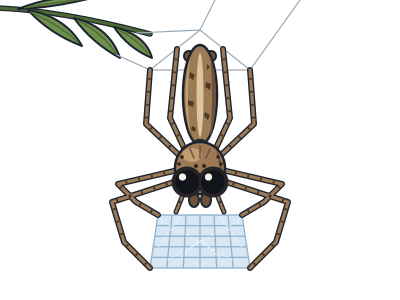
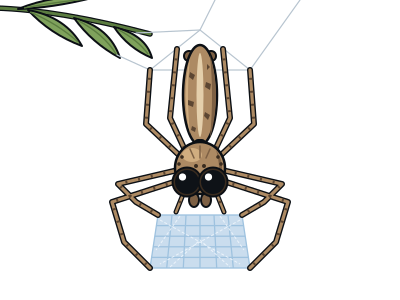
Touch the web of this spindly spider and it seems to vanish. It swings its body round and round in fast circles while its legs keep hold of the web. The springy threads make each swing even bigger, so to anyone watching, the spider becomes a blur.
It is a true spider, a relative of black widows, jumping spiders and orb-weavers. Its body is only about as long as a grain of rice, but its legs are about five to six times as long as its body. Don't confuse it with harvestmen or crane flies, which share the nickname 'daddy long-legs'. Harvestmen are arachnids but not spiders, and crane flies are insects.
Its loose, messy web is not sticky. Prey gets tangled in the threads, and the spider wraps it in more silk. This spider eats insects and other spiders, even surprisingly large house spiders. Sometimes it creeps into another spider's web and plucks the threads to copy the shaking of trapped prey. When the owner comes to check, the daddy long-legs spider catches it.
Today it lives in most temperate countries on every continent, usually indoors. Look up into the corner where a wall meets the ceiling and you may find one hanging upside down.
Eggs carried in her jaws
A mother holds a bundle of about 25 to 60 eggs, loosely wrapped in thin silk, in her jaws as she hangs in her web. Each egg is only about 1 mm across.
Slow to grow up
It takes about a year to grow up, then can live for two or more years as an adult.
The venom myth
Many people believe it has the deadliest venom of any spider but fangs too short to bite. There is no scientific evidence for this, and no cellar spider has been recorded harming a person.
Next to it on the tree
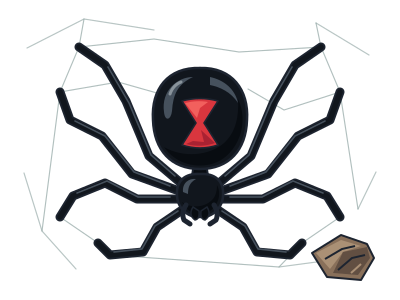
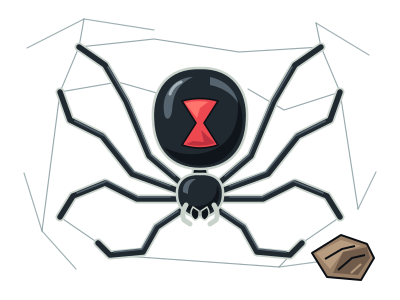
- Southern black widowA shiny black spider with a red hourglass and a strong nerve venom.
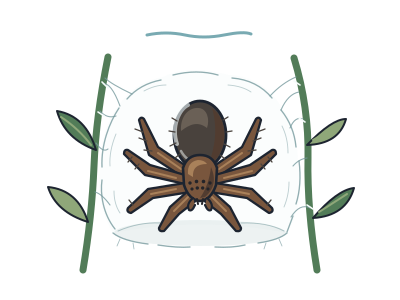
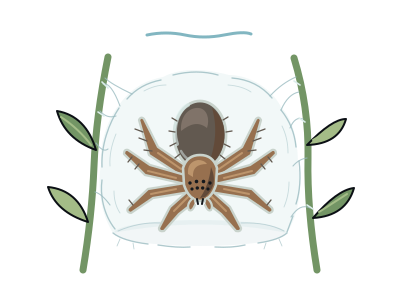
- Diving bell spiderLives underwater in a silk bubble of air that it fills from the surface.
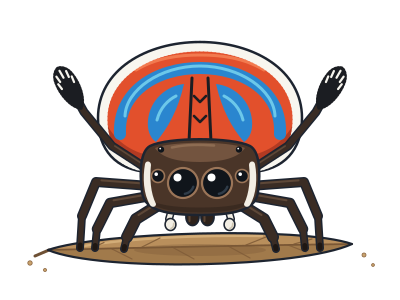
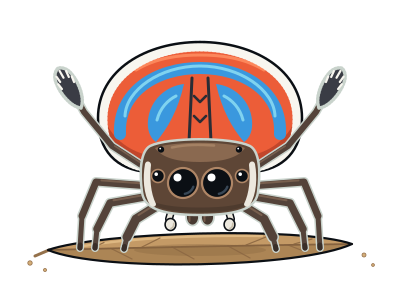
- Jumping spidersThe largest spider family, sharp-eyed hunters that leap onto prey instead of using webs.
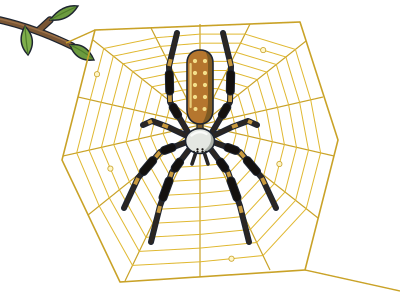
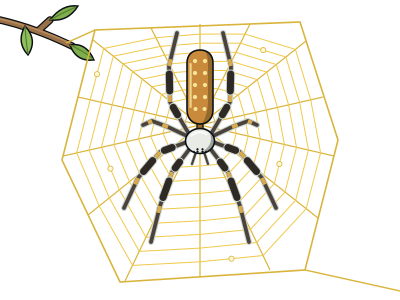
- Orb-weaversThe spiders that spin the classic round web with spokes and a sticky spiral.
- Carolina wolf spiderA hunter that runs prey down, and the mother carries her babies piled on her back.
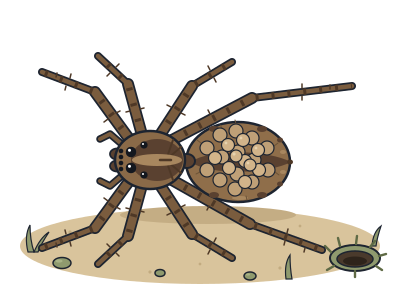
- Giant house spiderThe long-legged spider that sprints across the living-room floor in autumn.
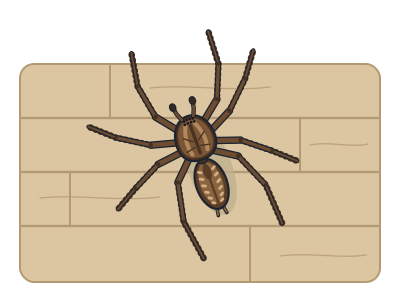
- Ogre-faced spiderHas two enormous night-vision eyes and holds a stretchy net to throw over passing insects.
- Goldenrod crab spiderWaits on flowers and slowly changes between white and yellow to match them.