A species
Golden silk orb-weaver
Trichonephila clavipes
A big spider whose huge web shines gold in the sun
You and the golden silk orb-weaver meet in the Two-sided animals branch, shown at about 580 million years ago (on 11 November, in a calendar from life's shared ancestor to today).
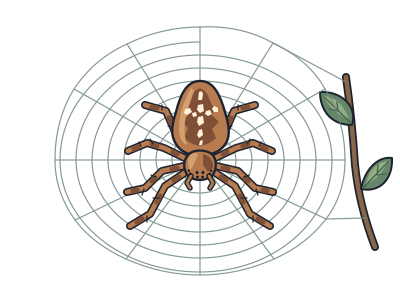
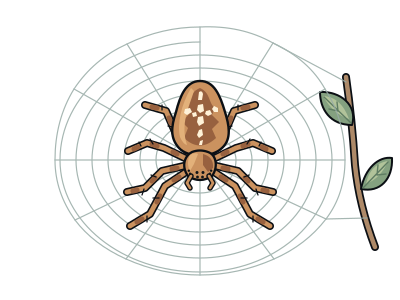
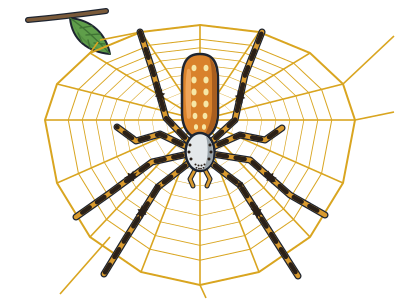
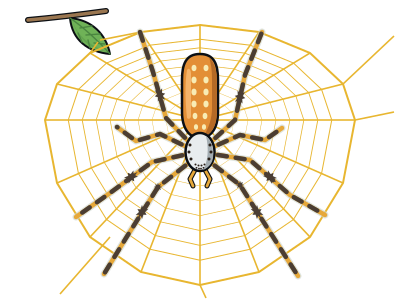
Walk along a forest trail on a sunny day and you might spot a web that glitters gold. The female of this spider spins a huge, lopsided wheel of silk. It is usually about a metre across. The biggest reach about 2 metres, which is taller than most adults. Its strong support threads are yellow, and the threads joining them are very sticky.
It belongs to the orb-weavers, the spiders that spin wheel-shaped webs. The European garden spider is one of its relatives in this group. Many orb-weavers take down their webs and rebuild them often. This spider is different, because it leaves its web up for a long time.
The female is large. Her body is about 2.5 to 4 cm long, and her long legs make her look even bigger. She has a silvery front, a long orange body with pale spots, and striped legs with tufts of black hair like tiny bottle-brushes. The male is tiny, only about 6 mm long, and dark reddish brown.
Why gold? The colour may do two jobs. In sunny spots, the bright threads seem to attract bees, which get caught. In shade, the yellow blends in with the leaves. The spider can even make its silk more or less yellow to suit the light.
Seven kinds of silk
This spider makes seven different types of silk, each from its own set of glands. It was the first orb-weaver whose genes were all identified and labelled by scientists.
Golden baskets of eggs
Late in autumn, the female lays at least two egg sacs. Each one holds several hundred eggs wrapped in a basket of yellow silk.
A mild bite
It bites only if bothered. The bite feels like a wasp sting and rarely causes more than a little redness and pain for a short time.