A species
Darwin's bark spider
Caerostris darwini
A small spider that hangs its web over whole rivers, using the toughest silk ever measured.
You and the darwin's bark spider meet in the Two-sided animals branch, shown at about 580 million years ago (on 11 November, in a calendar from life's shared ancestor to today).
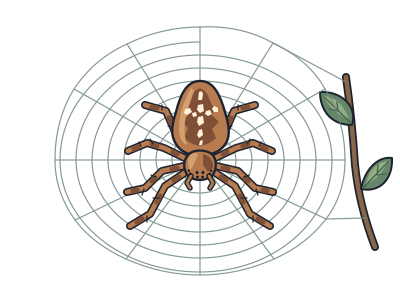
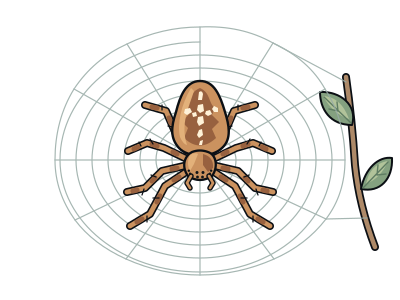
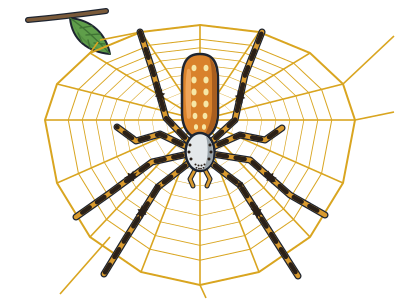
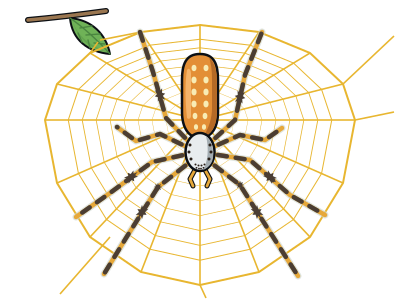
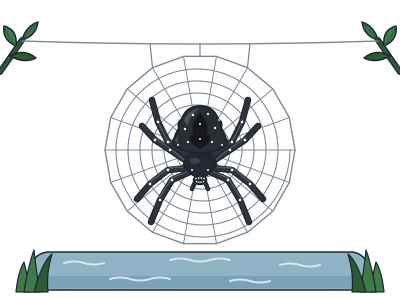
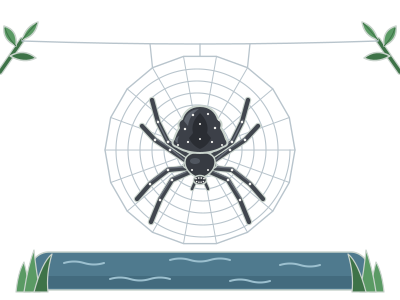
Imagine a spider web hanging right across a river, with a top thread about as long as a bus. Darwin's bark spider builds webs like this in the rainforests of eastern Madagascar. Its silk is the toughest ever measured. It soaks up more energy before it snaps than any other silk tested, and that is mainly because it stretches so far.
This spider is an orb-weaver, so it is related to the garden spiders that build wheel-shaped webs in backyards. On average, its silk is about two to three times tougher than the silk of another orb-weaver, the golden silk orb-weaver. Surprisingly, a close bark spider relative has the same set of silk genes. Darwin's bark spider seems to get its extra toughness mainly by switching some of those genes on much more strongly.
To cross the water, the spider does not swim. It lets out a large amount of silk and lets the wind carry it over the river. When the line catches on plants on the far bank, the spider reels it in to test it, then crosses and strengthens it several times. Its catching web hangs below this bridge line and traps insects rising from the water, such as mayflies.
Record-breaking webs
In the wild, the sticky catching part of the web can cover up to about 2.8 square metres. That makes these the largest single orb webs ever recorded.
Big females, tiny males
Females are mostly black with white hairs. Males are reddish-brown, with red, hairless upper leg segments. In captivity, females weighed about 14 times more than males.
A birthday name
The spider is named after Charles Darwin. The name marked 150 years since his famous book on evolution and 200 years since his birth, and the species was formally described in 2010.