A species
European garden spider
Araneus diadematus
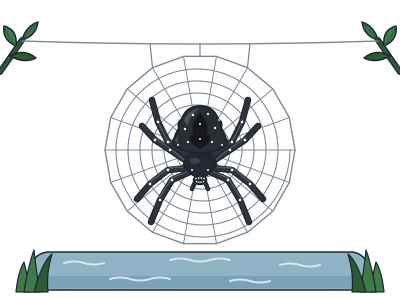
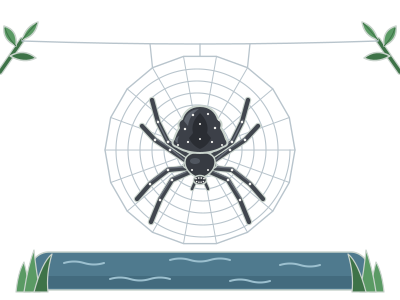
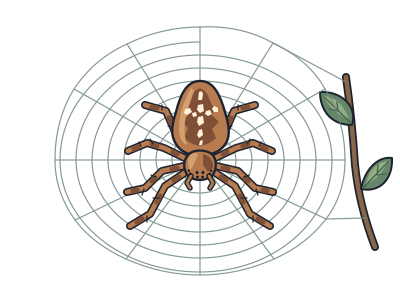
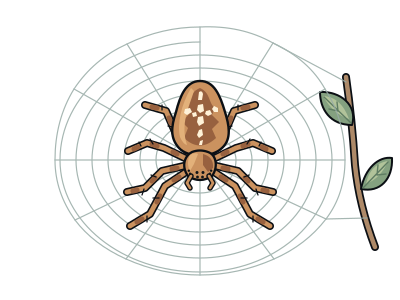
A fresh silk wheel, with yesterday’s web recycled.
You and the european garden spider meet in the Two-sided animals branch, shown at about 580 million years ago (on 11 November, in a calendar from life's shared ancestor to today).
Most days, a female European garden spider spins a fresh wheel-shaped web, often eating the old one. Eating the old threads lets her reuse the materials in her silk. A fresh trap helps because dust and pollen gradually make the old web’s sticky droplets less effective at holding insects.
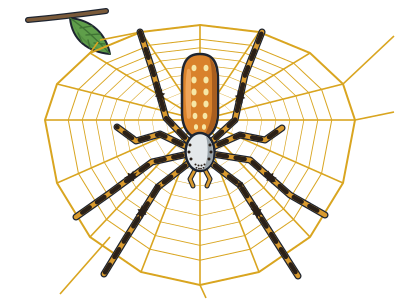
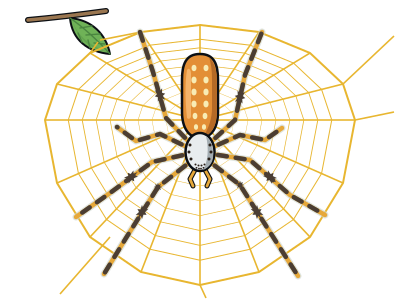
She belongs to the orb-weaver family, known for wheel-shaped webs. Her regal jumping spider relative belongs to a different spider family and hunts by pouncing instead. Both use silk, but in different ways. The garden spider’s web resembles a bicycle wheel, with supporting threads spreading from the centre and a sticky spiral crossing them.
Building begins when the breeze carries a silk thread across a gap. The spider strengthens this bridge before adding the rest. Her finished web usually stands almost upright. She often waits head down at the centre, though she can also hide nearby, connected to her trap by a signal thread.
A gentle announcement
A courting male gently plucks the female’s web, sending vibrations that announce his arrival.
A golden gathering
In Britain, newly emerged young are yellow with a black marking. They initially cluster into a golden ball before spreading out.
Striped, spiny legs
Its brown legs have darker bands and short spines.