A group of living things
Centipedes and millipedes
Myriapoda
Many legs, with an ancient history of breathing air.
This branch is shown at about 500 million years ago; its age is a rough estimate.
You and centipedes and millipedes meet in the Two-sided animals branch, shown at about 580 million years ago (on 11 November, in a calendar from life's shared ancestor to today).
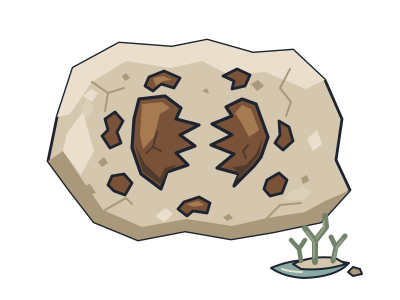
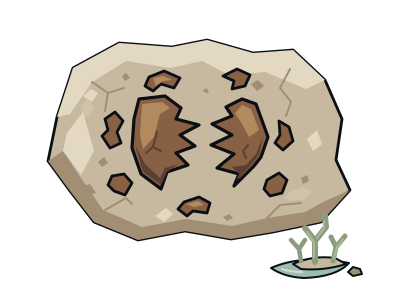
Centipedes and millipedes are many-legged land relatives of insects and spiders. Together, they belong to the arthropods: animals with jointed limbs and an outer skeleton. Their own branch includes some of the earliest known air-breathing animals. Tiny openings in fossil millipedes have been interpreted as breathing holes.
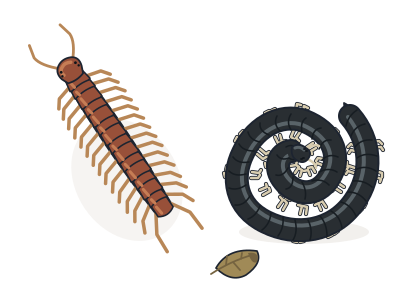
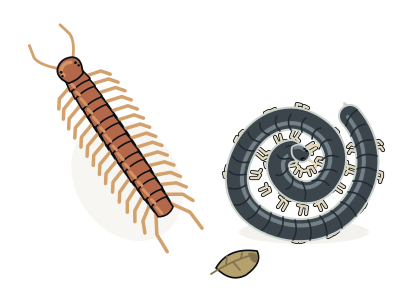
Both groups have bodies divided into many sections, with a pair of feelers on the head. Their legs offer a useful way to tell them apart. Centipedes have one pair of walking legs on each leg-bearing section. Most millipede body rings carry two pairs, although there are exceptions near the ends.
Centipedes mainly hunt other small animals. They usually hunt at night or stay in dark places during daylight. Many long-bodied millipedes have a different way to stay safe: they curl into a spiral, tucking their head and softer underside inside. Picture a stretched-out centipede beside a tightly coiled millipede.
Not exactly a hundred
Adult centipedes normally have an odd number of leg pairs, so a complete adult does not have exactly 100 walking legs.
More legs as they grow
Young millipedes gain extra legs as they grow and shed their outer skeleton.
A smelly defence
Many millipedes release strong-smelling defensive chemicals when disturbed.
Inside centipedes and millipedes
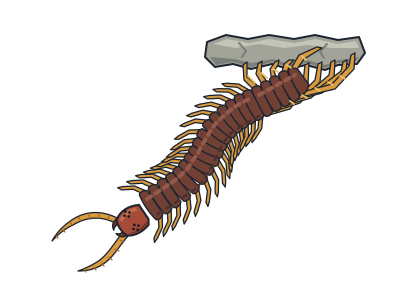
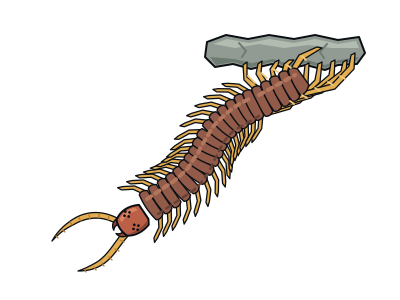
- Amazonian giant centipedeA foot-long centipede that hangs from cave roofs to catch bats in mid-air.
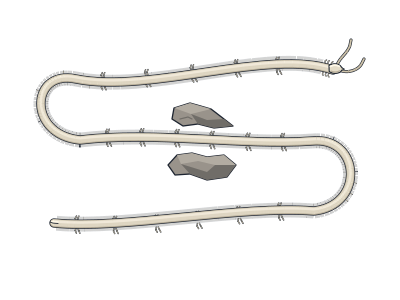
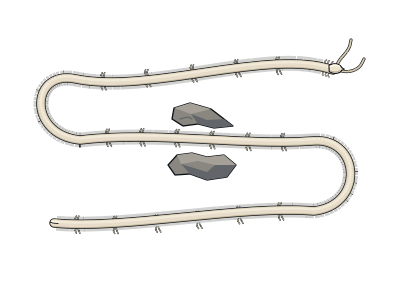
- Leggiest millipedeThe first animal found with over 1,000 legs, up to 1,306, living 60 metres underground in Australia.
- ArthropleuraA millipede relative from a group that included giants about as long as a very small car.
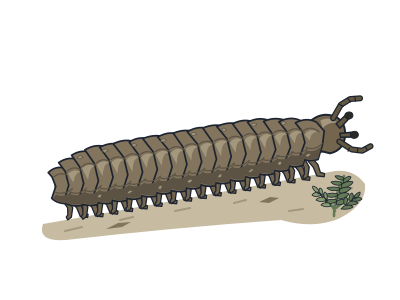
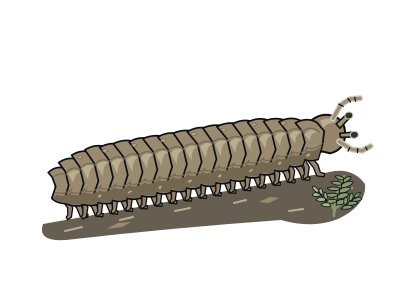
- PneumodesmusA tiny fossil millipede whose breathing holes preserve rare early evidence of life in air.
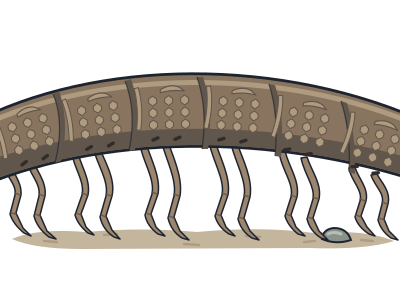
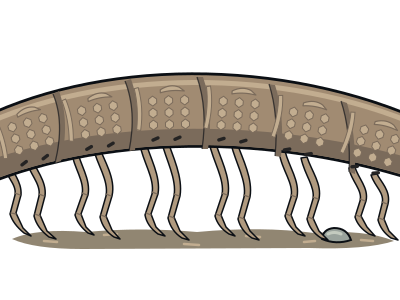
- House centipedeFifteen pairs of long legs and a lightning-fast sprint after household pests.
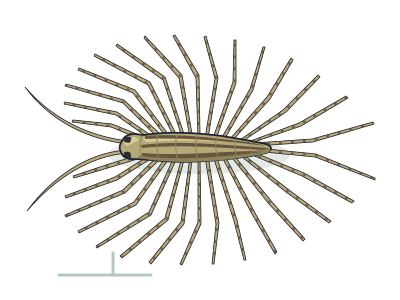
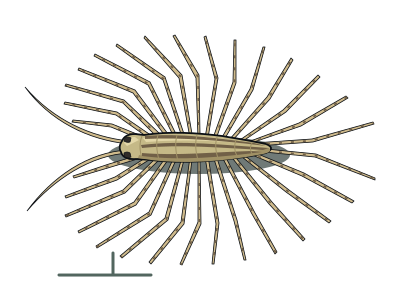
- Brown stone centipedeThe quick brown centipede that bolts when you lift a garden stone.
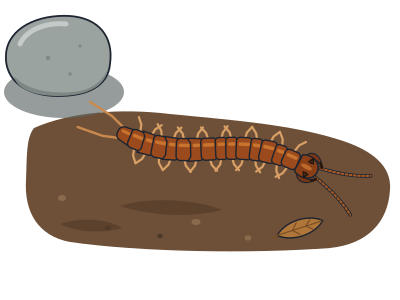
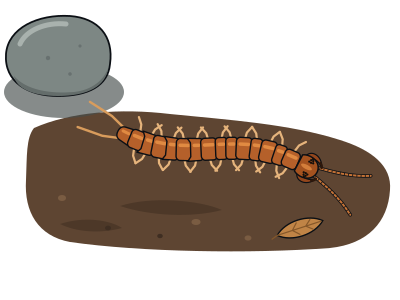
- Giant African millipedeA slow, gentle millipede as long as a ruler that curls into a spiral when touched.
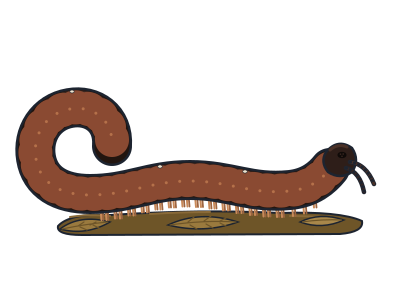
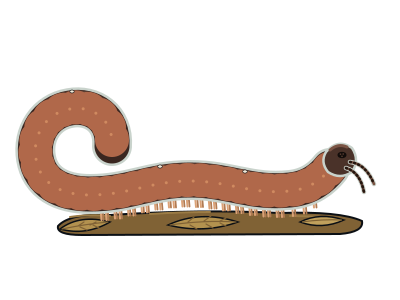
- Pill millipedeRolls into a perfect ball, just like a pill woodlouse, though the two are not close relatives.
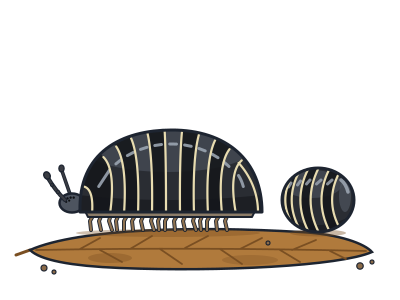
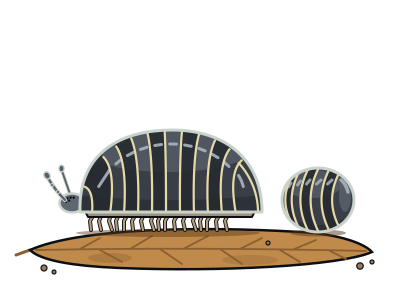
Next to it on the tree
- Spiders and kinFang-mouthed arthropods: spiders, scorpions, mites and horseshoe crabs.
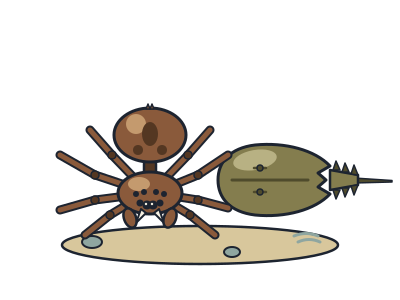
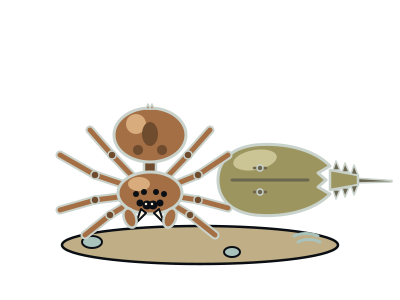
- Crustaceans and insectsInsects grew out of crustaceans: a bee is, in family terms, a land-going shrimp.
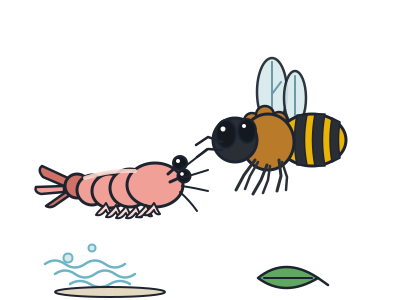
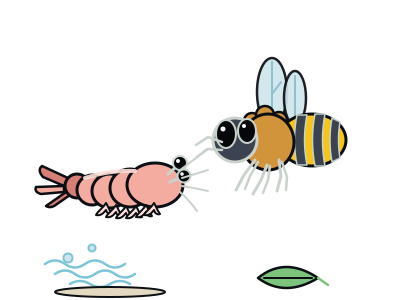
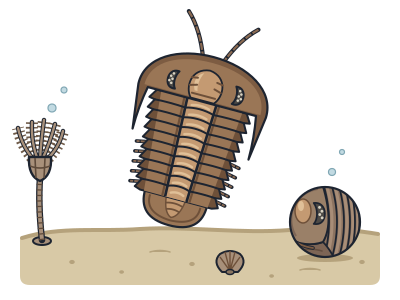
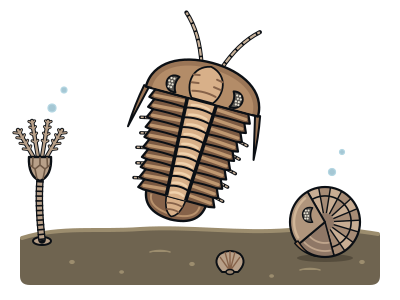
- TrilobitesArmoured sea arthropods with crystal eyes that thrived for nearly 300 million years.
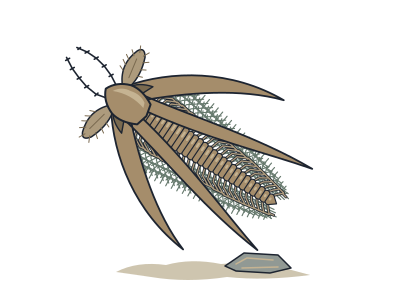
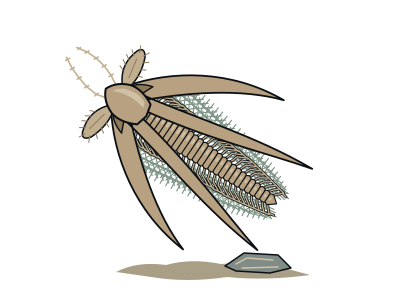
- MarrellaThe 'lace crab', the most common animal of the Burgess Shale, with swept-back spines.
- WaptiaA shrimp-like Cambrian arthropod found carrying its eggs, one of the oldest known cases of parental care.
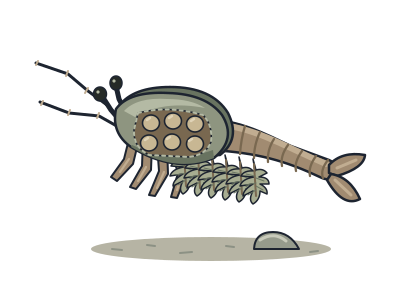
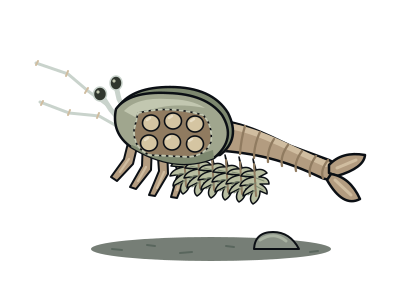
- LeanchoiliaA Cambrian swimmer with great whip-tipped claws on its head.
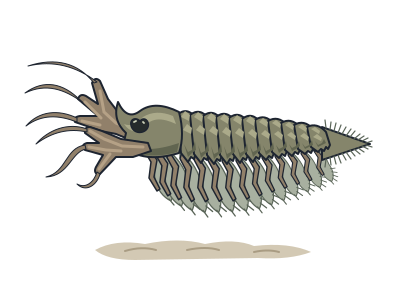
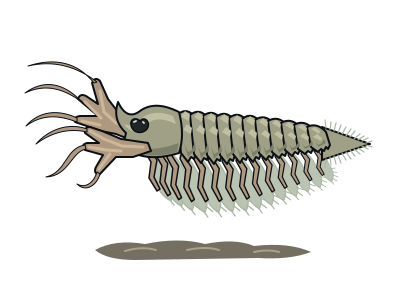
- RhyniognathaTiny fossil jaws once hailed as the oldest insect; their identity remains unresolved.