A species
Brown stone centipede
Lithobius forficatus
The quick brown centipede that bolts when you lift a garden stone.
You and the brown stone centipede meet in the Two-sided animals branch, shown at about 580 million years ago (on 11 November, in a calendar from life's shared ancestor to today).
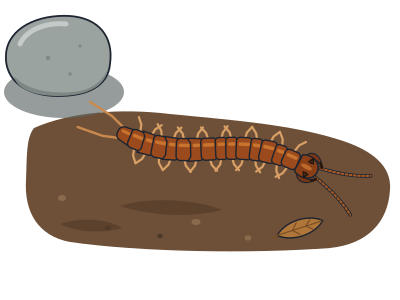
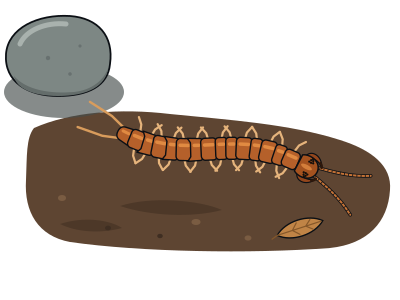
Lift a stone in a garden and you may see a shiny brown flash as this centipede races away. That speedy escape is one of the easiest ways to recognise it. It hides under rocks, in compost heaps and under tree bark, where it stays damp. Centipedes need damp hiding places because they lack the waxy, waterproof coat that insects and spiders have.
It is about 2 to 3 centimetres long, roughly the length of a paperclip, and chestnut brown. Adults have 15 pairs of legs, one pair on each body segment. That is far fewer than the 'hundred legs' its name suggests. Its eyesight is poor, so it feels its way around with its long antennae and its long back legs.
On the tree it sits with other centipedes, such as the house centipede and the Amazonian giant centipede, and with millipedes. Millipedes have two pairs of legs on each segment and mostly eat dead plants. Centipedes like this one are hunters. Their first pair of legs has turned into venomous claws just behind the head, something no other animals have. It catches insects, spiders, slugs and worms. Don't worry, though: it is harmless to people and rarely breaks the skin.
Older than the dinosaurs
Centipede fossils go back about 430 million years, long before the first dinosaurs.
Never exactly 100 legs
Centipedes always have an odd number of leg pairs, anywhere from 15 to 191, so none has exactly 100 legs.
Legs added as it grows
Young ones hatch with only about seven pairs of legs. They gain more body segments and legs each time they moult, until they reach 15 pairs.
Next to it on the tree
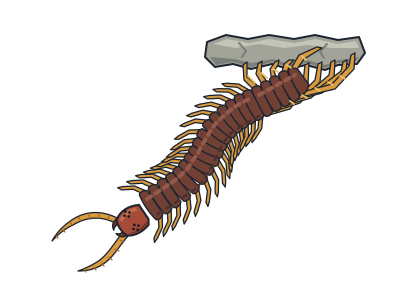
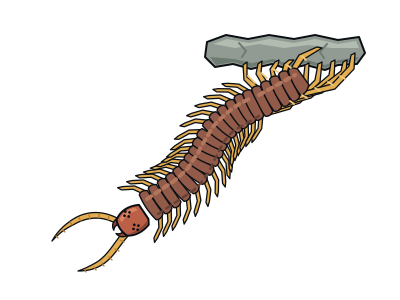
- Amazonian giant centipedeA foot-long centipede that hangs from cave roofs to catch bats in mid-air.
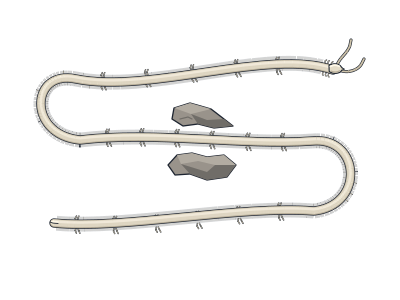
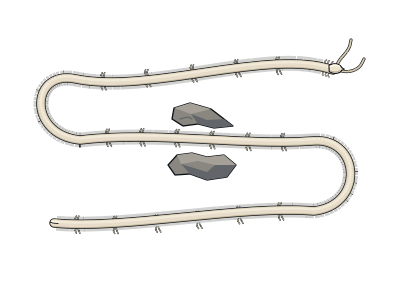
- Leggiest millipedeThe first animal found with over 1,000 legs, up to 1,306, living 60 metres underground in Australia.
- ArthropleuraA millipede relative from a group that included giants about as long as a very small car.
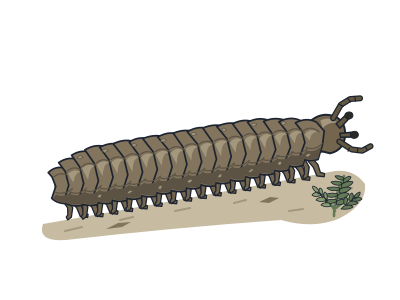
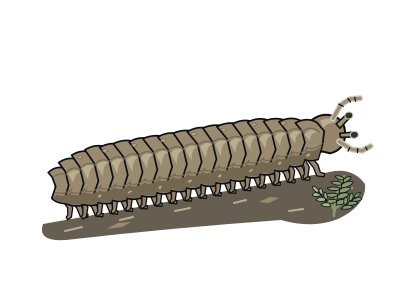
- PneumodesmusA tiny fossil millipede whose breathing holes preserve rare early evidence of life in air.
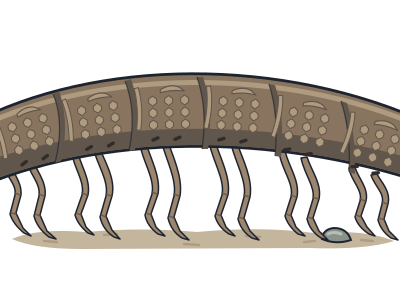
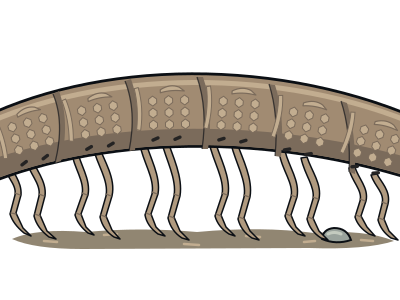
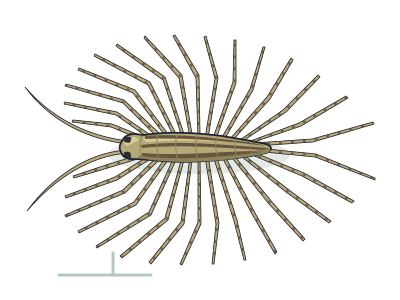
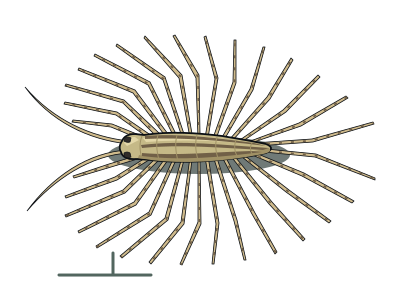
- House centipedeFifteen pairs of long legs and a lightning-fast sprint after household pests.
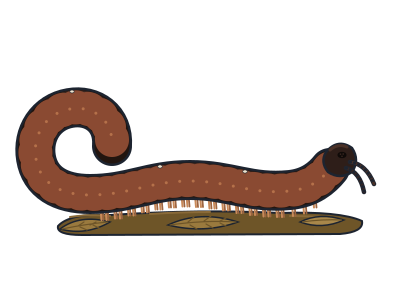
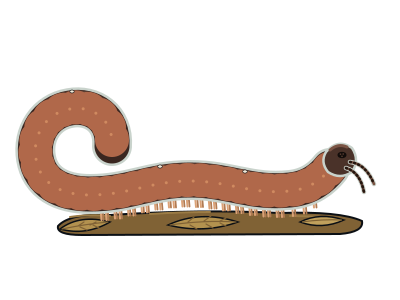
- Giant African millipedeA slow, gentle millipede as long as a ruler that curls into a spiral when touched.
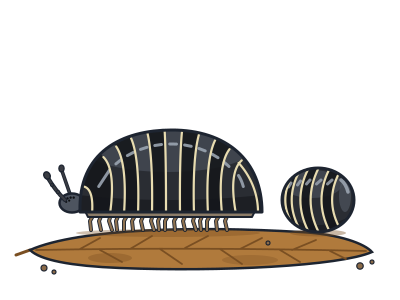
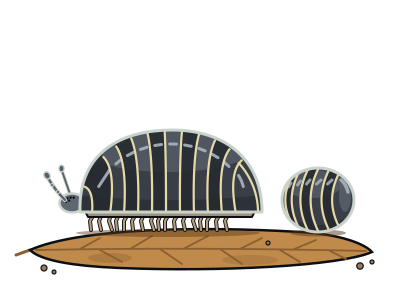
- Pill millipedeRolls into a perfect ball, just like a pill woodlouse, though the two are not close relatives.