A species
Leggiest millipede
Eumillipes persephone
Over a thousand legs, deep beneath Australia
You and the leggiest millipede meet in the Two-sided animals branch, shown at about 580 million years ago (on 11 November, in a calendar from life's shared ancestor to today).
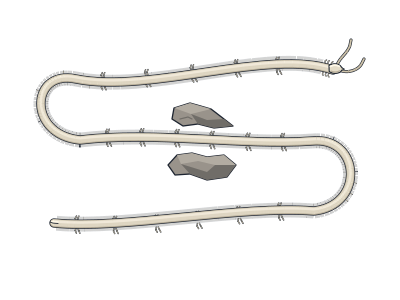
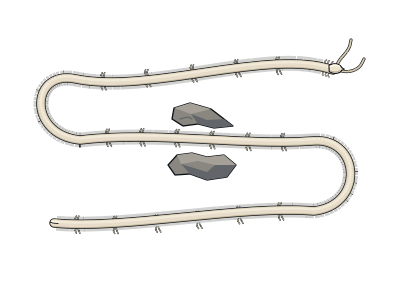
The first animal discovered with more than 1,000 legs lives deep beneath Western Australia. One female had 1,306 legs and was found 60 metres underground. Yet its remarkable shape does not make it a close relative of the previous record-holder: a Californian millipede with 750 legs.
These two millipedes look strikingly alike, but belong to distant branches of the millipede family tree. Genetic evidence shows that their extremely long bodies evolved separately, rather than coming from one extremely long-bodied ancestor. It is a reminder that animals can look very similar without being close relatives.
This Australian species lives in narrow underground cracks, not roomy cave chambers. It has a pale body and no eyes. A small, cone-shaped head carries two unusually large feelers and a tiny, beak-like mouth. Its many legs are short and fine. Its closest known surface-dwelling relatives in Australia have eyes and are generally broader, flatter and more strongly coloured.
Hundreds of body rings
The record female had 330 body segments.
Smaller males
The leggiest male studied had 818 legs and measured about 5.5 centimetres long.
An underworld name
Its scientific name combines words meaning ‘true thousand feet’ with Persephone, the goddess of the underworld in Greek mythology.
Next to it on the tree
- Amazonian giant centipedeA foot-long centipede that hangs from cave roofs to catch bats in mid-air.
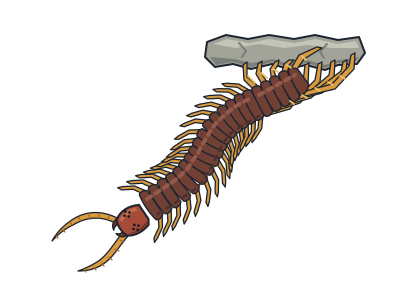
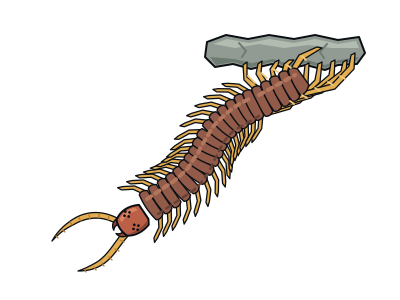
- ArthropleuraA millipede relative from a group that included giants about as long as a very small car.
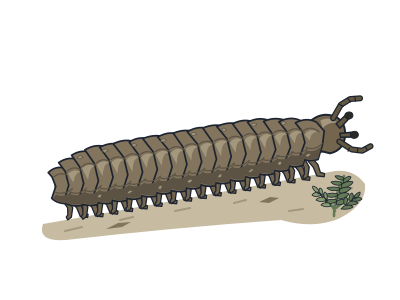
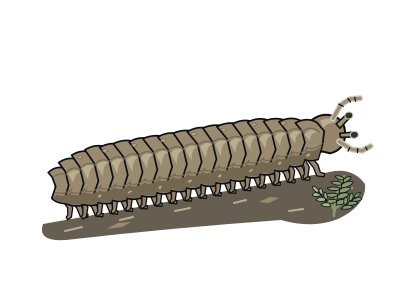
- PneumodesmusA tiny fossil millipede whose breathing holes preserve rare early evidence of life in air.
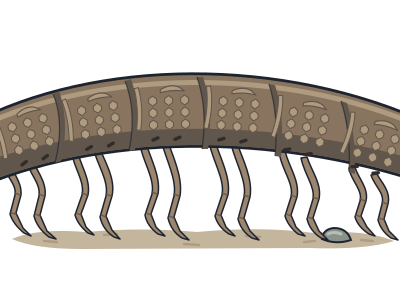
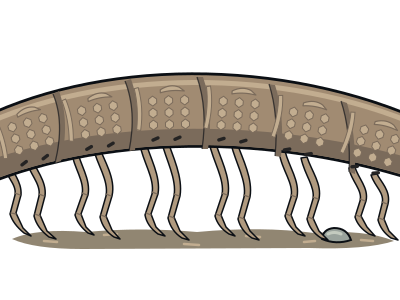
- House centipedeFifteen pairs of long legs and a lightning-fast sprint after household pests.
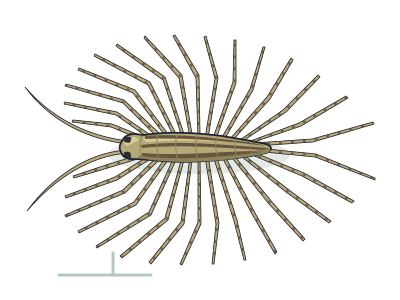
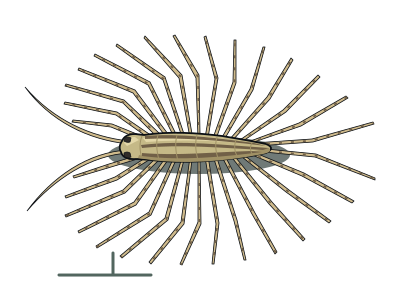
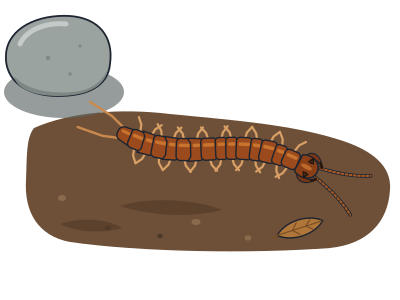
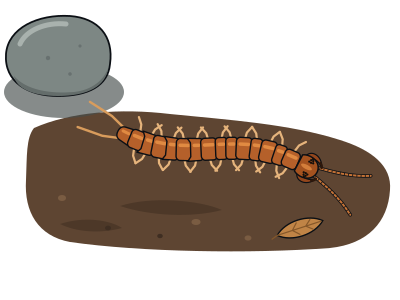
- Brown stone centipedeThe quick brown centipede that bolts when you lift a garden stone.
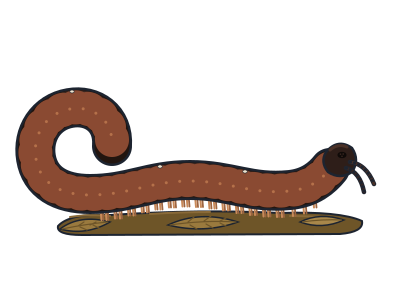
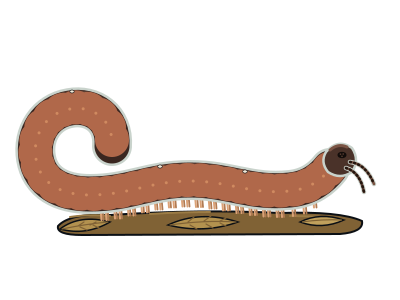
- Giant African millipedeA slow, gentle millipede as long as a ruler that curls into a spiral when touched.
- Pill millipedeRolls into a perfect ball, just like a pill woodlouse, though the two are not close relatives.