A species
Pill millipede
Glomeris marginata
A tiny armoured millipede that rolls up like a woodlouse, though the two are not close relatives
You and the pill millipede meet in the Two-sided animals branch, shown at about 580 million years ago (on 11 November, in a calendar from life's shared ancestor to today).
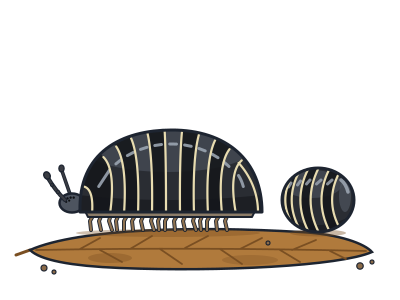
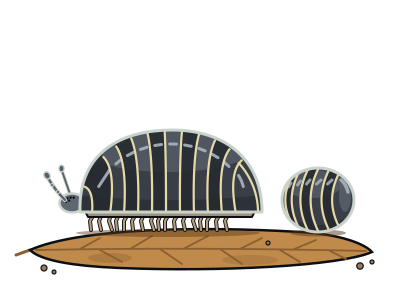
Disturb this little millipede and it rolls up into a tight, shiny ball, just like a pill woodlouse. The two look so alike that people often mix them up, but they are not close relatives. Woodlice are crustaceans, more closely related to crabs and shrimps. This animal belongs with the centipedes and millipedes. Each evolved the same rolling trick separately.
You can tell them apart by counting legs. A pill woodlouse has 7 pairs of walking legs. An adult pill millipede has about 18 pairs: 17 pairs for females and 19 for males. The millipede is glossy, usually black with pale rims on each back plate, while a pill woodlouse is grey. The woodlouse's rear plates are much narrower than the rest. The millipede's last plate is one large, rounded piece, and when it rolls up it makes a slightly egg-shaped ball rather than a round one.
It lives in damp woods, hedgerows and gardens across western Europe and is mostly active at night. It eats old, rotting leaves rather than fresh ones, which helps return nutrients to the soil. For such a small animal it can live a long time: up to about 10 or 11 years.
Starts with six legs
Babies hatch with only 3 pairs of legs. They gain more body segments and legs each time they moult. Adults keep moulting about once a year.
Eggs wrapped in soil
A female lays about 50 tiny eggs, each less than 1 mm across. She wraps each one in a little capsule made from soil that has passed through her gut.
A bitter back-up plan
Besides rolling up, it can ooze a few sticky drops from its back. They contain bitter, toxic chemicals that put off spiders, insects and animals with backbones, though starlings and toads still sometimes eat it. Refilling its supply can take up to about 4 months.
Next to it on the tree
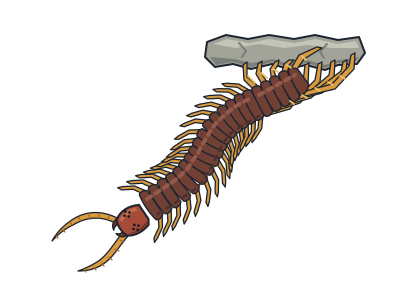
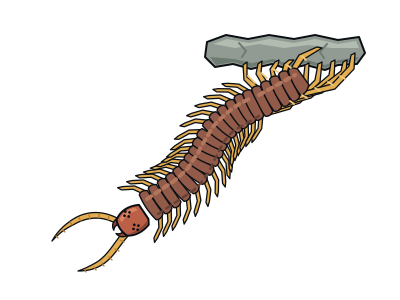
- Amazonian giant centipedeA foot-long centipede that hangs from cave roofs to catch bats in mid-air.
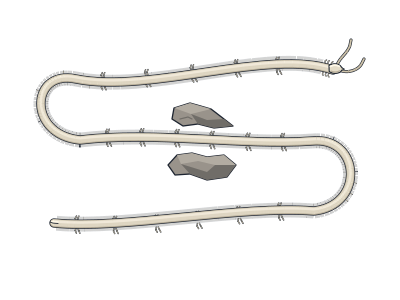
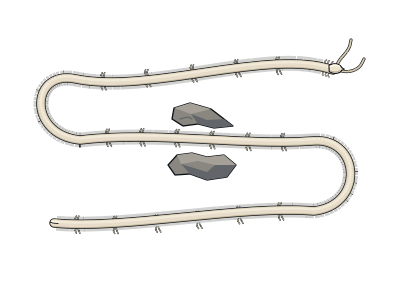
- Leggiest millipedeThe first animal found with over 1,000 legs, up to 1,306, living 60 metres underground in Australia.
- ArthropleuraA millipede relative from a group that included giants about as long as a very small car.
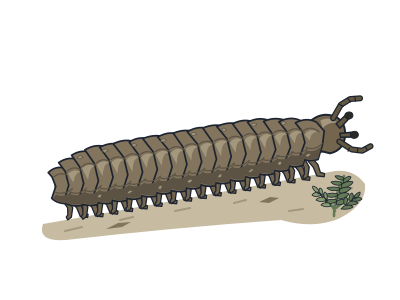
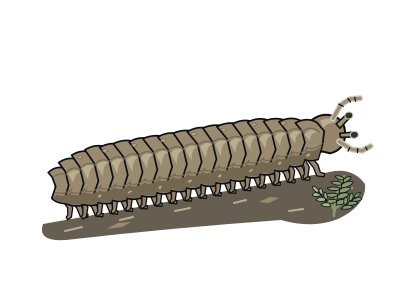
- PneumodesmusA tiny fossil millipede whose breathing holes preserve rare early evidence of life in air.
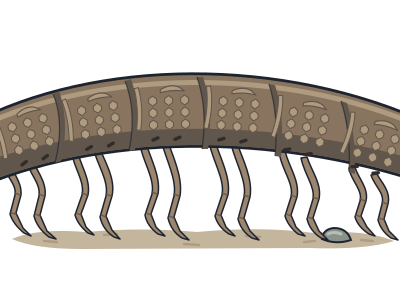
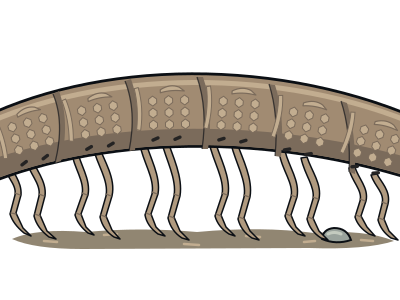
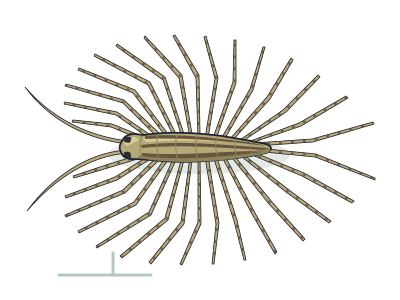
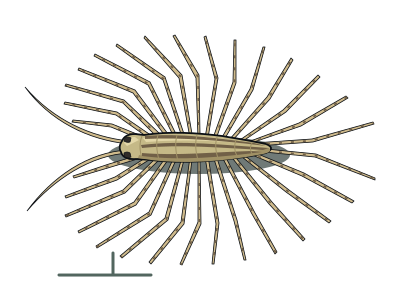
- House centipedeFifteen pairs of long legs and a lightning-fast sprint after household pests.
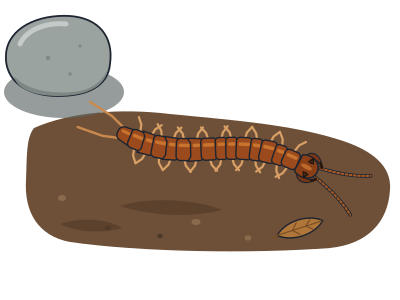
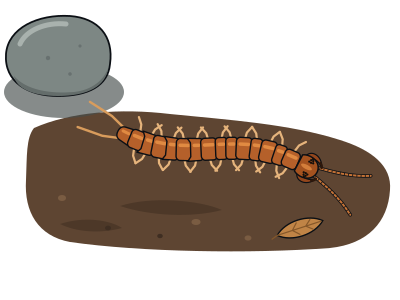
- Brown stone centipedeThe quick brown centipede that bolts when you lift a garden stone.
- Giant African millipedeA slow, gentle millipede as long as a ruler that curls into a spiral when touched.