An extinct species
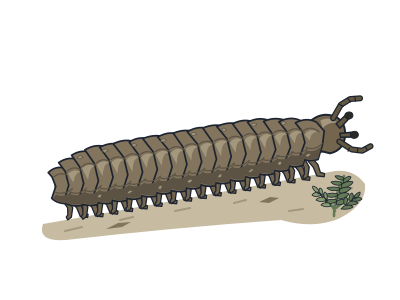
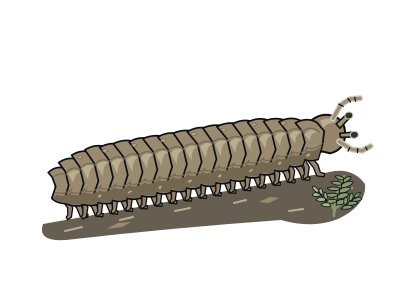
Pneumodesmus †
Pneumodesmus newmani
A tiny millipede with a remarkable record of breathing air.
Lived about 415–413 million years ago.
You and the pneumodesmus meet in the Two-sided animals branch, shown at about 580 million years ago (on 11 November, in a calendar from life's shared ancestor to today).
This tiny millipede’s breathing holes were its biggest story. They preserved rare early evidence of air-breathing structures in a land animal. Called spiracles, these openings passed through its outer covering. It belonged to the millipede branch. Centipedes were relatives on the wider family tree, but neither group belonged among insects.
It lived about 415 to 413 million years ago, under the younger interpretation of its debated age. The fossil came from Cowie Harbour near Stonehaven, Scotland. The surrounding rocks were interpreted as deposits left by rivers and floodplains. That described the burial landscape, but did not reveal exactly where the animal spent its life.
The securely identified fossil preserved just six body sections, not a whole animal. This fragment was about a centimetre long, roughly the width of a small fingernail. Its breathing openings were clear evidence of air breathing, but they did not establish it as the first animal ever to walk on land.
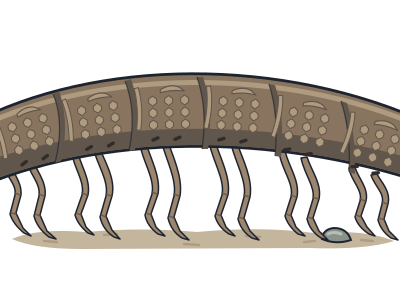
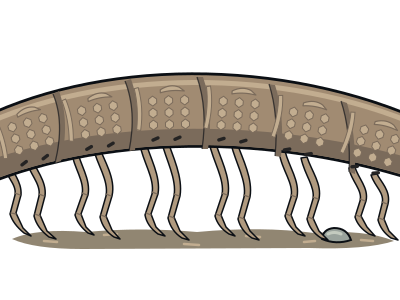
Slender legs
Its preserved legs were relatively long and thin.
Patterned armour
Each preserved back plate had a narrow crosswise bar followed by three rows of roughly six-sided bumps.
An unexpected find
Amateur fossil collector Mike Newman found it while searching for fossil fish. Its species name honoured him.
Next to it on the tree
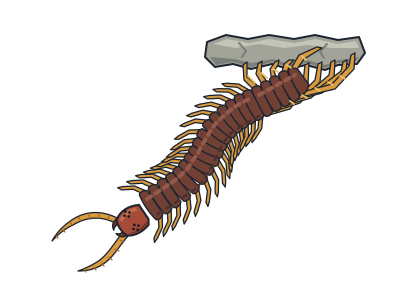
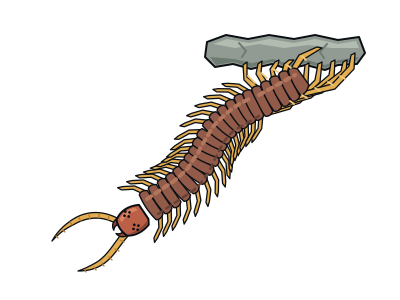
- Amazonian giant centipedeA foot-long centipede that hangs from cave roofs to catch bats in mid-air.
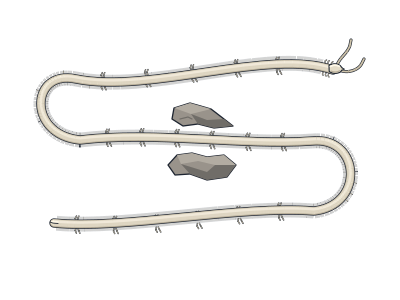
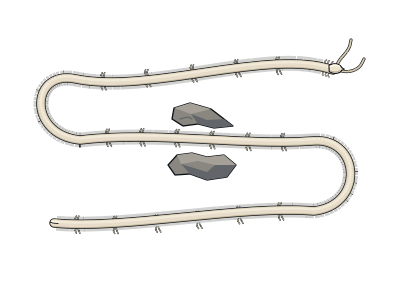
- Leggiest millipedeThe first animal found with over 1,000 legs, up to 1,306, living 60 metres underground in Australia.
- ArthropleuraA millipede relative from a group that included giants about as long as a very small car.
- House centipedeFifteen pairs of long legs and a lightning-fast sprint after household pests.
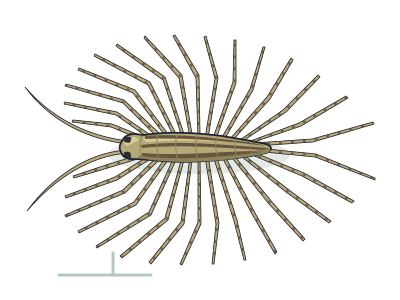
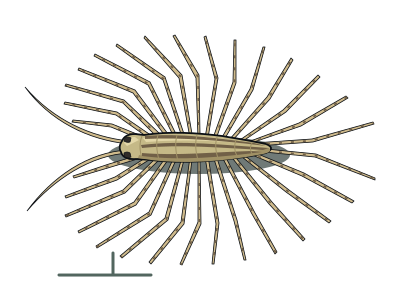
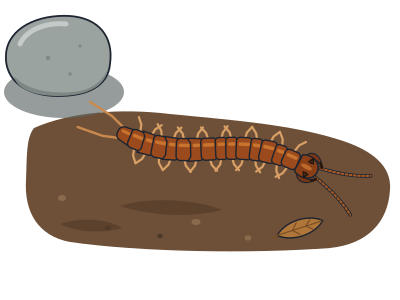
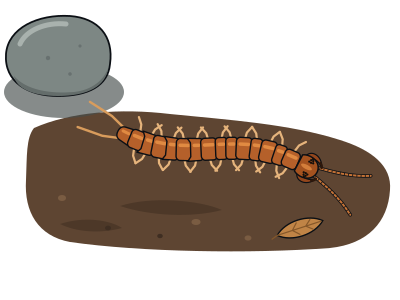
- Brown stone centipedeThe quick brown centipede that bolts when you lift a garden stone.
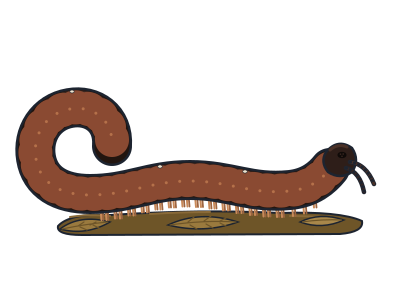
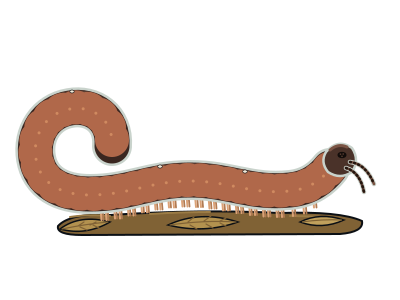
- Giant African millipedeA slow, gentle millipede as long as a ruler that curls into a spiral when touched.
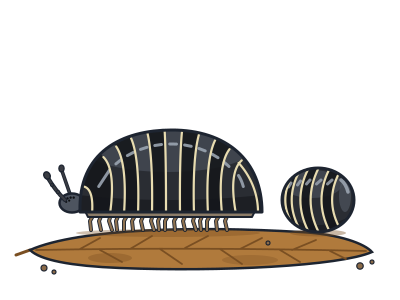
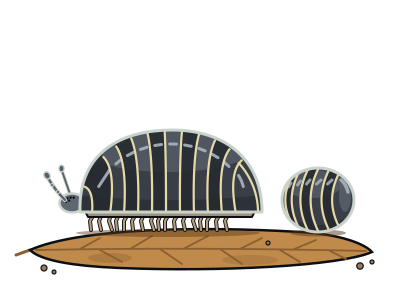
- Pill millipedeRolls into a perfect ball, just like a pill woodlouse, though the two are not close relatives.