An extinct species
Waptia †
Waptia fieldensis
An ancient egg-carrying relative of lobsters
Lived about 510–505 million years ago.
You and the waptia meet in the Two-sided animals branch, shown at about 580 million years ago (on 11 November, in a calendar from life's shared ancestor to today).
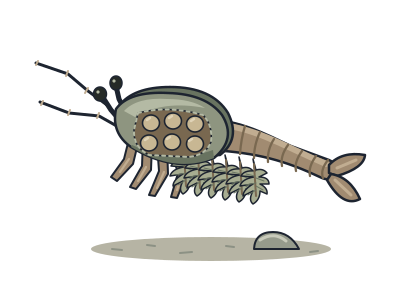
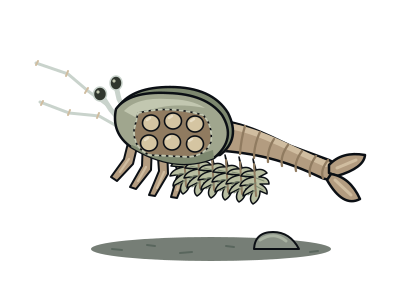
This shrimp-like animal carried eggs beneath its body shield, leaving one of the oldest known examples of parental care. It was an arthropod, a relative of lobsters and crayfish, but not a modern shrimp. It lived about 510 to 505 million years ago, during the Cambrian period.
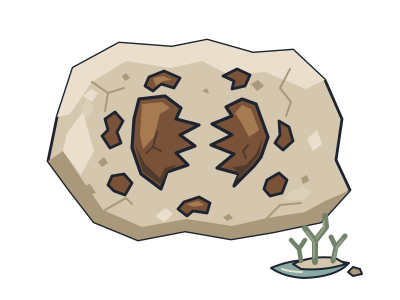
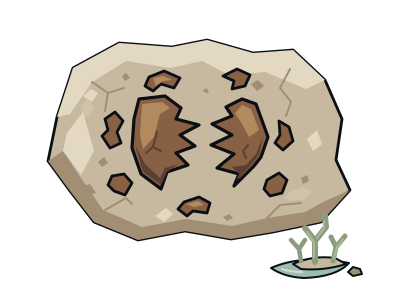
Fossils showed eggs tucked between the body and shield, arranged in a single layer on each side with little overlap. Some even preserved developing young inside. Researchers inferred that the shield sheltered the eggs. The fossils recorded egg-carrying, though—not whether the parent later fed or tended its young.
It lived in the sea, and its fossils were found in the Burgess Shale of British Columbia, Canada. It had two eyes on stalks, long feelers and a slender body. The remains were flattened impressions that preserved unusually fine details, giving researchers evidence of both its shape and the eggs it carried.
Five egg carriers
Researchers identified egg clusters in five fossil specimens.
About two dozen eggs
The largest reconstructed egg group contained up to about 24 eggs. That was not an established average.
More than a shell
Some fossils preserved complete bodies, including limbs and the gut, rather than just isolated shell fragments.
Next to it on the tree
- Spiders and kinFang-mouthed arthropods: spiders, scorpions, mites and horseshoe crabs.
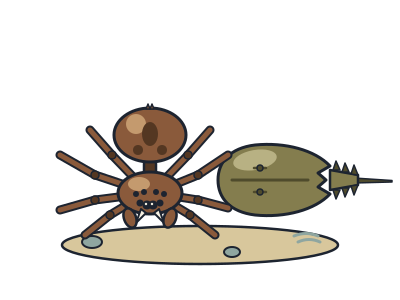
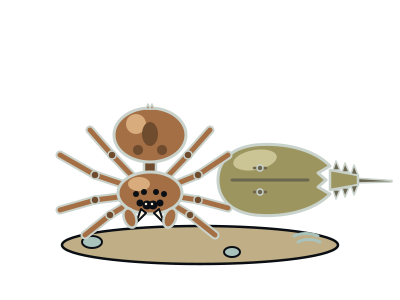
- Crustaceans and insectsInsects grew out of crustaceans: a bee is, in family terms, a land-going shrimp.
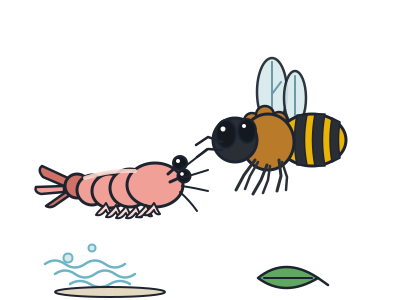
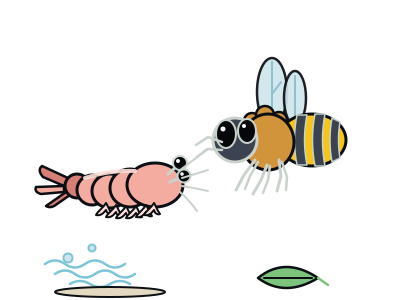
- TrilobitesArmoured sea arthropods with crystal eyes that thrived for nearly 300 million years.
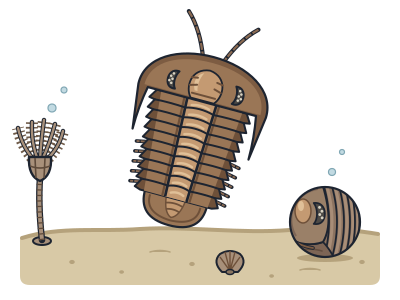
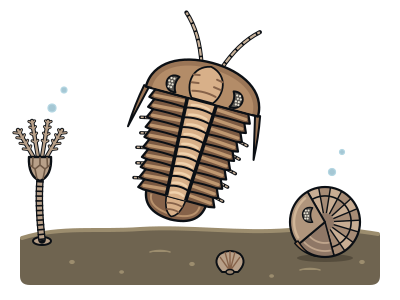
- Centipedes and millipedesMany-legged land arthropods; among the first animals to breathe air.
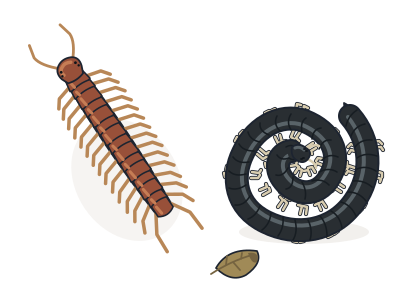
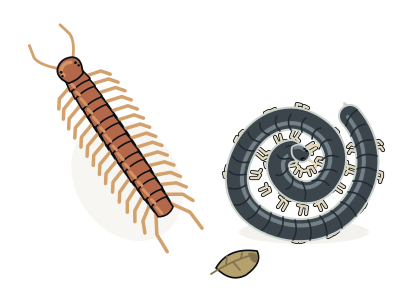
- MarrellaThe 'lace crab', the most common animal of the Burgess Shale, with swept-back spines.
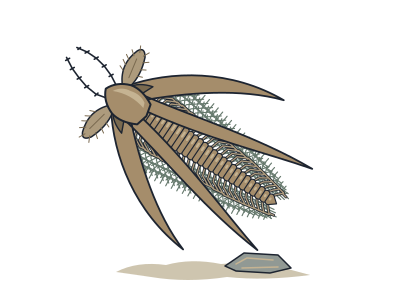
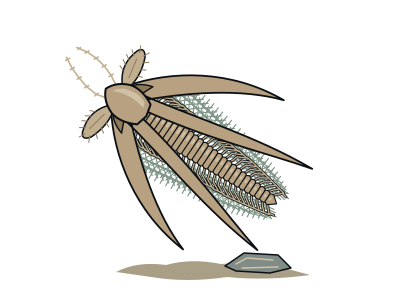
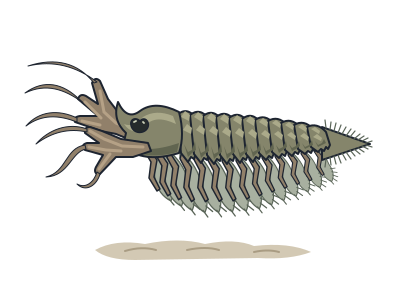
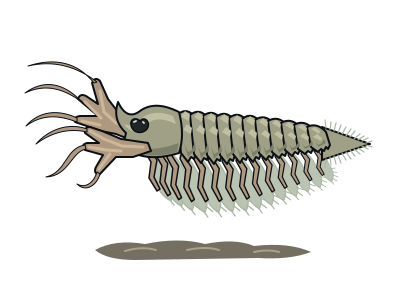
- LeanchoiliaA Cambrian swimmer with great whip-tipped claws on its head.
- RhyniognathaTiny fossil jaws once hailed as the oldest insect; their identity remains unresolved.