An extinct species
Leanchoilia †
Leanchoilia superlata
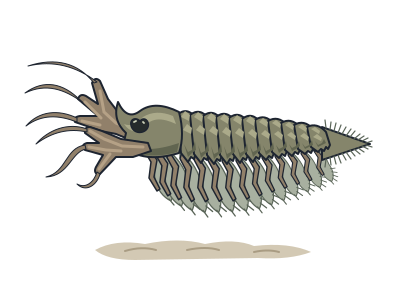
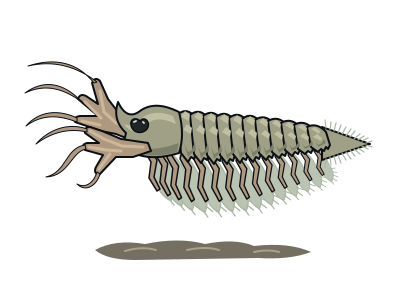
Great head claws with whip-like tips
Lived about 510–505 million years ago.
You and the leanchoilia meet in the Two-sided animals branch, shown at about 580 million years ago (on 11 November, in a calendar from life's shared ancestor to today).
Two great claws projected from its head, each with three long branches ending in whip-like tips. This strange-looking animal belonged to the arthropods, the broad animal group that also includes spiders and insects. It was not a fish. It lived about 510 to 505 million years ago, during a time called the Cambrian.
Fossils showed a slender body with 11 sections behind the head, followed by a pointed tail. An upward-curving snout stuck out from its head shield. Its ordinary limbs split into an inner jointed leg and an outer flattened branch edged with fine bristles. These were not fish fins: legs and paddle-like branches were parts of the same limbs.
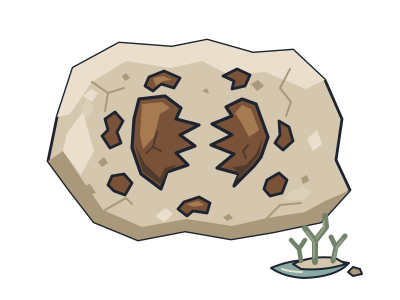
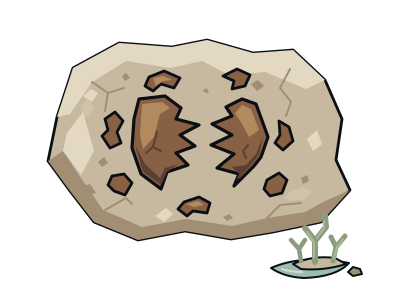
The fossils preserved its body, not its actions. From the way its limb joints fitted together, researchers inferred that it actively swam near the sea floor. Its grasping claws and spiny limb bases also suggested that it hunted other animals. That picture came from studying its anatomy, rather than from direct evidence of a hunt.
A quarry full of clues
More than 1,200 specimens were known from Raymond Quarry, although it was rare at nearby Walcott Quarry.
Named in 1912
Charles Walcott first described it in 1912.
A railway connection
The first part of its scientific name came from Leanchoil, a former railway station near Field in British Columbia.
Next to it on the tree
- Spiders and kinFang-mouthed arthropods: spiders, scorpions, mites and horseshoe crabs.
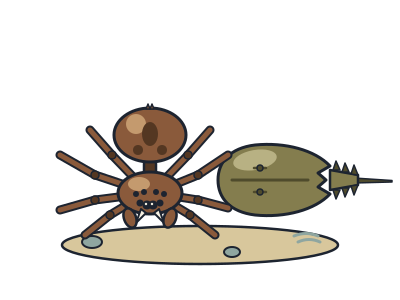
- Crustaceans and insectsInsects grew out of crustaceans: a bee is, in family terms, a land-going shrimp.
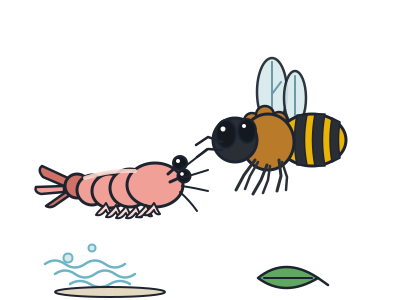
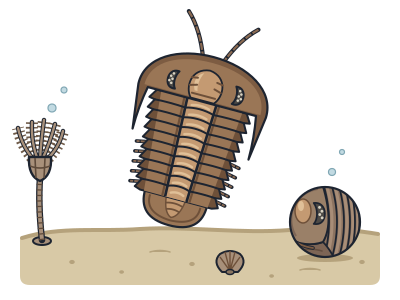
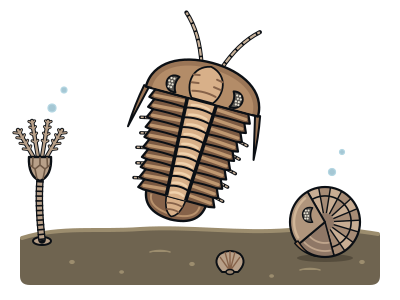
- TrilobitesArmoured sea arthropods with crystal eyes that thrived for nearly 300 million years.
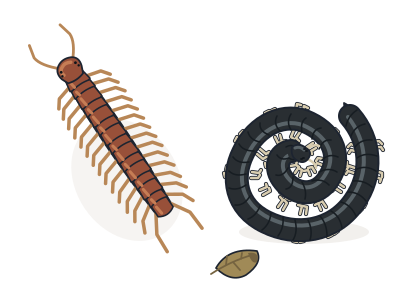
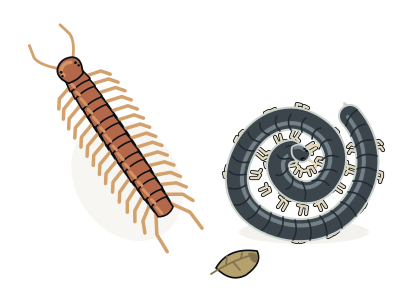
- Centipedes and millipedesMany-legged land arthropods; among the first animals to breathe air.
- MarrellaThe 'lace crab', the most common animal of the Burgess Shale, with swept-back spines.
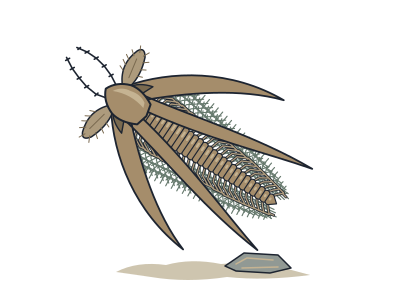
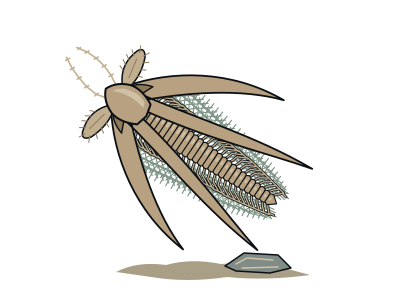
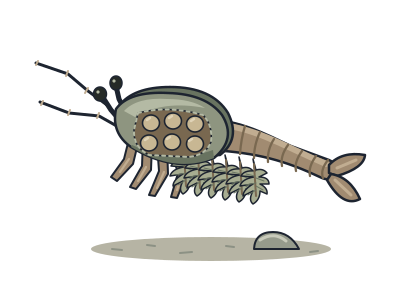
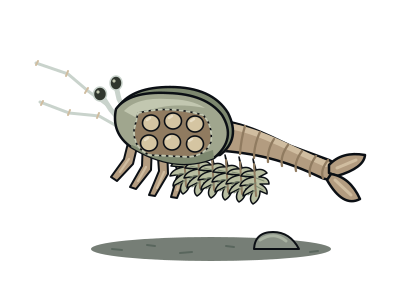
- WaptiaA shrimp-like Cambrian arthropod found carrying its eggs, one of the oldest known cases of parental care.
- RhyniognathaTiny fossil jaws once hailed as the oldest insect; their identity remains unresolved.