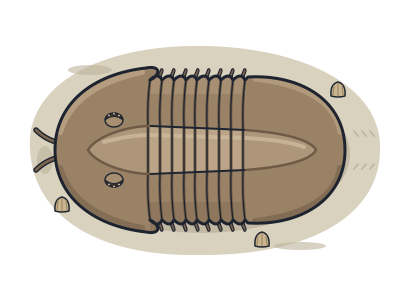
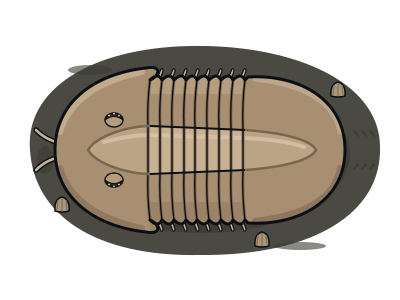
An extinct species
Isotelus rex †
Isotelus rex
The king of trilobites: a sea-floor giant as long as a child's arm.
Lived about 452–445 million years ago.
You and the isotelus rex meet in the Two-sided animals branch, shown at about 580 million years ago (on 11 November, in a calendar from life's shared ancestor to today).
Picture a trilobite about 70 centimetres long, roughly as long as a child's arm. This is the largest complete trilobite ever found. Most trilobites were only a few centimetres long, so this one was a true giant. It lived about 452 to 445 million years ago, long before the dinosaurs, in a warm, shallow sea near the equator. That sea once covered much of what is now North America.
Trilobites were arthropods, the huge animal group that also includes crabs, lobsters, insects and spiders. But today's crabs and lobsters are only distant relatives. Trilobites were a branch of their own, and the whole group has died out.
Only one fossil of this species is known. It is a nearly complete upper shell, still joined together, though part of the tail is missing. It shows a smooth, rounded head shield, eight jointed body segments and a large, smooth tail shield. The legs and feelers were not preserved, so artists borrow those details from other trilobites. Its colour is unknown, so any colour in a picture is a guess.
Very few other creatures had grown on its shell. The scientists who described it took this as a hint that it lay partly buried in the seabed, as a hunter or scavenger. Other trilobites of its kind are thought to have dug in soft mud for worms, so it may have done the same.
A race against the tide
The fossil was found in 1998 on the Hudson Bay shore near Churchill, Canada. It lay below the high-tide line. The team carried shotguns in case of polar bears and broke the fossil into pieces to get it out before the rising tide covered it again.
Smashing the record
It is almost 70 per cent longer than the biggest complete trilobite known before it. It was the first clear proof that trilobites could grow longer than half a metre.
A giant from warm water
Today many very large seabed arthropods live in cold polar seas. This giant is an example of the opposite: it grew huge in warm tropical waters.
Next to it on the tree
- OlenellusOne of the earliest trilobites, with crescent eyes and long spines.
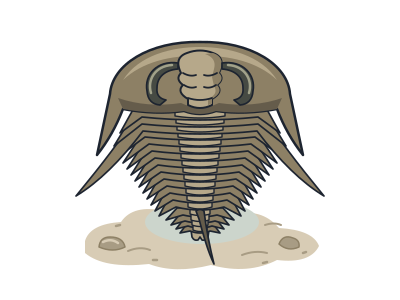
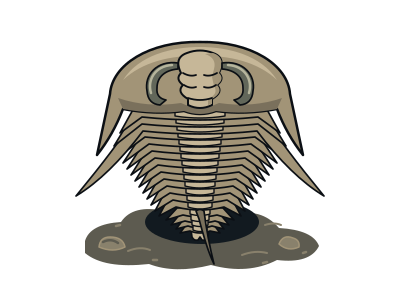
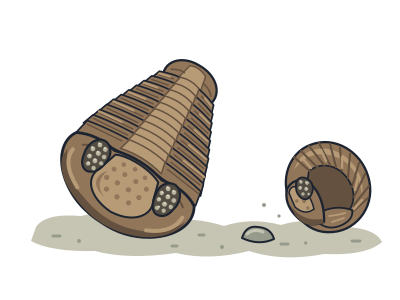
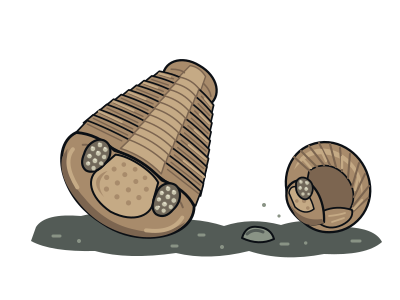
- PhacopsA trilobite with big, bumpy eyes made of crystal lenses, often found rolled into a ball.
- ParadoxidesA spiny Cambrian trilobite with a 12-centimetre reference fossil and much larger relatives.
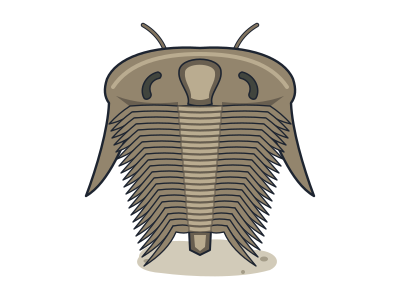
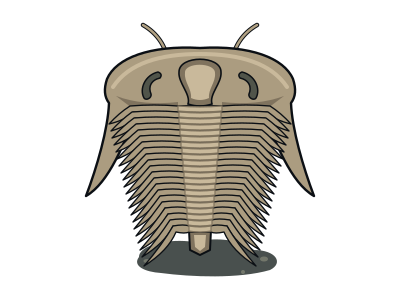
- WalliseropsA trilobite with a three-pronged trident sticking out of its head.
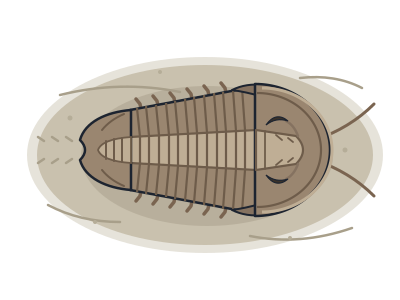
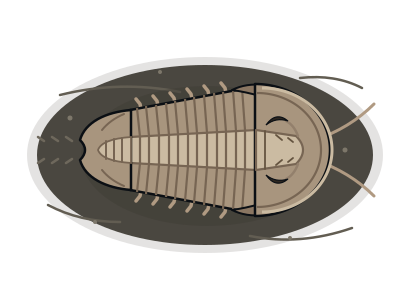
- ElrathiaThe trilobite in countless rock shops, dug up by the thousand from a single Utah shale.
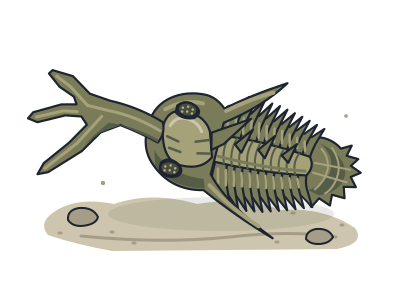
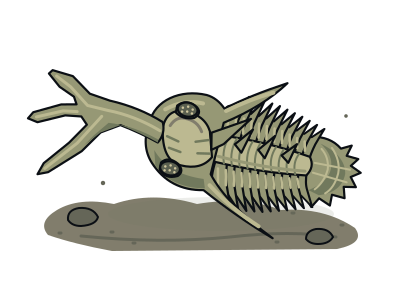
- AsaphusA trilobite with eyes perched on tall stalks, like a periscope peering out of the seafloor mud.