An extinct species
Phacops †
Eldredgeops rana
Crystal eyes and a shell that curled
Lived about 386–380 million years ago.
You and the phacops meet in the Two-sided animals branch, shown at about 580 million years ago (on 11 November, in a calendar from life's shared ancestor to today).
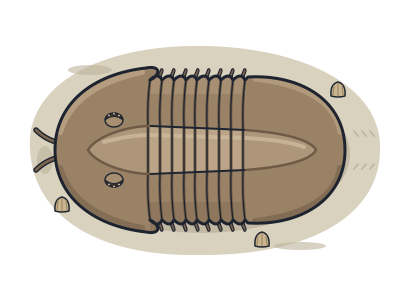
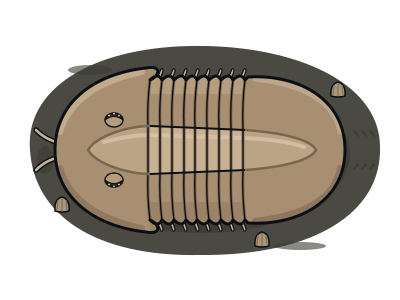
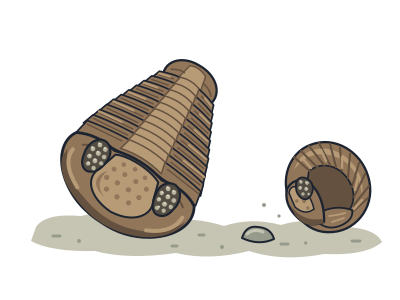
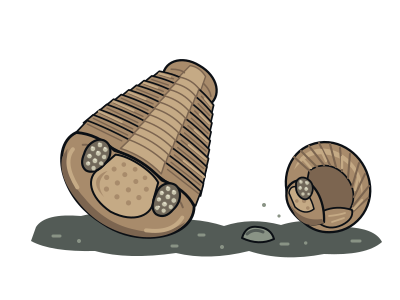
With big, bumpy eyes made of crystal lenses, this trilobite belonged to the arthropods, the wider animal family that included insects, spiders, crabs and lobsters. Fossils preserved it curled into a ball, but it was not a woodlouse.
Its eye lenses were made of calcite, a mineral, rather than the soft material in human lenses. Each lens was separated from its neighbours by shell material and had its own transparent covering. These were working lenses during life, not crystals that simply replaced the eyes as the animal became a fossil.
Its world was a sea covering parts of eastern North America. Museum fossils documented its presence from about 386 to 380 million years ago, though its full time range remained uncertain. It probably lived on or near the seabed. Preserved shells showed a broad, rounded head with a raised, bumpy middle. Rolled-up fossils directly recorded its curled shape; they did not reveal why each animal had curled.
Orderly eyes
A normal adult eye had 17 roughly upright rows of lenses.
A frog-inspired name
The word rana meant frog, referring to its frog-like eyes and appearance.
No long cheek spines
Unlike some spiny trilobites, it lacked projecting cheek spines and spines along its central body ridge.
Next to it on the tree
- OlenellusOne of the earliest trilobites, with crescent eyes and long spines.
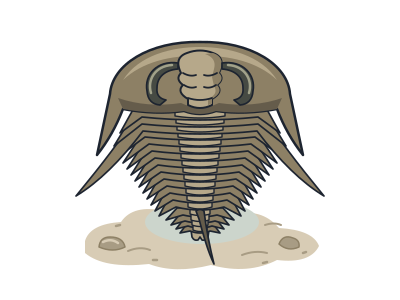
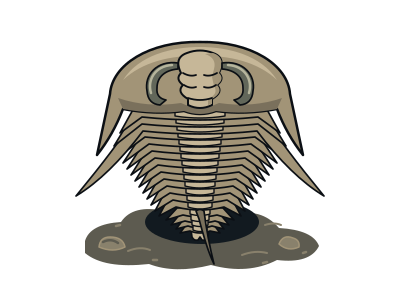
- ParadoxidesA spiny Cambrian trilobite with a 12-centimetre reference fossil and much larger relatives.
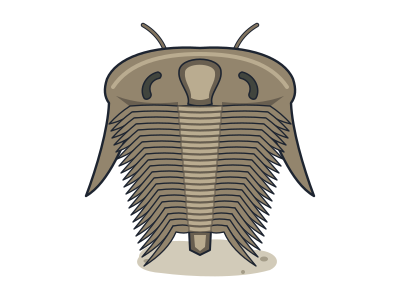
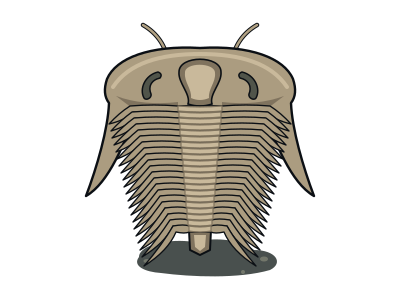
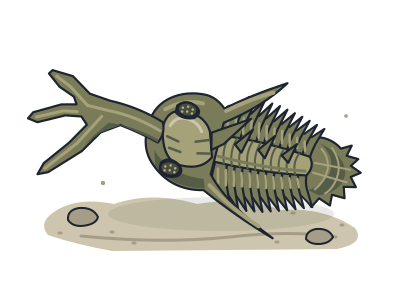
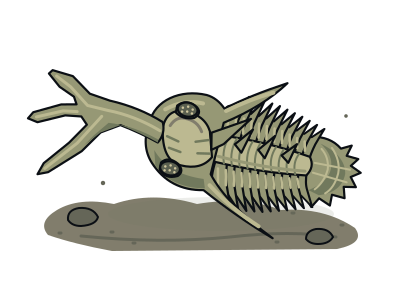
- WalliseropsA trilobite with a three-pronged trident sticking out of its head.
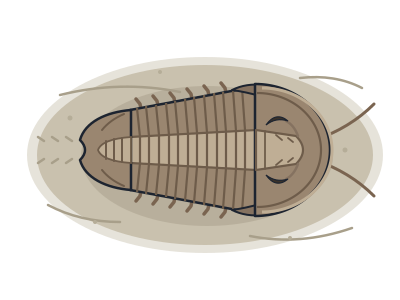
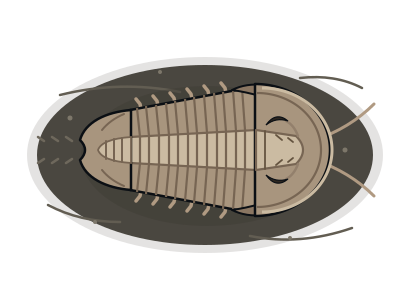
- ElrathiaThe trilobite in countless rock shops, dug up by the thousand from a single Utah shale.
- AsaphusA trilobite with eyes perched on tall stalks, like a periscope peering out of the seafloor mud.
- Isotelus rexThe largest complete trilobite ever found, about 70 centimetres long, as long as a child's arm.