An extinct species
Paradoxides †
Paradoxides paradoxissimus
Spiny sea armour, with forearm-sized relatives.
Lived about 506–500 million years ago.
You and the paradoxides meet in the Two-sided animals branch, shown at about 580 million years ago (on 11 November, in a calendar from life's shared ancestor to today).
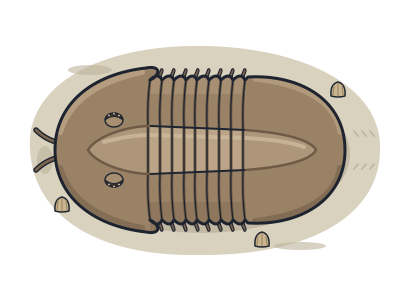
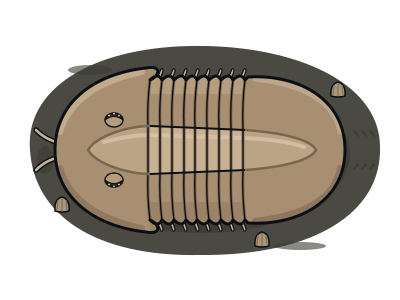
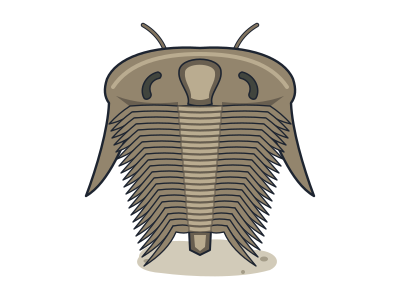
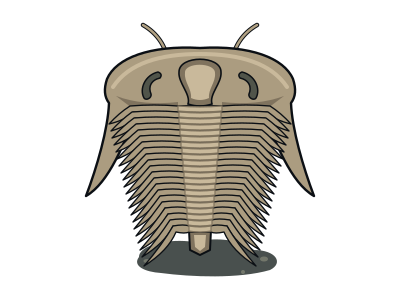
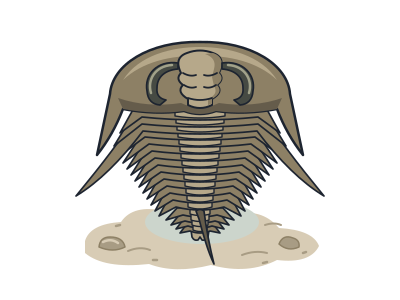
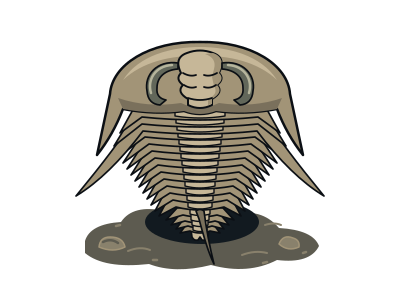
With its broad head and long spines, this trilobite belonged to a group that included forearm-sized animals. It was a distant relative of insects, spiders and crabs: all belonged to the joint-legged animal group called arthropods. It lived in the sea about 506 to 500 million years ago, during the Cambrian.
The forearm comparison came from its wider group, not a confirmed maximum for this species. Its reference specimen—the fossil used to identify the species—measured about 12 centimetres from head shield to tail shield, not counting projecting spine tips.
Fossils showed a broad head shield with long spines and a jointed, armoured body. But the reference fossil was a strongly flattened impression in shale, rather than an undistorted three-dimensional animal. As with other trilobites, the hard upper covering was much more often preserved than the delicate legs and antennae underneath.
Three strips, not three pieces
The name trilobite referred to three sections running lengthwise: a central ridge and a section on either side.
Growing meant shedding
Like other trilobites, it grew by moulting—shedding its hard outer covering.
Mineral eye lenses
Trilobite eye lenses were made from calcite, a mineral. This was a feature of the wider group, not unique to this species.
Next to it on the tree
- OlenellusOne of the earliest trilobites, with crescent eyes and long spines.
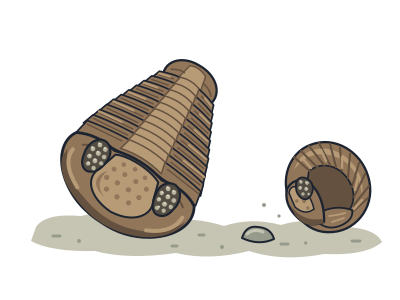
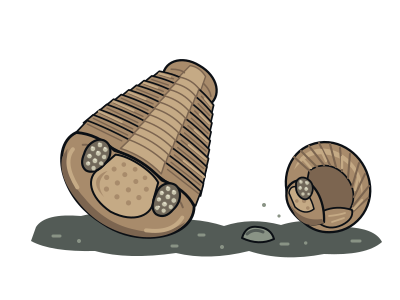
- PhacopsA trilobite with big, bumpy eyes made of crystal lenses, often found rolled into a ball.
- WalliseropsA trilobite with a three-pronged trident sticking out of its head.
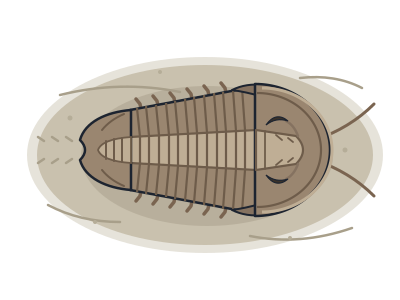
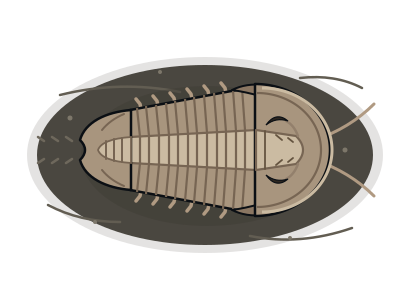
- ElrathiaThe trilobite in countless rock shops, dug up by the thousand from a single Utah shale.
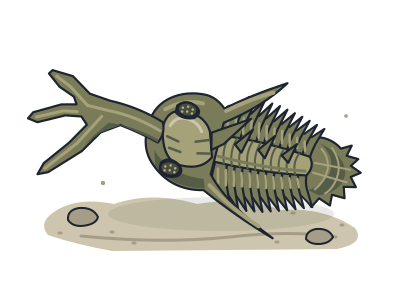
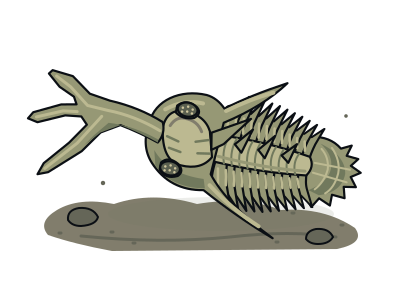
- AsaphusA trilobite with eyes perched on tall stalks, like a periscope peering out of the seafloor mud.
- Isotelus rexThe largest complete trilobite ever found, about 70 centimetres long, as long as a child's arm.