An extinct species
Walliserops †
Walliserops trifurcatus
A trilobite with a trident on its head
Lived about 400–395 million years ago.
You and the walliserops meet in the Two-sided animals branch, shown at about 580 million years ago (on 11 November, in a calendar from life's shared ancestor to today).
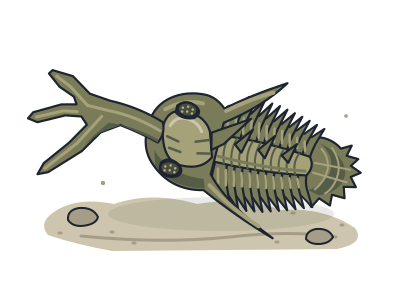
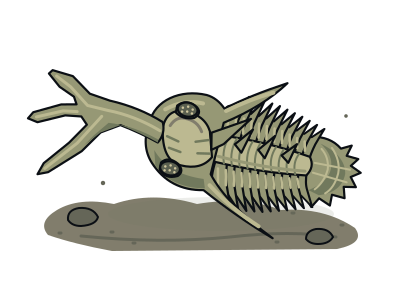
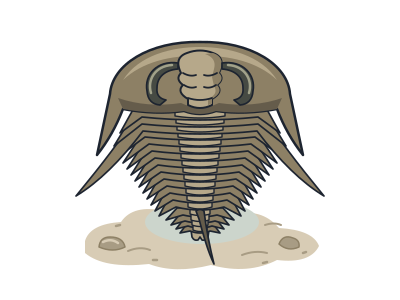
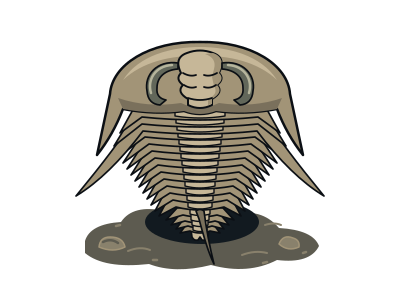
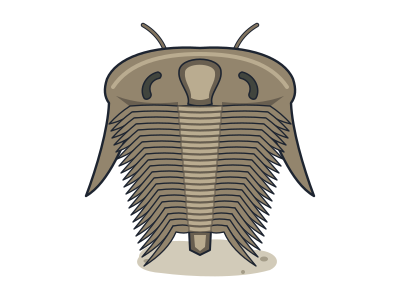
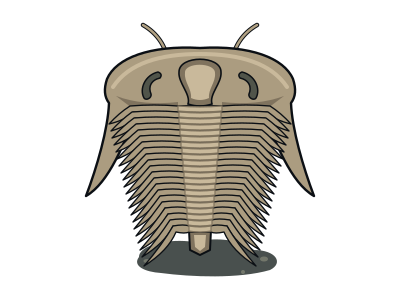
A long stalk ending in three broad, flattened prongs stuck out from this animal’s head. It looked like a tiny three-pointed fork, but it was part of the head armour, not a tool or an extra arm. This was a trilobite, belonging to the wider animal family called arthropods, which also included insects, crabs and spiders.
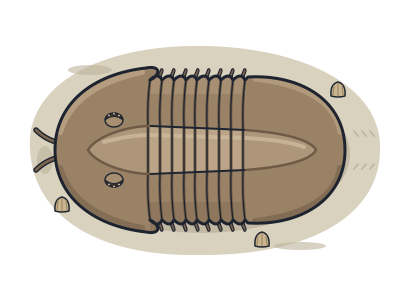
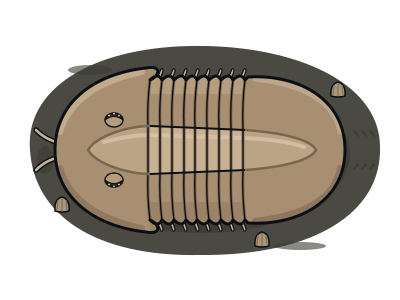
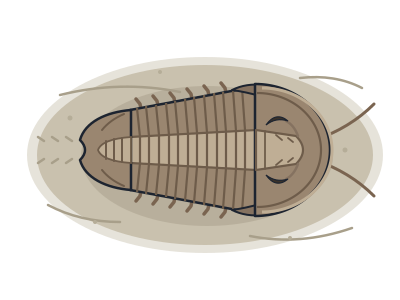
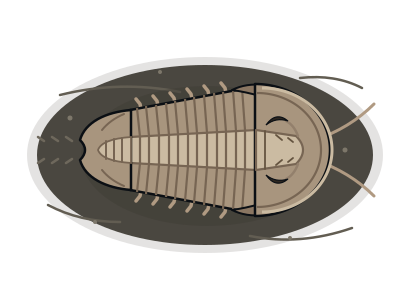
It lived on a seabed in what became southern Morocco, about 400 to 395 million years ago. Behind the striking headgear, fossils showed a body with 11 jointed middle sections. Long spines swept backwards from its cheeks, more spines covered its back, and a spiny shield formed its tail end.
The trident was fixed in place: it could not move independently like an arm. Some fossils preserved the outer armour so completely that specialists could carefully uncover it almost free of the surrounding limestone. Like other trilobites, this animal grew by shedding its hard outer skeleton and making a larger one.
Hollow headgear
Broken fossils revealed that the trident’s stalk and the central parts of its prongs were hollow.
Not quite symmetrical
The middle prong branched from either the left or right prong, rather than forming a perfectly even fork.
A different set of three
The name trilobite referred to three lengthwise body strips, not to the three-pronged trident.
Next to it on the tree
- OlenellusOne of the earliest trilobites, with crescent eyes and long spines.
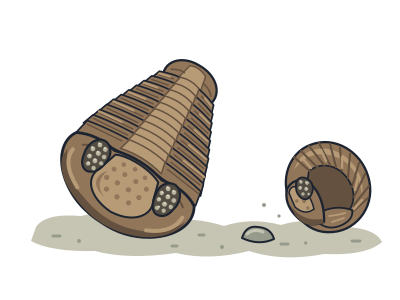
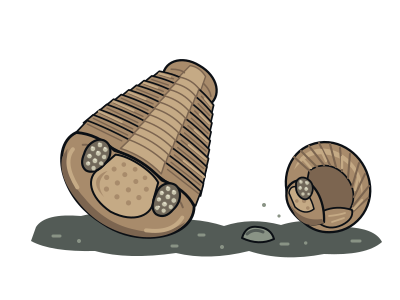
- PhacopsA trilobite with big, bumpy eyes made of crystal lenses, often found rolled into a ball.
- ParadoxidesA spiny Cambrian trilobite with a 12-centimetre reference fossil and much larger relatives.
- ElrathiaThe trilobite in countless rock shops, dug up by the thousand from a single Utah shale.
- AsaphusA trilobite with eyes perched on tall stalks, like a periscope peering out of the seafloor mud.
- Isotelus rexThe largest complete trilobite ever found, about 70 centimetres long, as long as a child's arm.