An extinct species
Olenellus †
Olenellus thompsoni
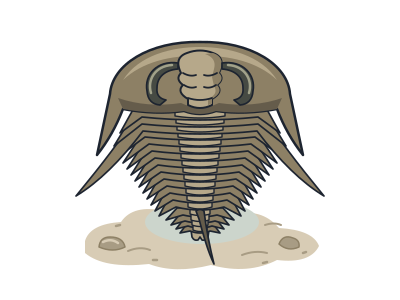
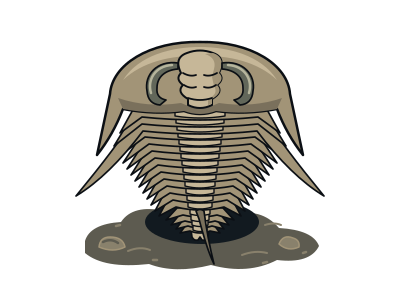
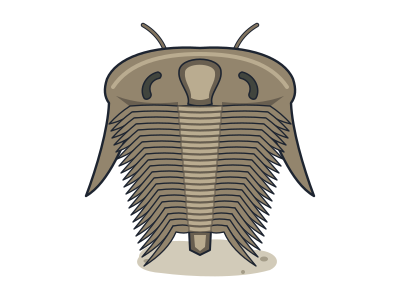
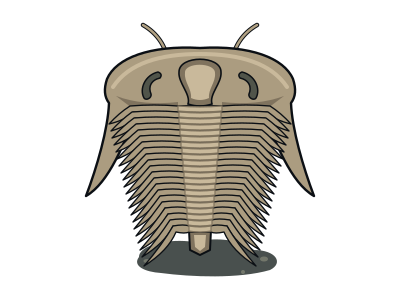
An early trilobite with crescent-shaped eye ridges and long spines.
Lived about 514–509 million years ago.
You and the olenellus meet in the Two-sided animals branch, shown at about 580 million years ago (on 11 November, in a calendar from life's shared ancestor to today).
One of the earliest trilobites, this sea animal had crescent-shaped eye ridges and long spines. It belonged to the arthropods, the wider animal group that includes insects, spiders and crabs. It was not an insect, though: trilobites formed their own extinct branch. It lived about 514 to 509 million years ago, long before the dinosaurs.
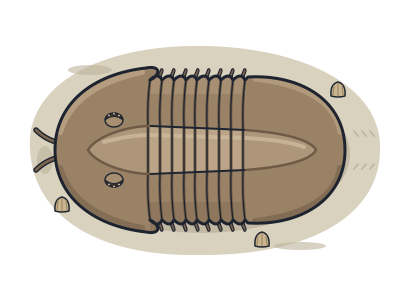
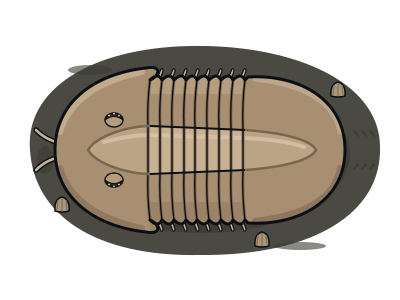
Its broad head shield formed a semicircle, with curved eye ridges beside a raised middle region. A spine pointed backwards from each rear corner of the head. The third section behind the head carried an especially large spine on each side. Farther back, another long spine rose from the centre of the body, ahead of a tiny tail shield.
Fossils preserved separate head shields and complete upper body coverings as moulds in rock. These recorded the shape of its armour, rather than every detail of the living animal. Surrounding rocks and other fossils showed that trilobites lived in seas, but this species’ exact diet and behaviour remained uncertain.
Three strips, not three body parts
The name trilobite referred to three regions running lengthwise: a central strip and one on either side.
Room to grow
Trilobites shed their outer coverings as they grew. Those discarded coverings could also become fossils.
Big sections, little sections
Its jointed trunk had 14 larger front sections followed by four much smaller rear sections.
Next to it on the tree
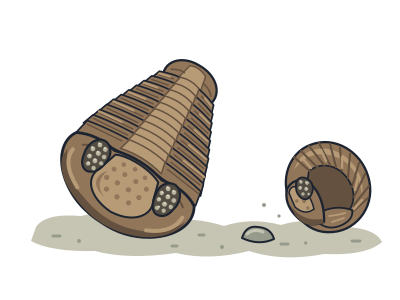
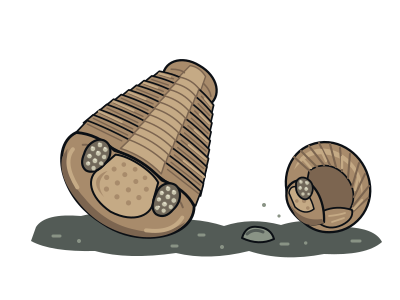
- PhacopsA trilobite with big, bumpy eyes made of crystal lenses, often found rolled into a ball.
- ParadoxidesA spiny Cambrian trilobite with a 12-centimetre reference fossil and much larger relatives.
- WalliseropsA trilobite with a three-pronged trident sticking out of its head.
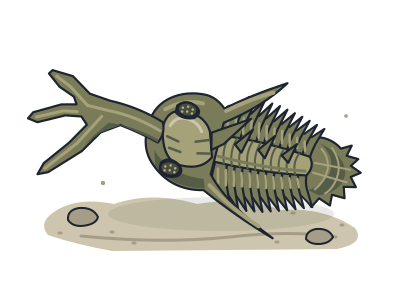
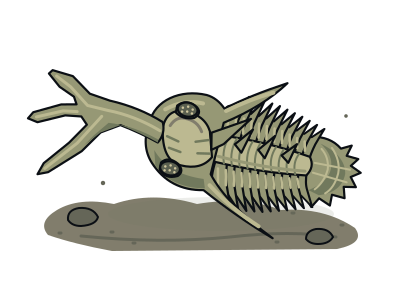
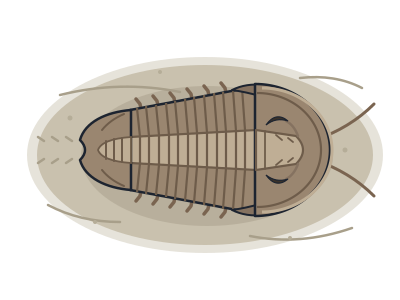
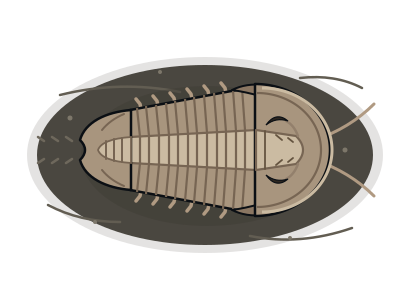
- ElrathiaThe trilobite in countless rock shops, dug up by the thousand from a single Utah shale.
- AsaphusA trilobite with eyes perched on tall stalks, like a periscope peering out of the seafloor mud.
- Isotelus rexThe largest complete trilobite ever found, about 70 centimetres long, as long as a child's arm.