A group of living things
Clams and oysters
Bivalvia
Two hinged shells, a soft body and no head
This branch is shown at about 500 million years ago; its age is a rough estimate.
You and clams and oysters meet in the Two-sided animals branch, shown at about 580 million years ago (on 11 November, in a calendar from life's shared ancestor to today).
Clams and oysters are molluscs with two hinged shells and no distinct head. That makes them relatives of snails, slugs, squid and octopuses, despite their very different shapes. Mussels, cockles, pipis and scallops belong to this same two-shelled group. A flexible band joins the two shell halves around the soft body.
These animals live in seas and fresh waters, including rivers and lakes. Most collect tiny pieces of food from water passing through their bodies. They do not all stay in one spot: many clams dig with a single muscular foot. Oysters instead cement one shell to a hard surface, while some other members anchor themselves with tough threads.
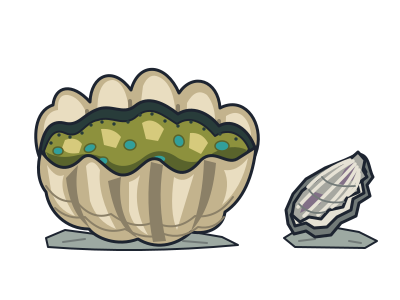
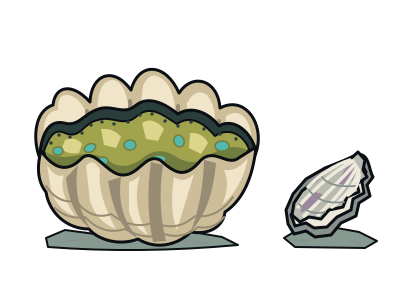
Picture the contrast between an oyster fixed in place and a giant clam, the largest living member of the group. Both share the same basic two-shell body plan, even though this family comes in many shapes and sizes.
Shell-building tissue
A sheet of living tissue called the mantle makes the shells.
Swimming by clapping
Great scallops can escape danger by rapidly clapping their shells, pushing out water to swim.
Food from tiny partners
Giant clams gain food from tiny algae living inside their tissues, as well as collecting drifting food from seawater.
Inside clams and oysters
- Giant clamCan weigh over 200 kilograms and grows algae in its lips.
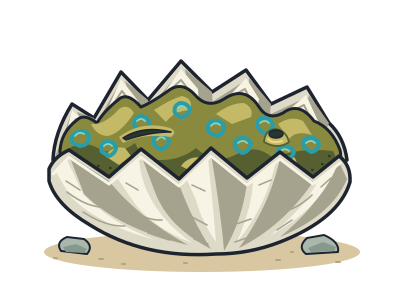
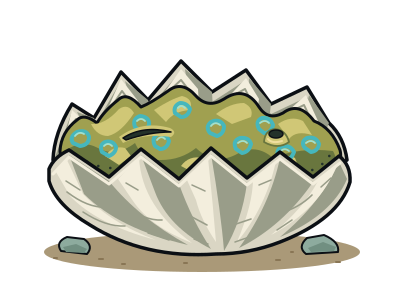
- Pacific oysterFilters about 50 litres of water a day.
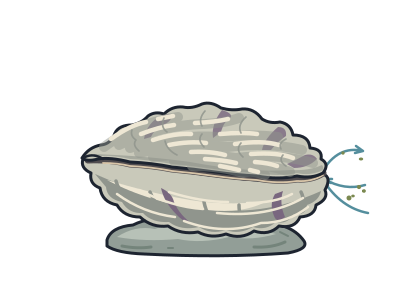
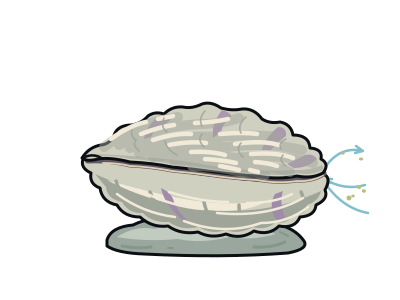
- RudistsCone-shaped clams that built reefs and vanished with the dinosaurs.
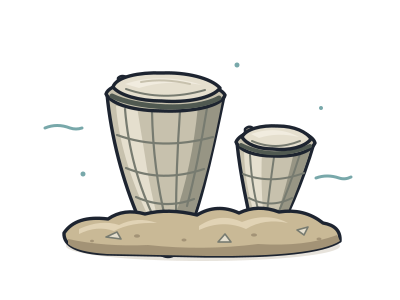
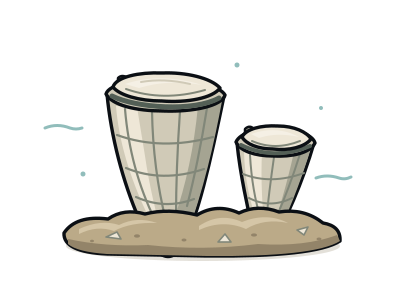
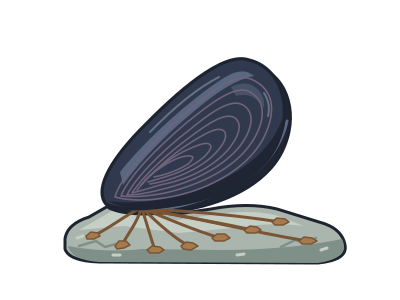
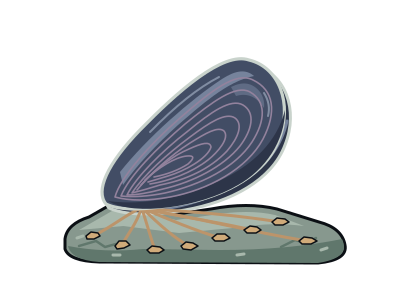
- Blue musselAnchors itself with super-strong threads that inspire underwater glues.
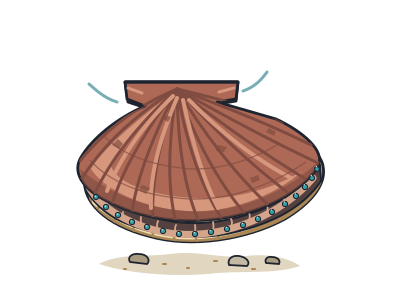
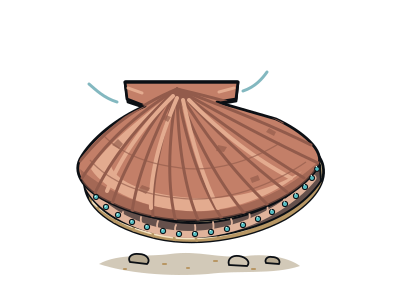
- Great scallopSwims by clapping its shells and watches with up to 200 tiny eyes.
- Ocean quahogOne was 507 years old, the oldest animal whose age is known exactly.
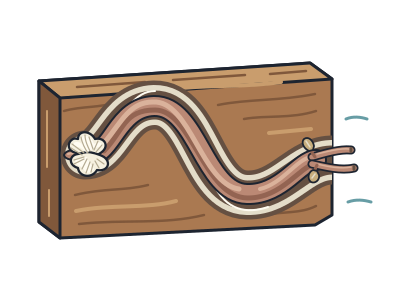
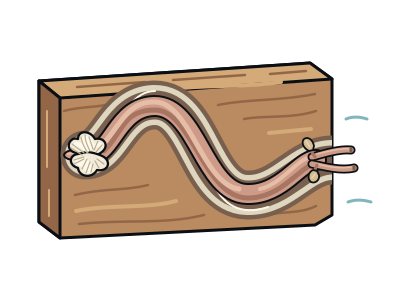
- ShipwormA worm-like clam that bores through wooden ships and piers.
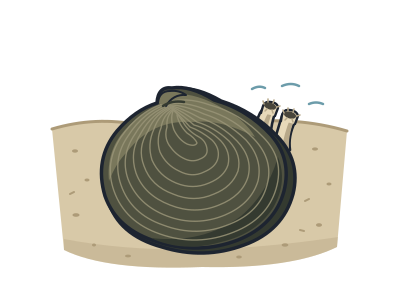
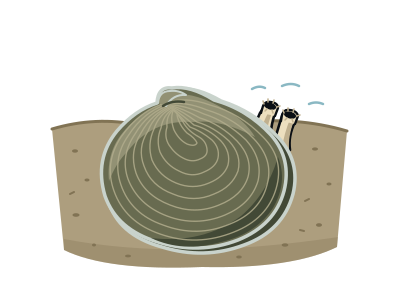
- GeoduckA giant burrowing clam whose neck is too big to fit in its shell; it can live 150 years.
- Freshwater pearl musselA river mussel that can live for over 100 years, and whose rare pearls once decorated royal crowns.
- Disco clamA clam that seems to flash like a disco ball, using light reflected from its lips.
Next to it on the tree
- Fuzzy chitonA mollusc with eight shell plates dotted with hundreds of tiny eyes made of mineral.
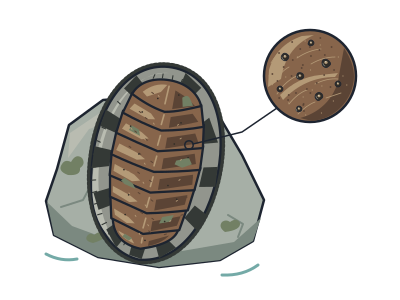
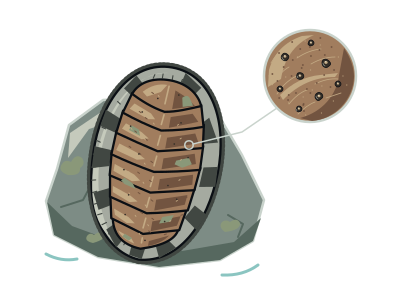
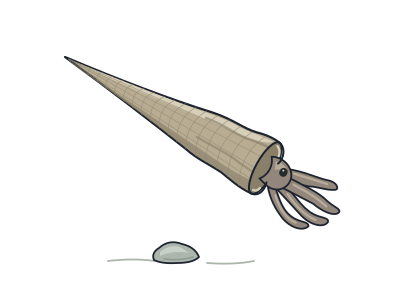
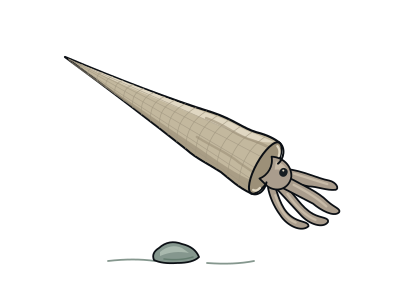
- EndocerasA genus of cone-shelled relatives of squid; large historical shell estimates approach car-length, while diet remains debated.
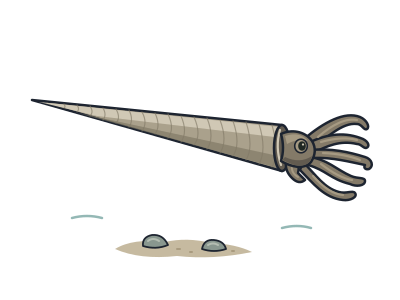
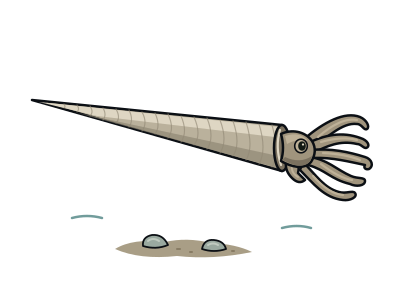
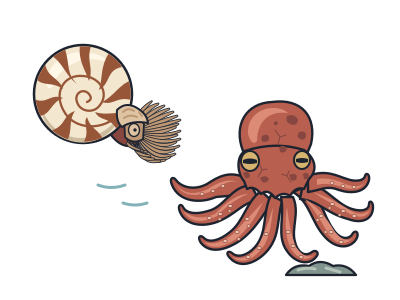
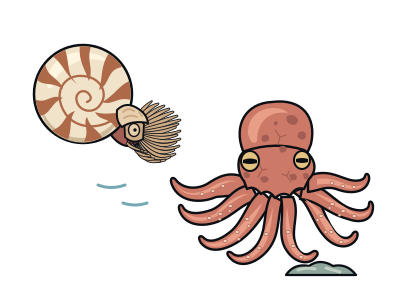
- CephalopodsMolluscs that became fast, clever hunters with arms around the mouth.
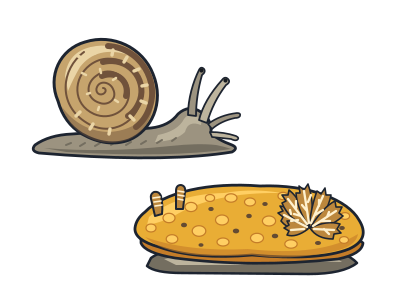
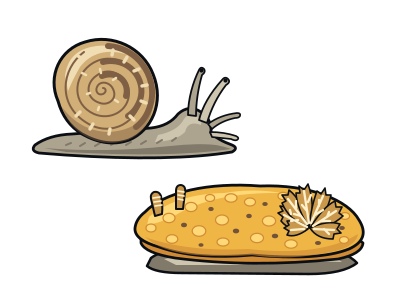
- Snails and slugsMolluscs that twist their bodies as larvae; the most varied mollusc group.
- Tusk shellA mollusc in a tiny elephant-tusk shell that probes sand with sticky threads.
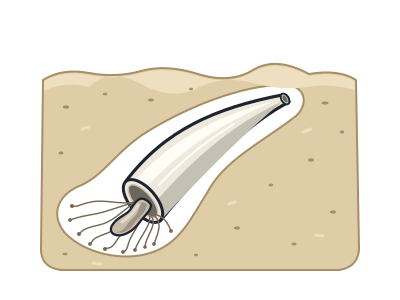
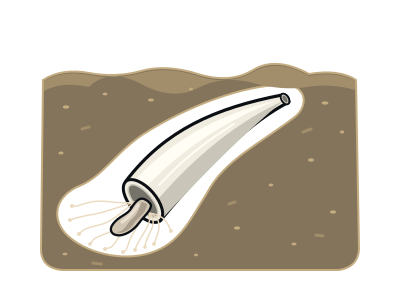
- NeopilinaKnown only from 375-million-year-old fossils until found alive in the deep sea in 1952.
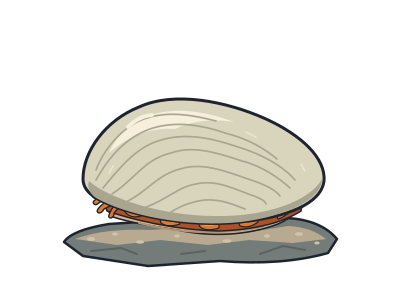
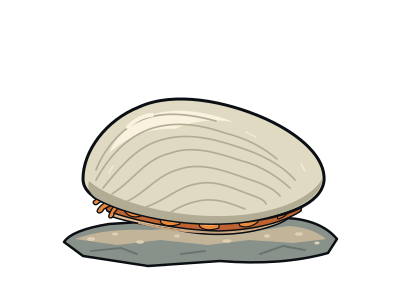
- OrthocerasA squid relative in a straight, pointed shell, sold everywhere as polished fossils.
- Gumboot chitonThe largest chiton, a reddish leathery slab as long as a shoe that hides its shell plates inside.