A group of living things
Cephalopods
Cephalopoda
Snail relatives with arms around their mouths
This branch is shown at about 415 million years ago; its age is a rough estimate.
You and cephalopods meet in the Two-sided animals branch, shown at about 580 million years ago (on 11 November, in a calendar from life's shared ancestor to today).
This mollusc family includes fast hunters and puzzle-solvers—surprising relatives of snails and clams. Their arms and tentacles evolved from the muscular foot found in other molluscs. A hard, bird-like beak sits at the mouth, surrounded by limbs. Yet members of this family lead very different lives.
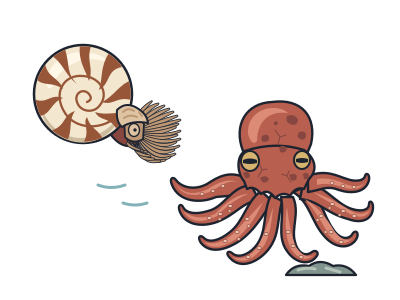
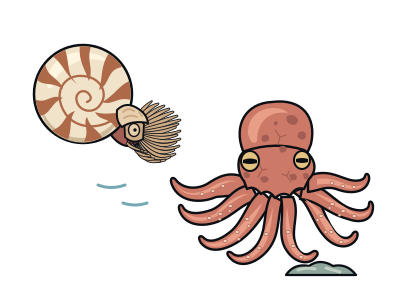
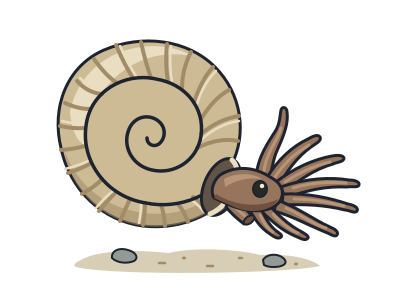
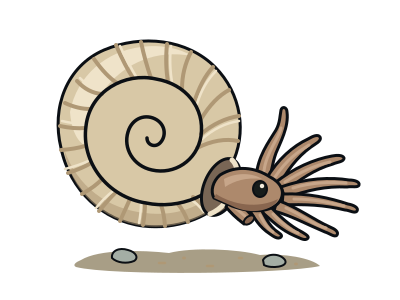
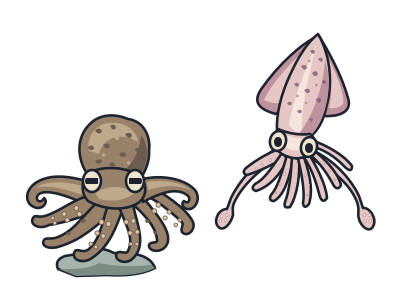
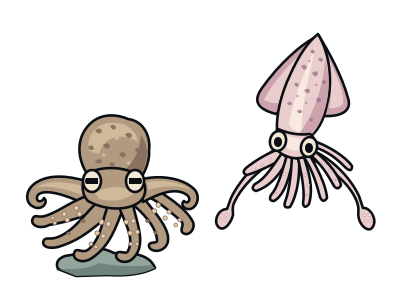
Compare an octopus with a nautilus. An octopus has eight arms, while a nautilus has a crowd of slender tentacles. A nautilus has simple eyes with tiny openings and no lenses; octopus eyes have lenses. Giant Pacific octopuses can learn to open jars and solve puzzles, but that does not mean every member has the same skills.
Many swim by forcing water through a muscular funnel. Like a jet, the escaping water pushes them the opposite way. Bottom-dwelling octopuses commonly crawl instead, saving jet swimming for escape. Many family members hunt fish, crabs and other molluscs. Others feed differently: nautiluses also scavenge, while vampire squid collect drifting scraps.
Head foot
The name cephalopod means ‘head foot’.
Two extra feeding limbs
Cuttlefish and most squid have eight arms plus two specialised feeding tentacles.
Suckers that sense
A giant Pacific octopus’s suckers do more than grip: they also help it taste and smell.
Inside cephalopods
Next to it on the tree
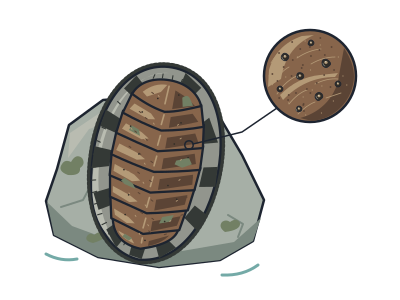
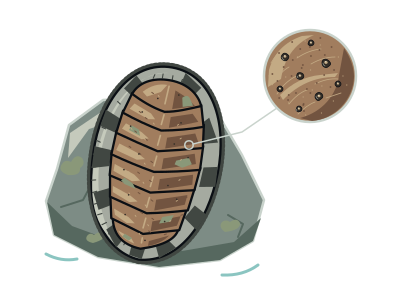
- Fuzzy chitonA mollusc with eight shell plates dotted with hundreds of tiny eyes made of mineral.
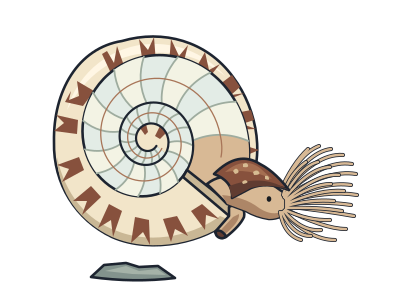
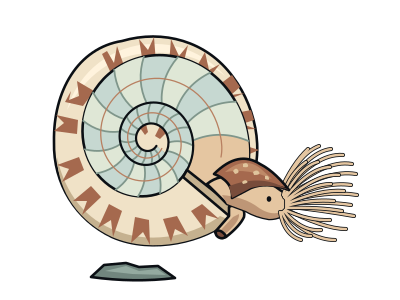
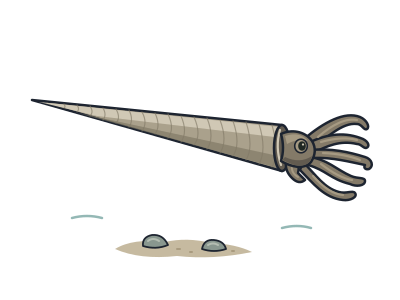
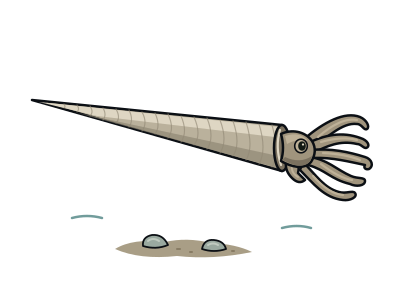
- EndocerasA genus of cone-shelled relatives of squid; large historical shell estimates approach car-length, while diet remains debated.
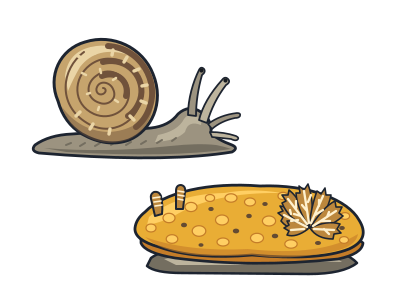
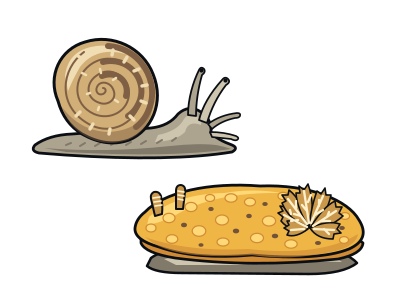
- Snails and slugsMolluscs that twist their bodies as larvae; the most varied mollusc group.
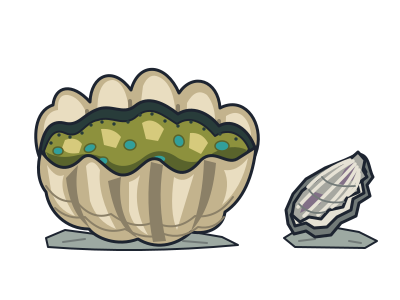
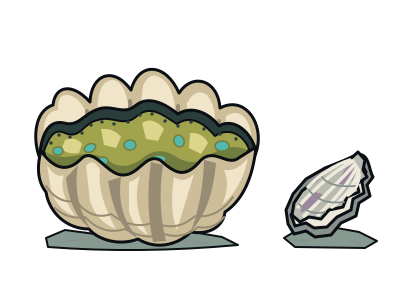
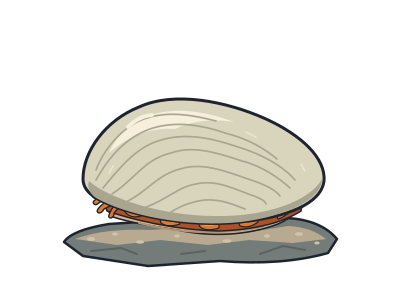
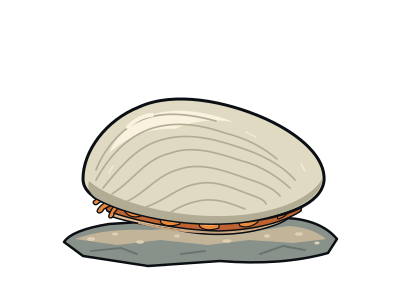
- Clams and oystersMolluscs with two hinged shells and no head.
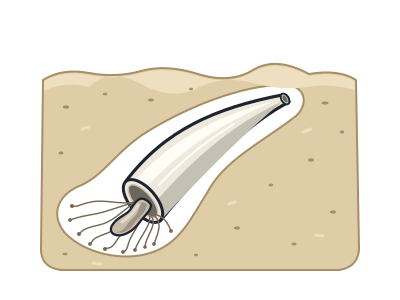
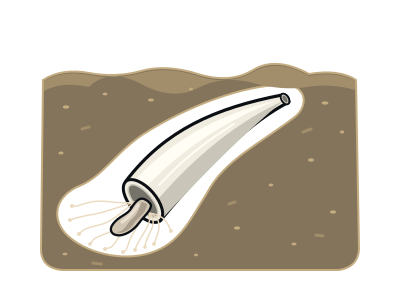
- Tusk shellA mollusc in a tiny elephant-tusk shell that probes sand with sticky threads.
- NeopilinaKnown only from 375-million-year-old fossils until found alive in the deep sea in 1952.
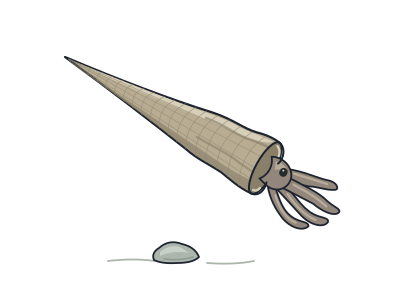
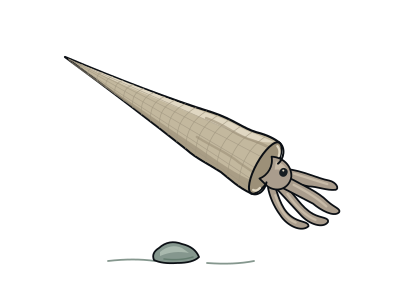
- OrthocerasA squid relative in a straight, pointed shell, sold everywhere as polished fossils.
- Gumboot chitonThe largest chiton, a reddish leathery slab as long as a shoe that hides its shell plates inside.