A group of living things
Octopuses, squid and cuttlefish
Coleoidea
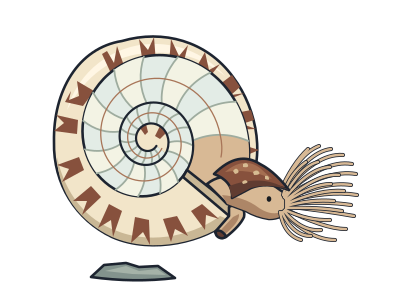
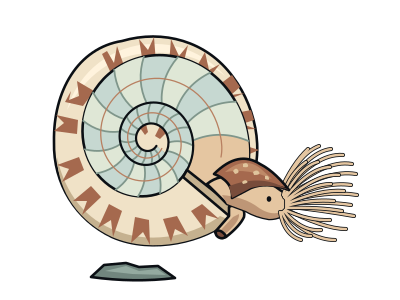
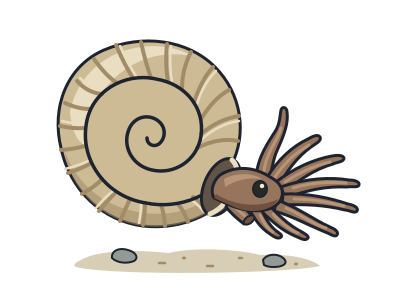
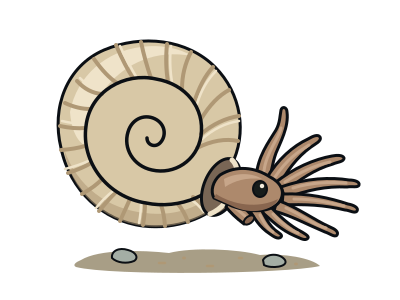
The shell went inside—or disappeared.
This branch is shown at about 260 million years ago; its age is a rough estimate.
You and octopuses, squid and cuttlefish meet in the Two-sided animals branch, shown at about 580 million years ago (on 11 November, in a calendar from life's shared ancestor to today).
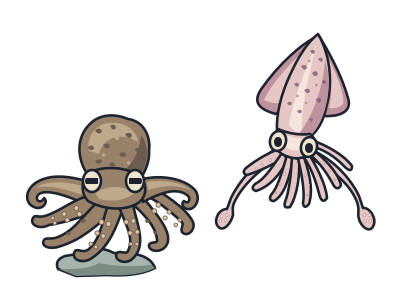
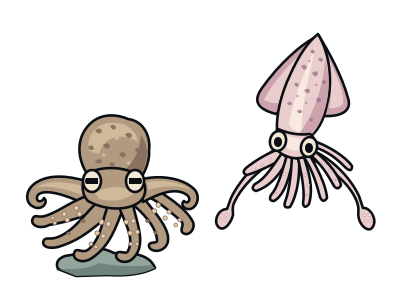
Octopuses, squid and cuttlefish are cephalopods whose ancestors’ outer shells became internal, shrank or disappeared. Their soft bodies can look nothing like a snail or clam, yet all belong to the same wider family: the molluscs. Every living cephalopod except the nautiluses belongs to this branch.
Look inside and the shell story becomes clearer. Many squid have a stiff support called a pen, rather than a bone. A cuttlefish has a cuttlebone: despite its name, this is a chambered inner shell. It helps the animal stay at the right depth without sinking. Many familiar octopuses have lost their shells entirely, though some deep-sea octopuses still have internal supports and fins.
The two main living branches hold another surprise. Squid and cuttlefish sit on one side, while octopuses and vampire squid sit on the other. Despite its name, a vampire squid is more closely related to octopuses than to squid. Names do not always tell the whole family story.
Three hearts and blue blood
These animals have three hearts. Their blood contains a copper-based substance that turns blue when carrying oxygen.
Water-powered movement
They can move by forcing water through a funnel. Bottom-dwelling octopuses also walk across the seabed on their arms.
Learning to open jars
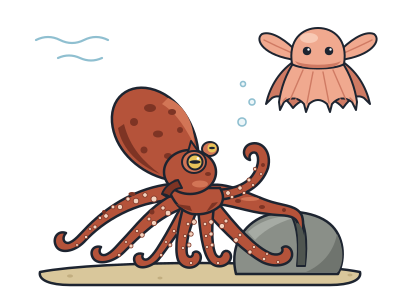
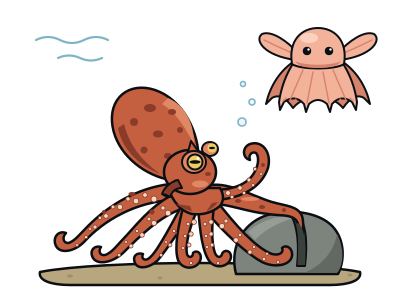
Giant Pacific octopuses can learn to open jars and recognise their aquarium carers.
Inside octopuses, squid and cuttlefish
- BelemnitesSquid-like animals whose bullet-shaped inner shells are common fossils.
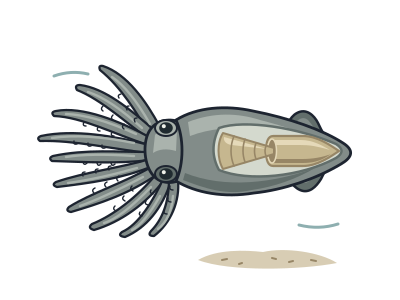
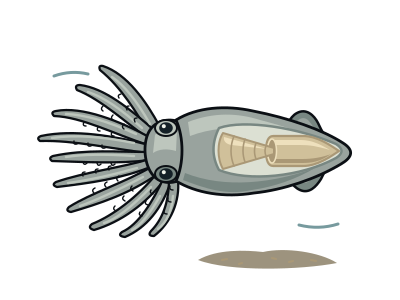
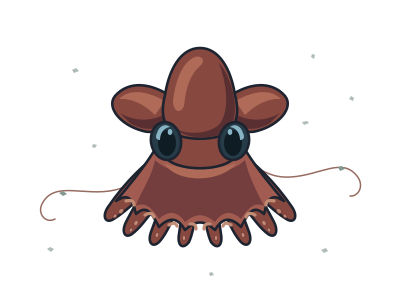
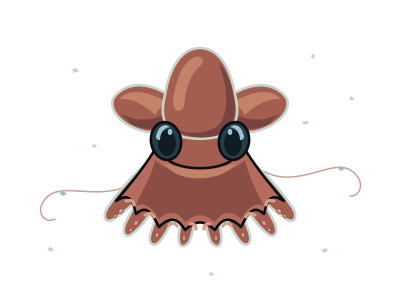
- Vampire squidNeither vampire nor squid: a gentle deep-sea drifter that eats marine snow.
- OctopusesEight-armed cephalopods with no shell at all, able to squeeze through any gap bigger than their beak.
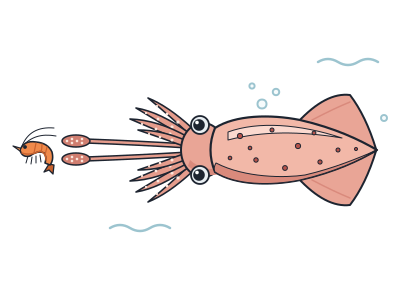
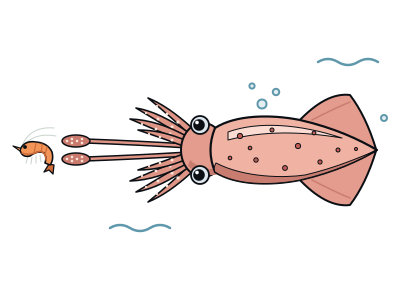
- Squid and cuttlefishCephalopods with eight arms plus two long feeding tentacles that shoot out to grab prey.