A species
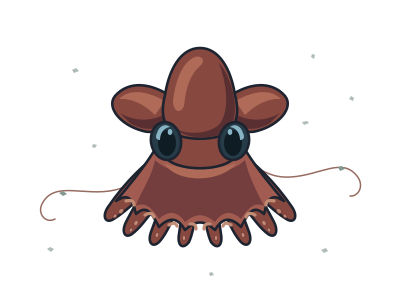
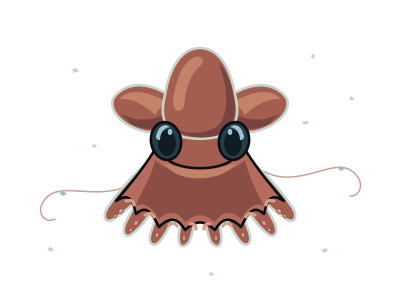
Vampire squid
Vampyroteuthis infernalis
Neither vampire nor squid: a deep-sea drifter dining on marine snow.
You and the vampire squid meet in the Two-sided animals branch, shown at about 580 million years ago (on 11 November, in a calendar from life's shared ancestor to today).
The vampire squid neither drinks blood nor belongs among true squid. It is more closely related to octopuses, yet belongs to a separate group of its own. Its frightening name tells you more about its appearance than its meals.
Its main food is marine snow: scraps sinking from the waters above, not frozen water. These scraps include remains of tiny algae and animals, animal droppings and mucus. Two sticky feeding threads collect the particles. Each thread can stretch to about eight times the animal’s length. It draws these threads through its arms, wrapping the gathered food in mucus before eating it.
This deep-sea drifter lives in the open water of tropical and temperate oceans worldwide, including layers with very little oxygen. When threatened, it folds its webbed arms back over its body. This changes its outline and exposes soft, finger-like projections. Despite their spiky appearance, these are not teeth.
Glowing instead of inking
It does not release ink. When threatened, it can release a cloud of glowing mucus instead.
Lights along its body
Light-producing organs sit at its arm tips, across its skin and in a larger pair near its fins.
No quick colour switch
Unlike many shallow-water squid and octopuses, it cannot rapidly change its overall skin colour.