A group of living things
Squid and cuttlefish
Decapodiformes
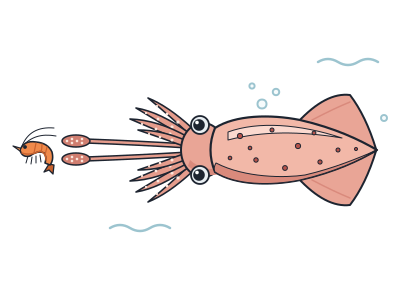
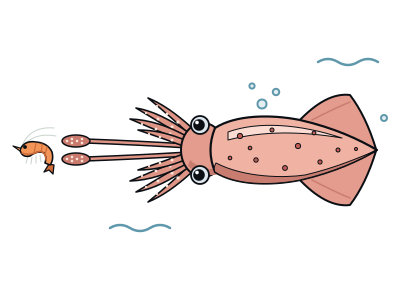
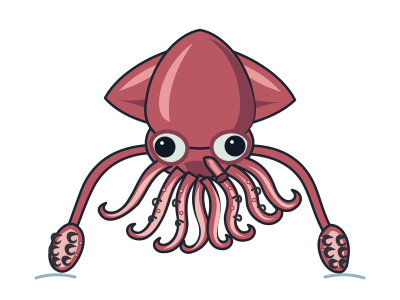
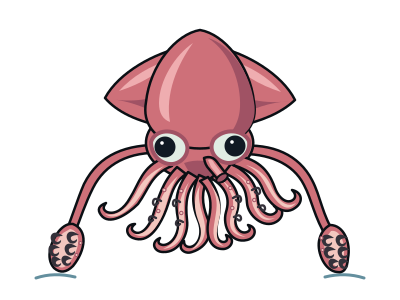
Ten-limbed hunters that shoot out two long tentacles to grab their prey
This branch is shown at about 240 million years ago; its age is a rough estimate.
You and squid and cuttlefish meet in the Two-sided animals branch, shown at about 580 million years ago (on 11 November, in a calendar from life's shared ancestor to today).
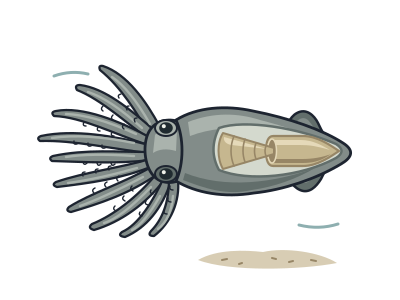
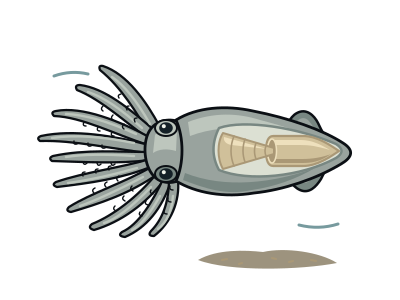
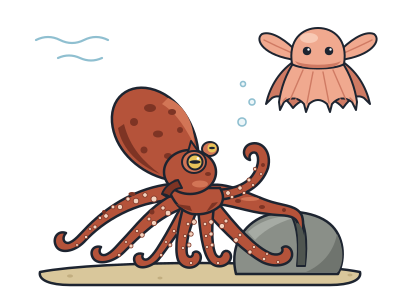
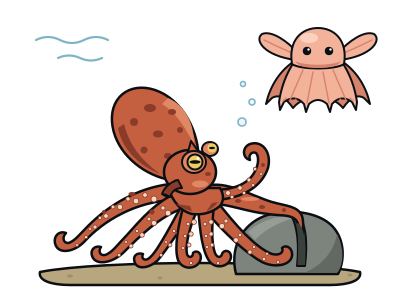
Squid and cuttlefish are relatives of octopuses, but they have a difference you can count. Almost all of them have ten limbs: eight shorter arms plus two long tentacles. Octopuses have eight arms and no tentacles at all.
The two tentacles are built for hunting. Each one is a bare stalk with a sucker-covered club at the tip. When a squid strikes, the stalks stretch up to almost twice their resting length, and the whole strike takes only about 20 to 40 thousandths of a second. That is far quicker than a blink. Once the clubs stick, the stalks pull back. The eight arms then take over, holding the catch and bringing it to the mouth.
Inside, a squid has three hearts, and its blood turns blue when it carries oxygen. Squid swim mostly by jet power, squirting water out through a funnel under the body. They also have a thin, rod-like 'pen' inside them for support.
Sizes vary hugely. Pygmy squids are only 1 to 2 centimetres long, and most squid are under about 60 centimetres. A female giant squid's body and arms together are about 5 metres long, longer than a car, and its eyes are as big as dinner plates.
Learning to strike
Newly hatched squid can't do the tentacle strike yet. Until they are about 40 days old, their tentacles work like extra arms.
Hooks, not just suckers
The colossal squid is the heaviest known animal without a backbone. One caught near Antarctica in 2007 weighed 495 kilograms, and its tentacle clubs carry two rows of sharp, swivelling hooks.
Hiding with moonlight
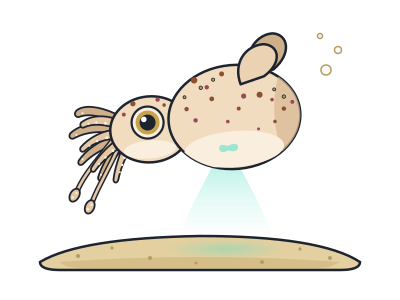
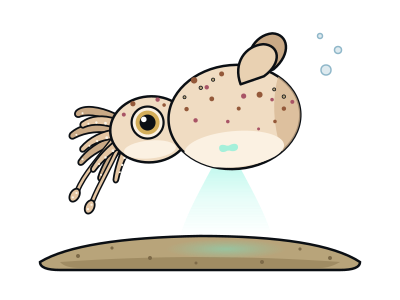
The Hawaiian bobtail squid keeps glowing bacteria in a light organ on its underside. At night their light matches the moonlight from above, so the squid casts no shadow. Each dawn it pushes out most of the bacteria, and the rest grow back by nightfall.
Inside squid and cuttlefish
- European squidA jet-propelled hunter whose giant nerve fibres taught us how nerves work.
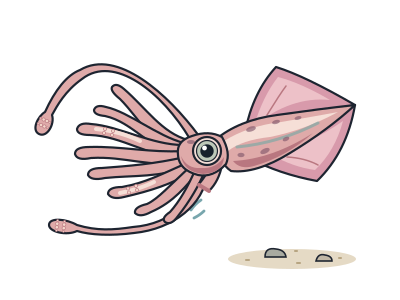
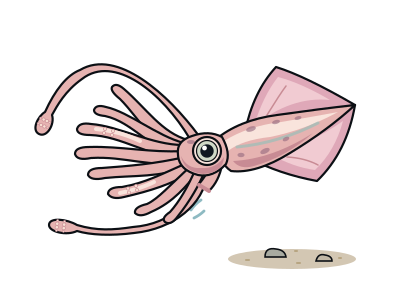
- Giant squidEyes as big as dinner plates; first photographed alive in the wild only in 2004.
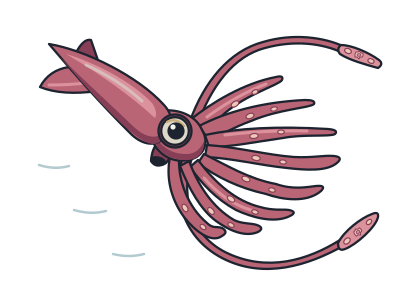
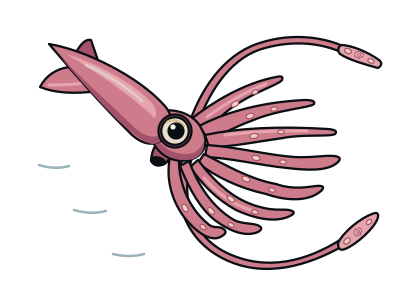
- Colossal squidHeavier than the giant squid, with swivelling hooks on its arms and the largest eyes known.
- CuttlefishColour-changing cephalopods that steer their buoyancy with a chambered internal shell.
- Hawaiian bobtail squidA thumb-sized squid that hides its shadow at night with a glowing organ full of friendly bacteria.
- Humboldt squidHunts in large, fast schools and flashes red and white to signal to its companions.
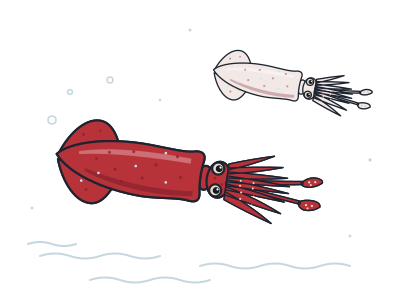
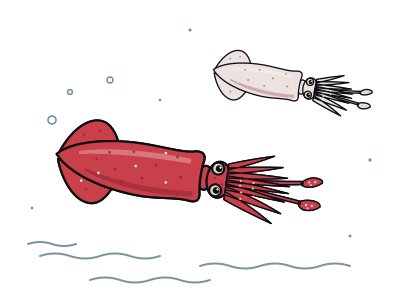
- Firefly squidEach spring, millions light up Toyama Bay in Japan with sparkling blue lights.
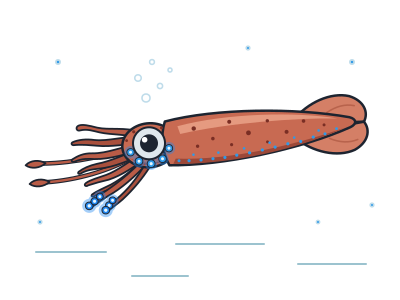
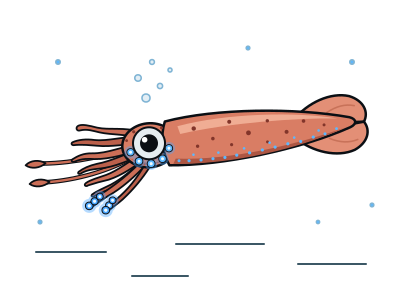
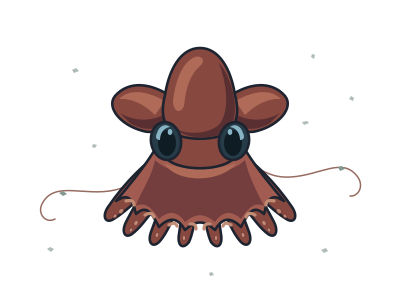
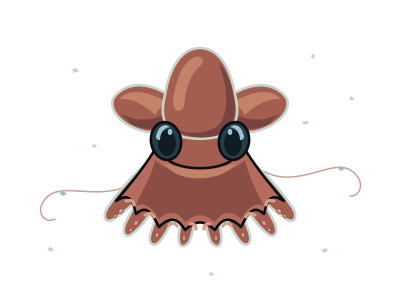
- Ram's horn squidA small deep-sea squid with a coiled shell inside it, found washed up on beaches worldwide.