A species
Colossal squid
Mesonychoteuthis hamiltoni
A heavyweight with swivelling hooks and enormous eyes
You and the colossal squid meet in the Two-sided animals branch, shown at about 580 million years ago (on 11 November, in a calendar from life's shared ancestor to today).
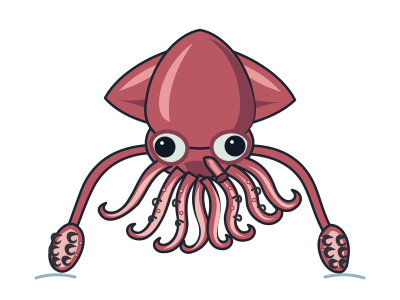
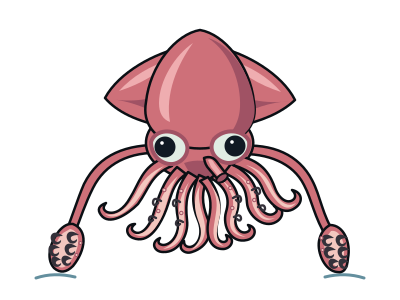
Heavier than the giant squid, but not as long, the colossal squid has the largest animal eyes ever studied. Despite their similar names, these squid are only distant relatives. The colossal squid belongs to the glass squid family, alongside piglet squids. Its enormous eyes face forwards and are roughly soccer-ball-sized.
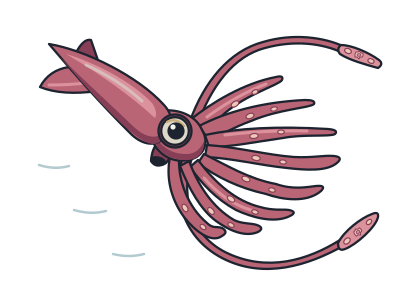
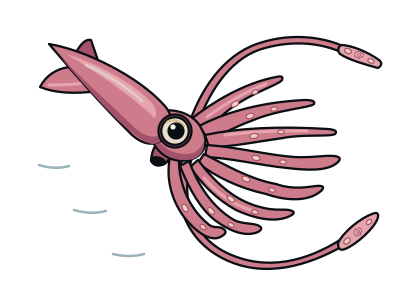
Eight arms and two longer feeding tentacles surround its mouth. The tentacles end in widened tips carrying hooks that can swivel through a full circle. Its arms carry hooks too, but those stay fixed. So the swivelling hooks belong on the two long tentacles, not on the eight shorter arms.
This squid lives in cold Southern Ocean waters around Antarctica. Large individuals live deep down, often about a kilometre or more below the surface. Young ones occur in shallower water. It is the heaviest known living animal without a backbone, yet much of its life remains poorly understood.
Eyes with lights
Each huge eyeball carries a light-producing organ.
Named in 1925
Scientists first described the species using two sets of arms recovered from a sperm whale’s stomach.
A meal for other animals
A 2017 review recorded colossal squid in the diets of 17 predator species, including seabirds, fishes and marine mammals.
Next to it on the tree
- European squidA jet-propelled hunter whose giant nerve fibres taught us how nerves work.
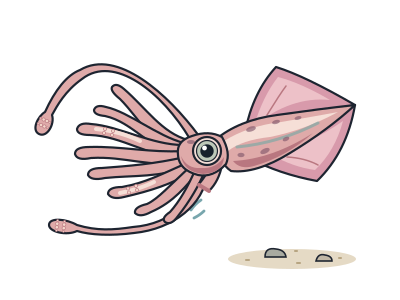
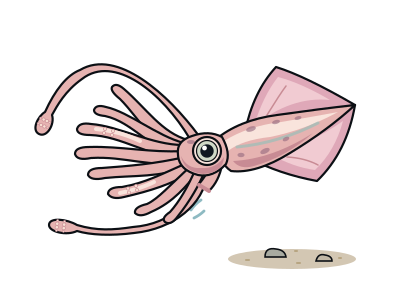
- Giant squidEyes as big as dinner plates; first photographed alive in the wild only in 2004.
- CuttlefishColour-changing cephalopods that steer their buoyancy with a chambered internal shell.
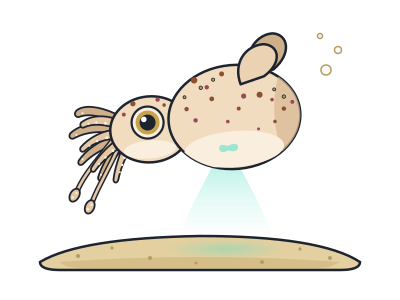
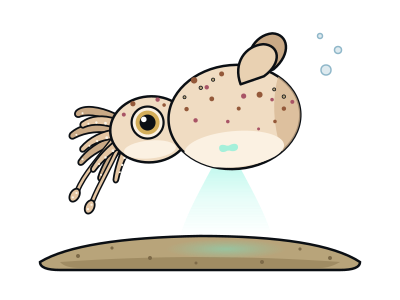
- Hawaiian bobtail squidA thumb-sized squid that hides its shadow at night with a glowing organ full of friendly bacteria.
- Humboldt squidHunts in large, fast schools and flashes red and white to signal to its companions.
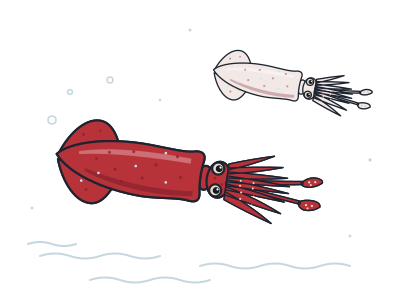
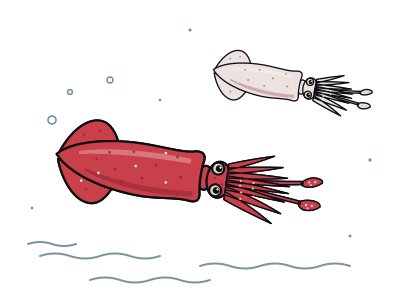
- Firefly squidEach spring, millions light up Toyama Bay in Japan with sparkling blue lights.
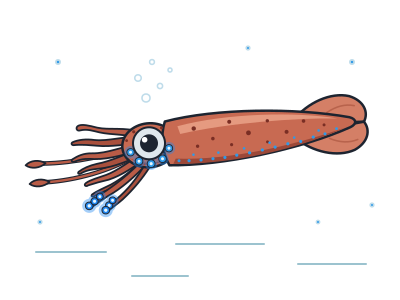
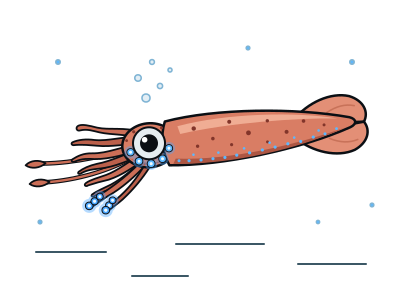
- Ram's horn squidA small deep-sea squid with a coiled shell inside it, found washed up on beaches worldwide.