A species
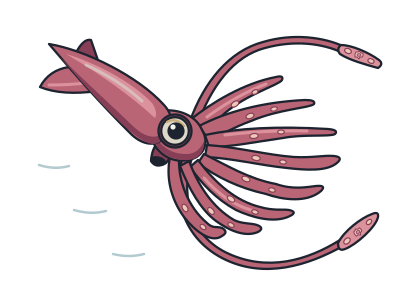
Giant squid
Architeuthis dux
Dinner-plate eyes, hidden in the deep
You and the giant squid meet in the Two-sided animals branch, shown at about 580 million years ago (on 11 November, in a calendar from life's shared ancestor to today).
With eyes as big as dinner plates, the giant squid is a startling relative of snails and clams. All belong to the molluscs, a broad animal group that also includes octopuses and cuttlefish. Despite its size, the first photographs of a living giant squid in the wild were taken only in 2004. Researchers captured them off Japan, about 900 metres below the surface.
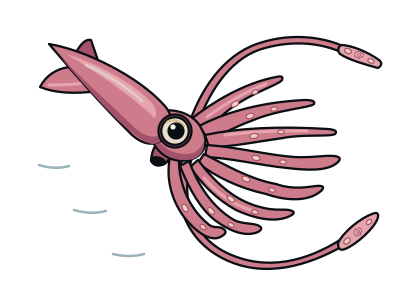
It lives in deep, cold ocean water. It has eight arms and two much longer feeding tentacles, not ten matching tentacles. The long pair ends in widened tips lined with suckers. The arms bring food towards a hard beak at their centre.
To move, it forces water through a funnel beneath its body. Its home spans oceans around the world, especially cooler waters outside the tropics. For most visitors, seeing a preserved specimen in a museum is far more practical than hoping to meet one at sea.
A later film debut
The first film of a giant squid in its natural deep-sea habitat was recorded in 2012.
Food through the brain
Its brain forms a ring. The tube carrying food to its stomach passes through the middle.
The biggest are females
The largest known specimens are female. Males appear to reach smaller maximum sizes.
Next to it on the tree
- European squidA jet-propelled hunter whose giant nerve fibres taught us how nerves work.
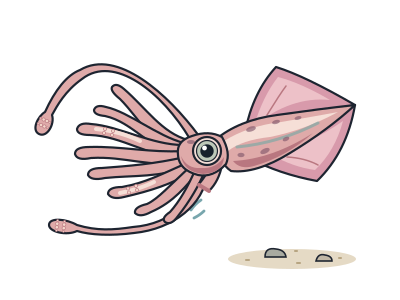
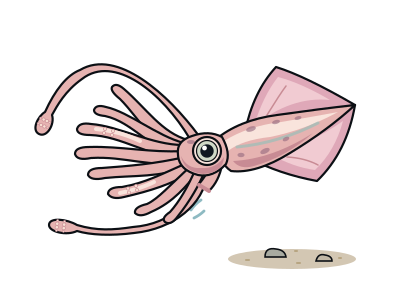
- Colossal squidHeavier than the giant squid, with swivelling hooks on its arms and the largest eyes known.


- CuttlefishColour-changing cephalopods that steer their buoyancy with a chambered internal shell.
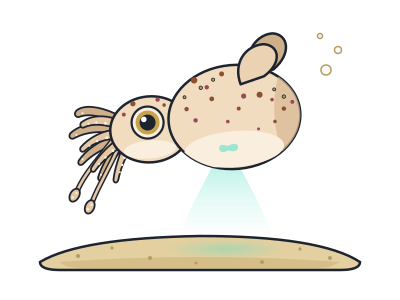
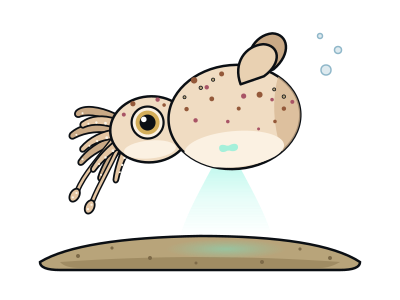
- Hawaiian bobtail squidA thumb-sized squid that hides its shadow at night with a glowing organ full of friendly bacteria.
- Humboldt squidHunts in large, fast schools and flashes red and white to signal to its companions.


- Firefly squidEach spring, millions light up Toyama Bay in Japan with sparkling blue lights.
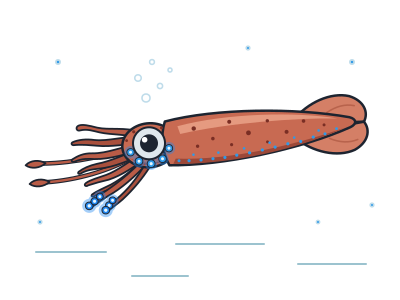
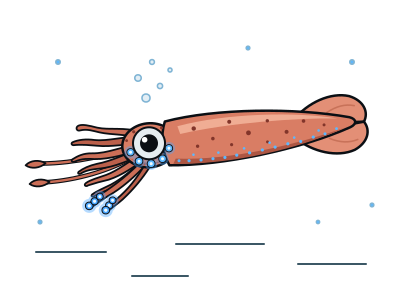
- Ram's horn squidA small deep-sea squid with a coiled shell inside it, found washed up on beaches worldwide.