A species
Firefly squid
Watasenia scintillans
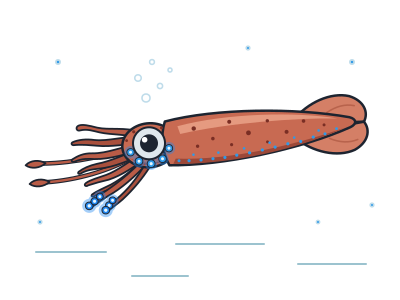
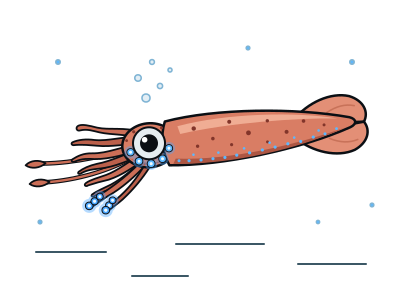
A finger-sized squid that turns a Japanese bay into a sea of blue sparks every spring.
You and the firefly squid meet in the Two-sided animals branch, shown at about 580 million years ago (on 11 November, in a calendar from life's shared ancestor to today).
Each spring, millions of firefly squid come up from the deep sea into Toyama Bay, on Japan's west coast, to lay their eggs. At night the water sparkles with their bright blue lights. The glow comes from the squid themselves, not from tiny plankton. Most of these squid are females near the end of their lives. By then, most of the males have already died after mating.
Despite the name, this squid is only a very distant relative of fireflies, which are beetles. It is a mollusc, a relative of the giant squid and cuttlefish. Its light-making proteins belong to the same broad family as a firefly's, but they are only about 20% alike and use a different fuel chemical. Squid and beetles evolved their glow separately.
The firefly squid is small, about 7.5 cm long, or roughly the length of a little finger. About 800 to 1,000 tiny light organs dot its underside. Five larger ones sit below each eye. Three very bright ones are at the tip of each arm in its fourth pair. These arm-tip lights are packed with tiny rod-shaped crystals. No other living thing has been found to make light this way.
A daily lift ride
Every day it travels up and down the sea. By day it stays about 300 to 400 metres deep, and at night it rises to about 20 to 60 metres below the surface.
Maybe sees in colour
Most squid and octopuses are thought to be colour-blind. This squid's eyes have three different light-sensing pigments, which may let it tell colours apart.
A protected patch of sea
The stretch of sea along the Toyama coast where the squid swarm became a national natural monument in 1922. In 1952 it was made a Special Natural Monument.
Next to it on the tree
- European squidA jet-propelled hunter whose giant nerve fibres taught us how nerves work.
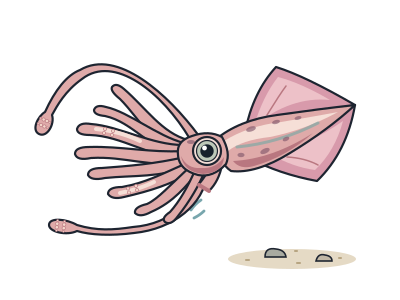
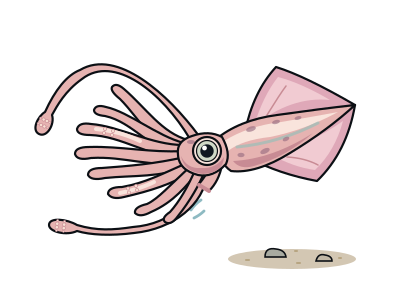
- Giant squidEyes as big as dinner plates; first photographed alive in the wild only in 2004.
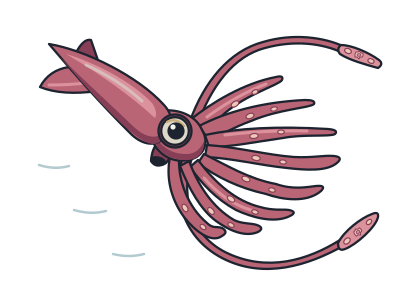
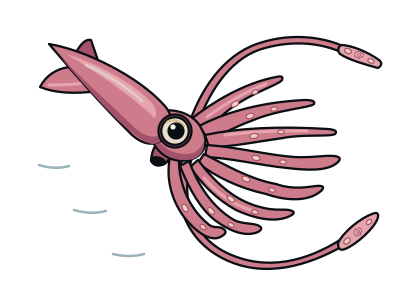
- Colossal squidHeavier than the giant squid, with swivelling hooks on its arms and the largest eyes known.
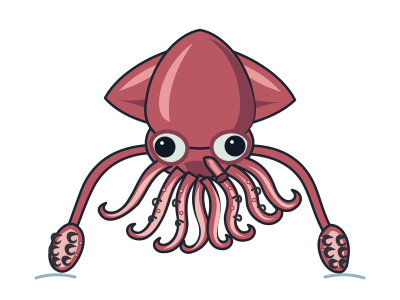
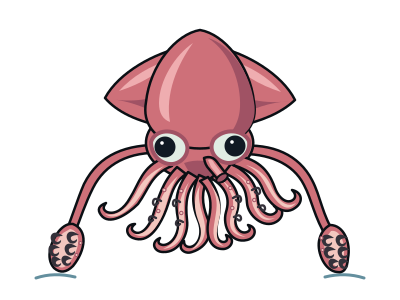
- CuttlefishColour-changing cephalopods that steer their buoyancy with a chambered internal shell.
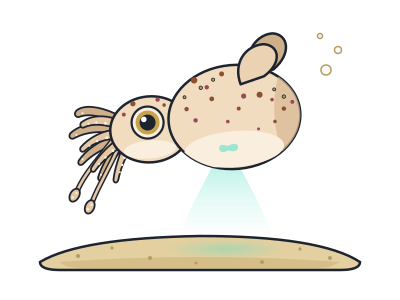
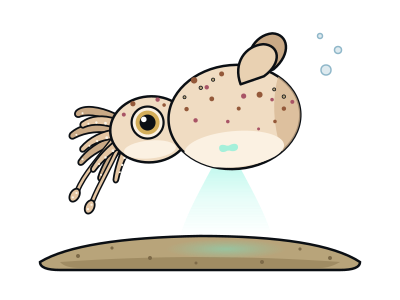
- Hawaiian bobtail squidA thumb-sized squid that hides its shadow at night with a glowing organ full of friendly bacteria.
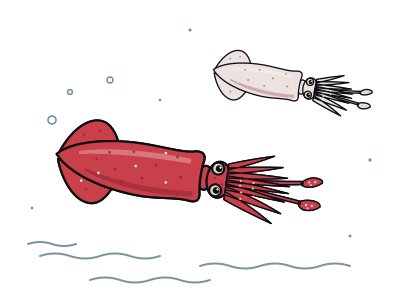
- Humboldt squidHunts in large, fast schools and flashes red and white to signal to its companions.

- Ram's horn squidA small deep-sea squid with a coiled shell inside it, found washed up on beaches worldwide.