A species
Hawaiian bobtail squid
Euprymna scolopes
A thumb-sized squid that hides its shadow with a night-light made by bacteria.
You and the hawaiian bobtail squid meet in the Two-sided animals branch, shown at about 580 million years ago (on 11 November, in a calendar from life's shared ancestor to today).
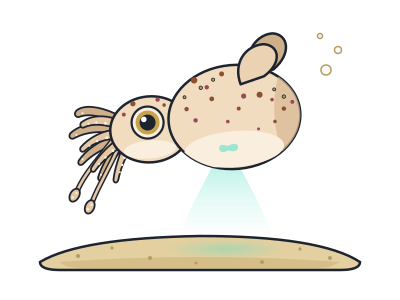
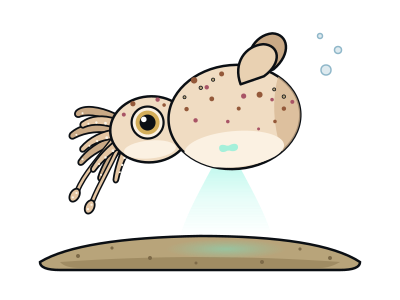
This squid is only about as big as your thumb, but it carries its own night-light. Inside its body is a special light organ full of glowing bacteria. On a moonlit night, a hunter looking up from below would usually see a dark squid shape against the bright water above. Instead, the squid shines a soft glow downward that matches the moonlight and starlight, so its shadow seems to disappear.
The squid does not make the light itself. The bacteria do, and the squid aims and dims their glow to match the brightness above. In return, it feeds them sugars and other nutrients.
Babies hatch without any bacteria. Within hours they catch the right kind from the seawater, using sticky mucus as a net. Every morning at dawn, the squid squirts most of its bacteria back into the sea. The rest regrow during the day while it hides buried in the sand.
It lives only in shallow water around Hawaii and Midway, and comes out at night to ambush small shrimp. On the tree it sits in the squid and cuttlefish group, next to relatives as huge as the giant squid and the colossal squid.
Squid in space
In June 2021, NASA sent newly hatched bobtail squid to the International Space Station. Scientists wanted to see how weightlessness affects the squid's partnership with its bacteria.
Strength in numbers
The bacteria only start to glow about 12 hours after a hatchling first meets them, once enough of them have gathered. They work out how crowded they are using chemical signals.
Seal snack
Hawaiian monk seals eat these little squid in the north-western Hawaiian Islands.
Next to it on the tree
- European squidA jet-propelled hunter whose giant nerve fibres taught us how nerves work.
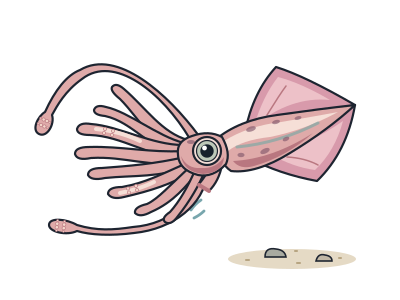
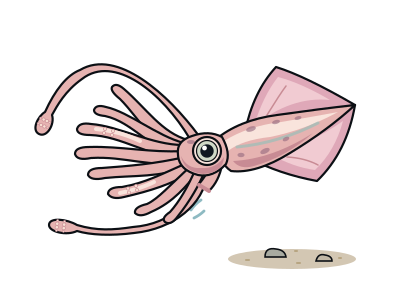
- Giant squidEyes as big as dinner plates; first photographed alive in the wild only in 2004.
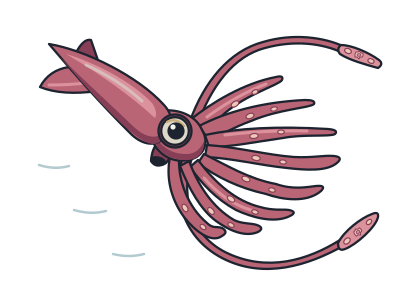
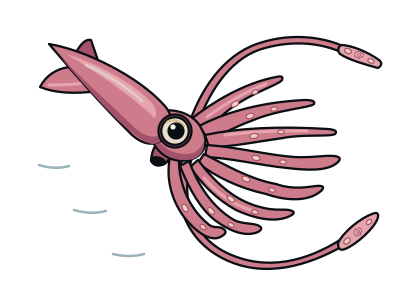
- Colossal squidHeavier than the giant squid, with swivelling hooks on its arms and the largest eyes known.
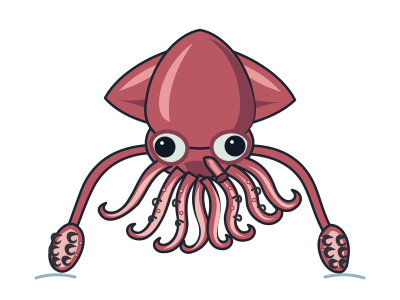
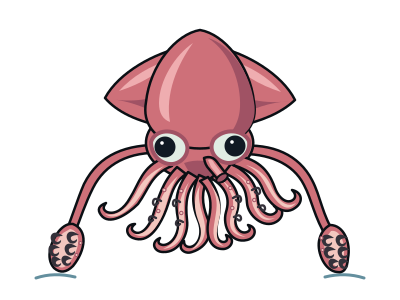
- CuttlefishColour-changing cephalopods that steer their buoyancy with a chambered internal shell.
- Humboldt squidHunts in large, fast schools and flashes red and white to signal to its companions.
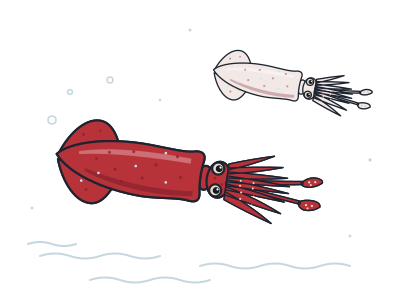
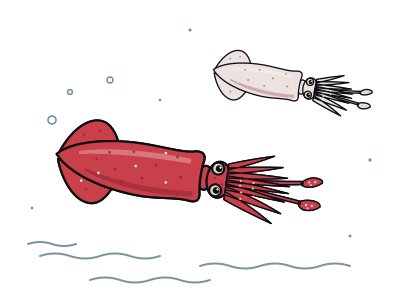
- Firefly squidEach spring, millions light up Toyama Bay in Japan with sparkling blue lights.
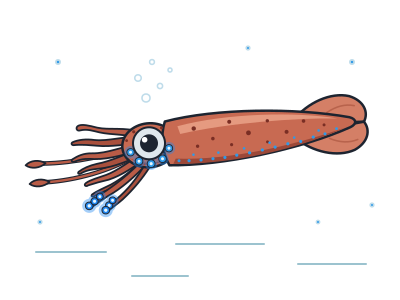
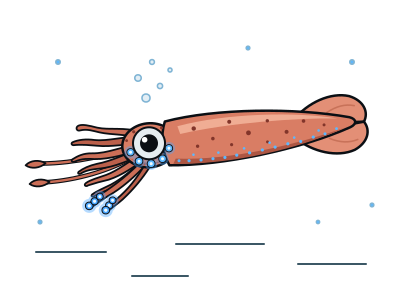
- Ram's horn squidA small deep-sea squid with a coiled shell inside it, found washed up on beaches worldwide.