A species
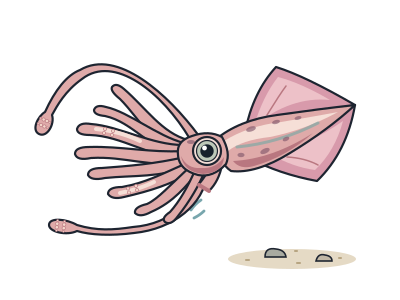
European squid
Loligo vulgaris
A jet-powered hunter with a place in the story of nerves
You and the european squid meet in the Two-sided animals branch, shown at about 580 million years ago (on 11 November, in a calendar from life's shared ancestor to today).
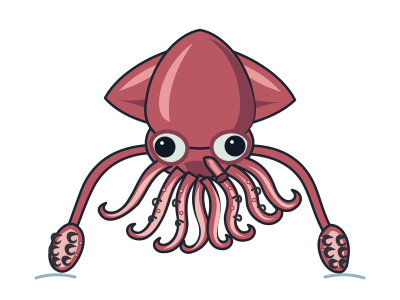
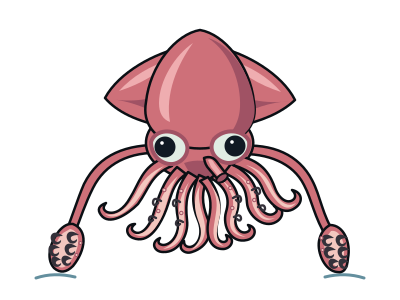
The European squid is a jet-propelled hunter with a surprising family claim to fame. Squid have unusually thick nerve fibres that helped scientists discover how nerves carry electrical signals. The famous studies included the related veined squid, rather than European squid alone. “Giant” describes the nerve fibre: it does not mean the animal was a giant squid.
Despite its streamlined shape, this hunter is not a fish. It belongs to the molluscs, alongside octopuses and cuttlefish, with snails and clams among its wider relatives. Its shell is hidden inside its body as a thin, flexible support shaped like a pen.
It uses jet propulsion to hunt and escape. Its broad fins help with slower, controlled swimming. Those fins form a diamond-like outline around much of the body. Its meals include small fish and shrimps.
Three hearts
Two hearts pump blood through the gills. A third supplies the rest of the body.
Changing colours
It can change colour quickly by expanding and shrinking tiny structures containing pigment in its skin.
An inky escape
It can release an ink cloud to confuse a predator while escaping.
Next to it on the tree
- Giant squidEyes as big as dinner plates; first photographed alive in the wild only in 2004.
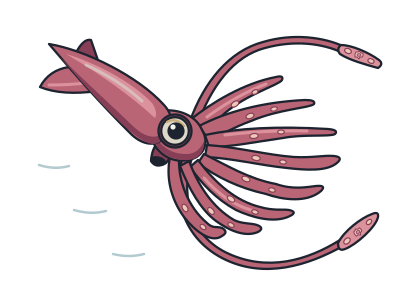
- Colossal squidHeavier than the giant squid, with swivelling hooks on its arms and the largest eyes known.
- CuttlefishColour-changing cephalopods that steer their buoyancy with a chambered internal shell.
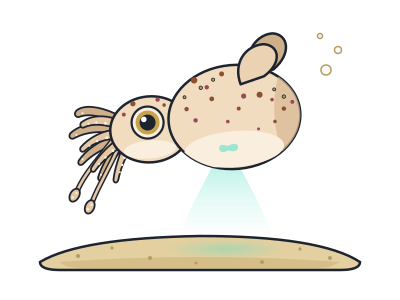
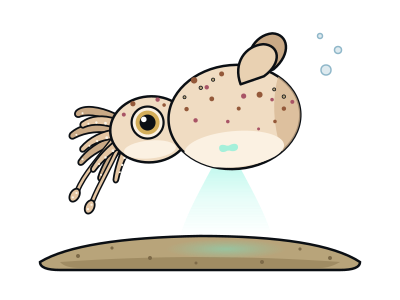
- Hawaiian bobtail squidA thumb-sized squid that hides its shadow at night with a glowing organ full of friendly bacteria.
- Humboldt squidHunts in large, fast schools and flashes red and white to signal to its companions.

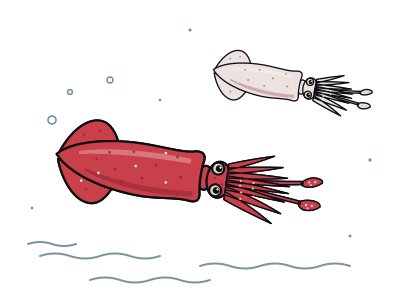
- Firefly squidEach spring, millions light up Toyama Bay in Japan with sparkling blue lights.
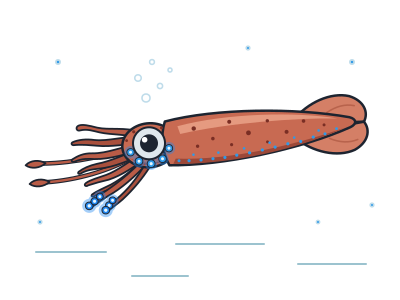
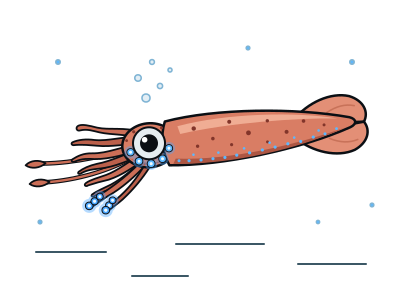
- Ram's horn squidA small deep-sea squid with a coiled shell inside it, found washed up on beaches worldwide.