A species
Greater argonaut
Argonauta argo
An octopus mum who builds a paper-thin shell to carry her eggs
You and the greater argonaut meet in the Two-sided animals branch, shown at about 580 million years ago (on 11 November, in a calendar from life's shared ancestor to today).
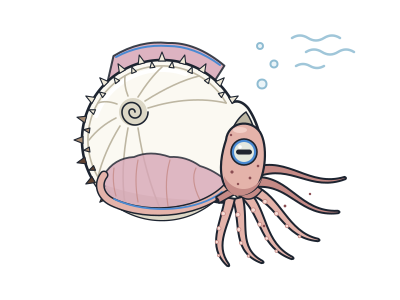
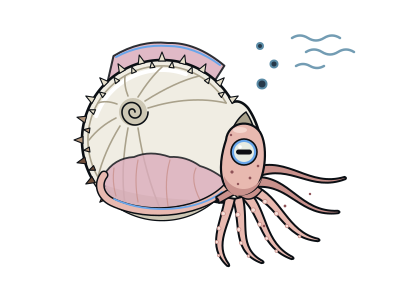
The female greater argonaut is an octopus, a relative of the common octopus, that builds her own shell. It is paper-thin, white, brittle and coiled into a spiral. It is not a home like a snail's shell. It is a floating cradle: she lays her eggs inside it and guards them there. Males never make one.
People often call it a 'paper nautilus', but it has nothing to do with a nautilus shell. Her arms make it, and it evolved quite separately. A 2022 study of her genes found that she builds it mostly with borrowed proteins that normally do other jobs, not the usual shell-making ones.
The shell is also a clever float. She swims up to the surface, gulps air into the top of the shell and seals it in with her arms. Then she jets downwards. At about 7 to 8 metres deep, the squeezed air balances her weight and she hovers without effort. When scientists turned argonauts right round underwater, not a single bubble escaped.
Females and males are very different. A female's body can reach about 10 centimetres, and her shell can grow to about 30 centimetres, about as long as a school ruler. The male is only about 2 centimetres long, roughly 600 times lighter than her, and has no shell.
A tiny genome
When scientists read its genome in 2022, it was the smallest known for any octopus, squid or cuttlefish. It was less than half the size of the others studied.
An ancient sailing myth
About 2,300 years ago, Aristotle suggested that argonauts sailed on the sea surface, using their arms as sails and oars. The idea lasted for centuries, but it is false. They swim by squirting out jets of water like other octopuses.
Thousands of eggs
One female was found carrying about 48,800 developing eggs inside her shell.
Next to it on the tree
- Common octopusThree hearts, blue blood, and arms that taste and think for themselves.
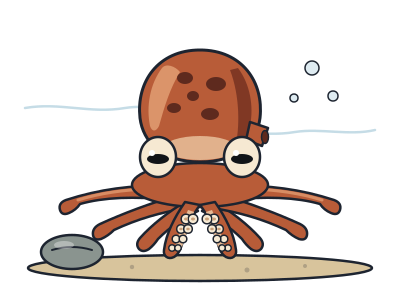
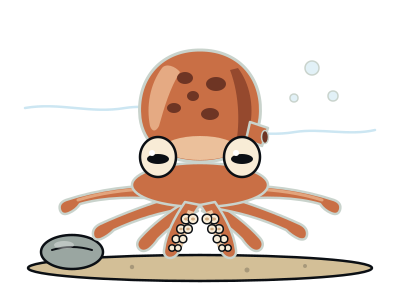
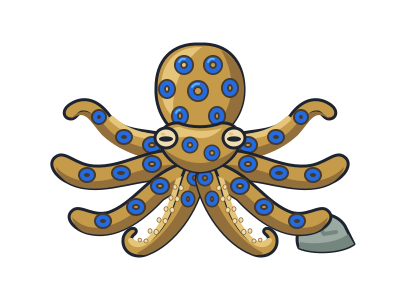
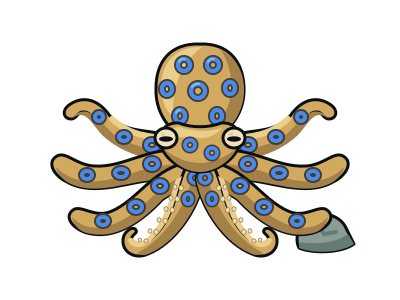
- Blue-ringed octopusSmall enough to fit in a palm, it flashes blue rings as a warning of deadly venom.
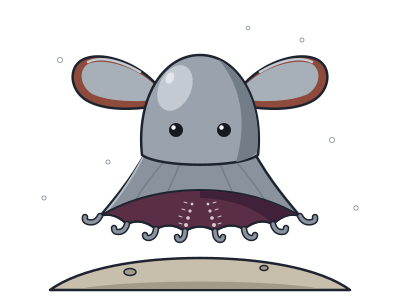
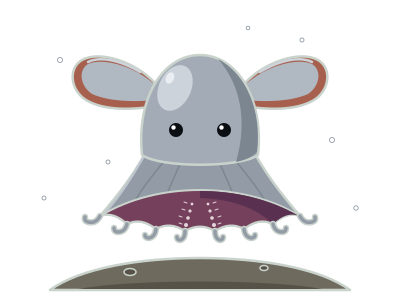
- Dumbo octopusA deep-sea octopus that flaps two ear-like fins, like Disney's flying elephant.
- Mimic octopusImpersonates lionfish, flatfish and sea snakes by changing its shape and colour.
- Giant Pacific octopusThe largest octopus, with arms spanning several metres, yet it lives only about four years.