A group of living things
Octopuses
Octopoda
Soft-bodied, eight-armed escape artists with almost no shell left
This branch is shown at about 200 million years ago; its age is a rough estimate.
You and octopuses meet in the Two-sided animals branch, shown at about 580 million years ago (on 11 November, in a calendar from life's shared ancestor to today).
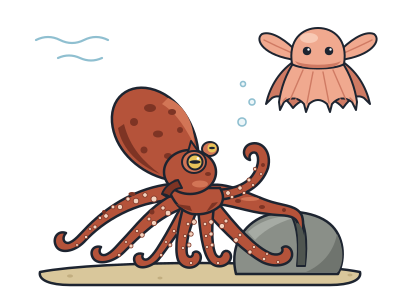
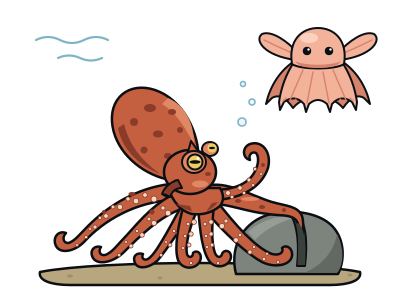
An octopus is a mollusc that has given up its hard shell almost completely. Scientists think its closest living relative is the vampire squid. Squid and cuttlefish are more distant cousins. Its only hard part is its beak, hidden in the middle of its eight arms. If the beak fits through a gap, the rest of the soft body can follow. A fully grown giant Pacific octopus can fit through a hole about the size of a lemon.
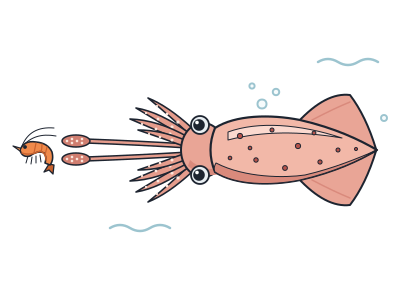
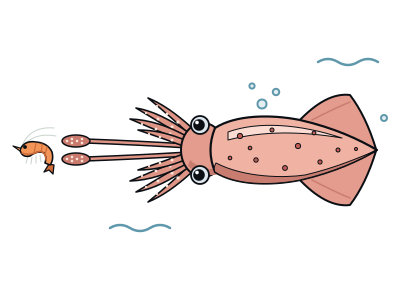
Squid and cuttlefish have two extra long feeding tentacles as well as eight arms. Octopuses have only the eight arms, lined with suckers. Inside, an octopus has three hearts and blue blood, coloured by a protein rich in copper. Many shallow-water octopuses can change colour in seconds and squirt a cloud of ink to escape.
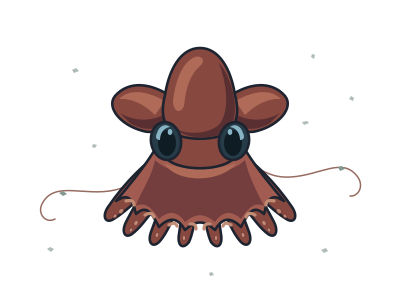
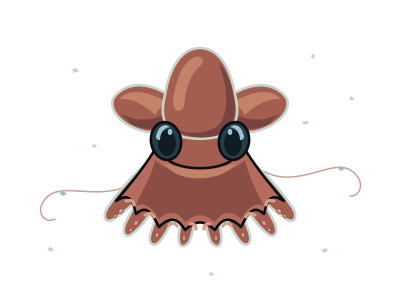
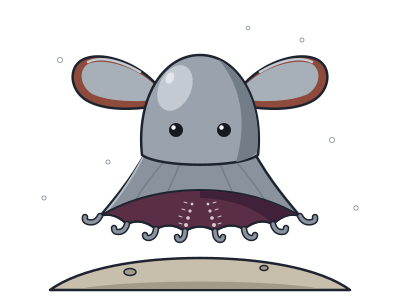
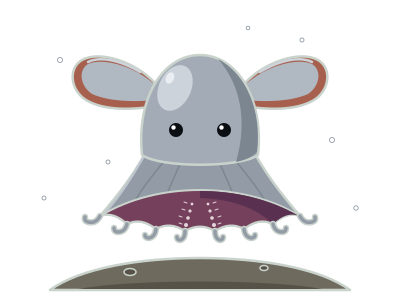
There are about 300 kinds of octopus, and they live in every ocean. The common octopus hunts in rocky shallows, and its arms can grow up to about a metre long. Dumbo octopuses live in the deep sea, and one holds the record as the deepest octopus ever seen. They flap two ear-like fins to swim. Dumbos still keep a soft leftover of a shell inside their bodies, which props up those fins.
Brainy arms
An octopus has about 500 million nerve cells. About two-thirds of them are in its arms, not its brain.
Carry-along house
Veined octopuses collect coconut shells and carry them around to use as shelters. This is an example of an animal using a tool.
Small but deadly
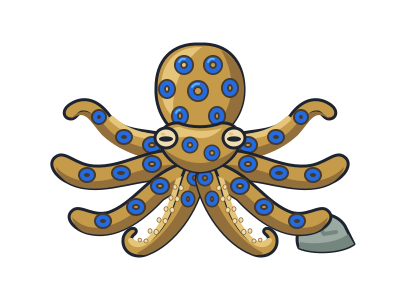
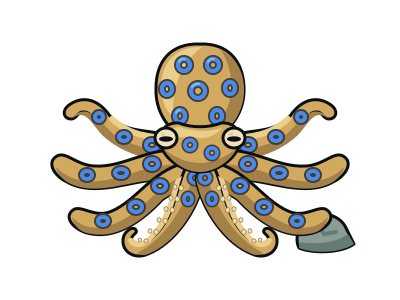
All octopuses have some venom, but only blue-ringed octopuses are known to be deadly to people. They show shimmering blue rings as a warning.
Inside octopuses
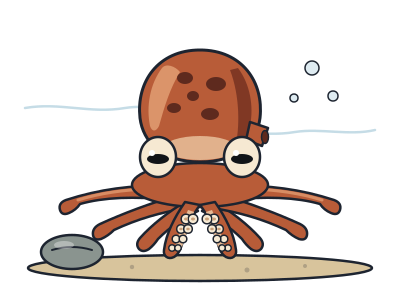
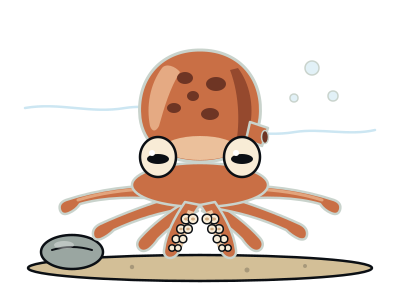
- Common octopusThree hearts, blue blood, and arms that taste and think for themselves.
- Blue-ringed octopusSmall enough to fit in a palm, it flashes blue rings as a warning of deadly venom.
- Dumbo octopusA deep-sea octopus that flaps two ear-like fins, like Disney's flying elephant.
- Mimic octopusImpersonates lionfish, flatfish and sea snakes by changing its shape and colour.
- Giant Pacific octopusThe largest octopus, with arms spanning several metres, yet it lives only about four years.
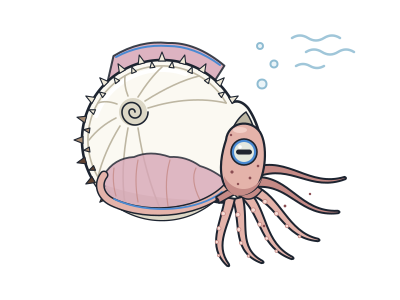
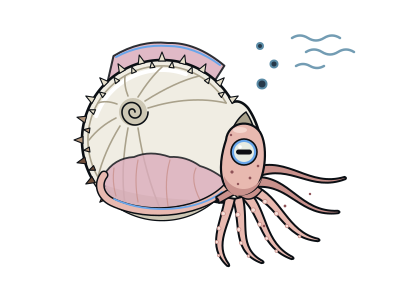
- Greater argonautA female octopus that builds a paper-thin shell as a floating cradle for her eggs.