An extinct group
Belemnites †
Belemnitida
Squid-like relatives whose hidden shells became common bullet-shaped fossils.
Lived about 235–66 million years ago.
You and belemnites meet in the Two-sided animals branch, shown at about 580 million years ago (on 11 November, in a calendar from life's shared ancestor to today).
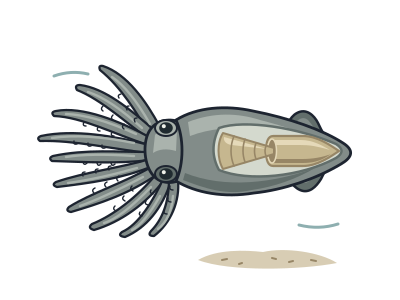
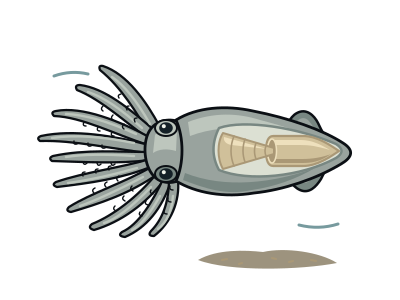
Belemnites were squid-like relatives of squid and cuttlefish, but their most familiar fossils looked like small bullets. These were pieces of a shell hidden inside the body, not whole animals. They lived in the seas about 235 to 66 million years ago.
The bullet-shaped part, called the guard, lay towards the rear of the animal. It was made mainly of calcite, a mineral that could survive after the soft body disappeared. Unlike an ammonite’s outer shell, a belemnite’s shell was tucked away inside. A loose fossil guard revealed only a small part of the animal that once carried it.
Exceptionally preserved fossils from Germany showed much more: guards, other shell sections, hooked arms and remains of soft tissues. These rare finds helped researchers reconstruct the squid-like animal around its familiar fossil. Most finds were much less complete, so a guard alone could not show exactly how the whole animal looked.
Ancient sea temperatures
The chemistry preserved in guards helped scientists estimate how warm ancient seas had been.
Clues in rock layers
Different belemnite fossils helped geologists recognise and compare particular layers of rock.
Mistaken for thunderbolts
Their name came from a Greek word for dart or javelin. Folklore described the pointed fossils as thunderbolts.
Next to it on the tree
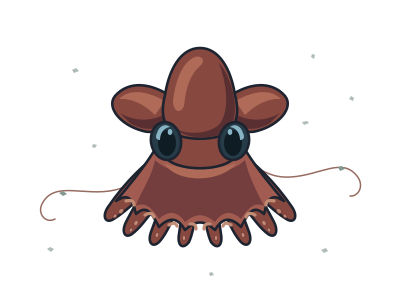
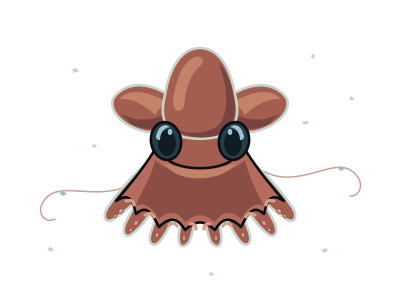
- Vampire squidNeither vampire nor squid: a gentle deep-sea drifter that eats marine snow.
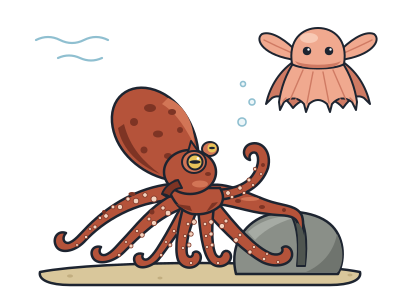
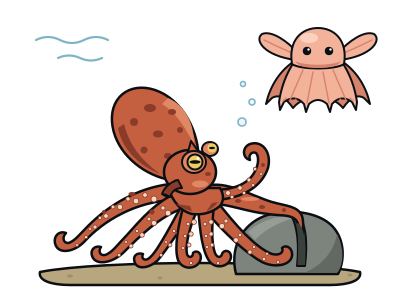
- OctopusesEight-armed cephalopods with no shell at all, able to squeeze through any gap bigger than their beak.
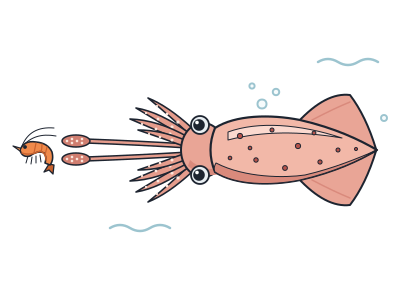
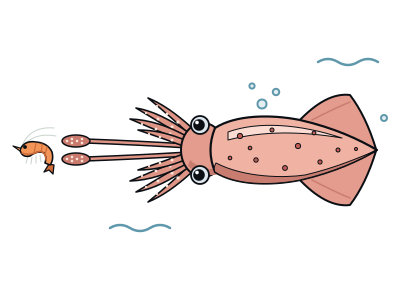
- Squid and cuttlefishCephalopods with eight arms plus two long feeding tentacles that shoot out to grab prey.