A species
Blue-ringed octopus
Hapalochlaena lunulata
Palm-sized, with a brilliant blue warning.
You and the blue-ringed octopus meet in the Two-sided animals branch, shown at about 580 million years ago (on 11 November, in a calendar from life's shared ancestor to today).
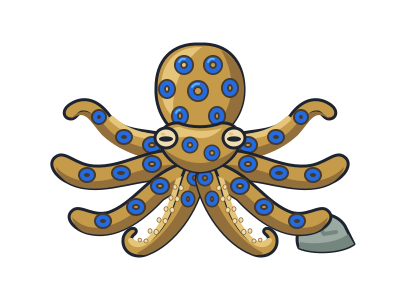
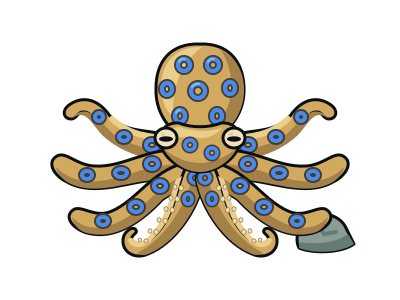
Small enough to fit in a palm, this octopus flashes blue rings to warn of a venomous bite that can kill a person. Its relatives include squid and cuttlefish, but also snails and oysters. It has eight arms lined with suckers. Many squid have eight arms plus two specialised tentacles for catching prey.
The blue rings do not make their own light. Instead, they reflect light that falls on the skin. Muscles quickly hide or reveal them, while dark colour beneath and around each ring makes the blue stand out. This creates a striking warning display when the animal feels threatened.
It usually lives alone and spends much of its time hidden. Rock cracks and empty shells provide shelter, as can discarded bottles and cans. It can crawl using its arms or swim by pushing water through a funnel. Although generally not aggressive towards people, it may bite in defence. Never handle or provoke one.
An arm can grow back
It can regrow a lost arm.
Small prey
It eats crabs and small fish.
Greater rings, not a giant body
The name greater blue-ringed octopus refers to its relatively large rings, not an exceptionally large body.
Next to it on the tree
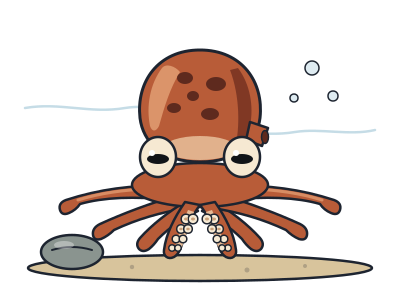
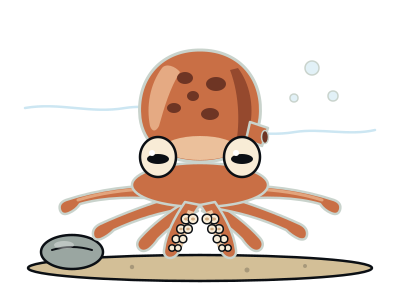
- Common octopusThree hearts, blue blood, and arms that taste and think for themselves.
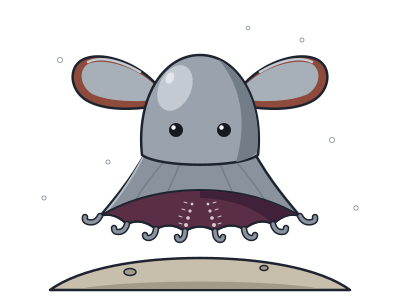
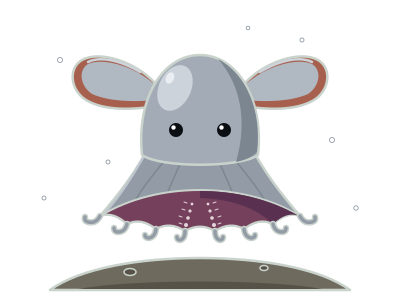
- Dumbo octopusA deep-sea octopus that flaps two ear-like fins, like Disney's flying elephant.
- Mimic octopusImpersonates lionfish, flatfish and sea snakes by changing its shape and colour.
- Giant Pacific octopusThe largest octopus, with arms spanning several metres, yet it lives only about four years.
- Greater argonautA female octopus that builds a paper-thin shell as a floating cradle for her eggs.