A species
Chambered nautilus
Nautilus pompilius
A shell that doubles as a float.
You and the chambered nautilus meet in the Two-sided animals branch, shown at about 580 million years ago (on 11 November, in a calendar from life's shared ancestor to today).
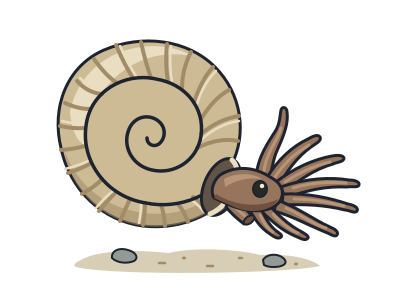
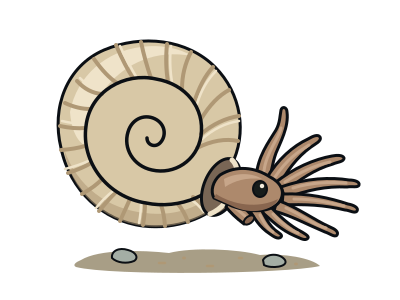
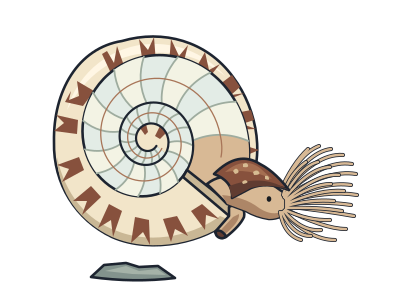
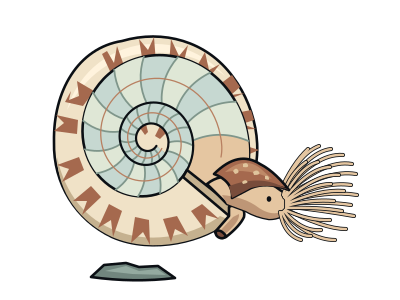
Gas-filled chambers help the chambered nautilus float, supporting its heavy shell in the water. A tube of living tissue runs through the chambers and adjusts how much liquid they hold. Swimming is a separate job: the animal squirts water through a muscular funnel. By aiming that funnel, it can move forwards, backwards or sideways.
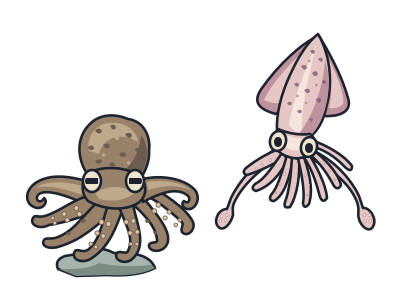
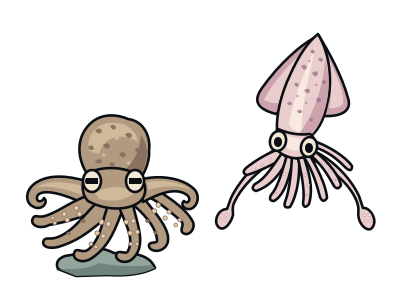
Its shell may look snail-like, but it belongs to the same group as octopuses, squid and cuttlefish: the cephalopods. Living nautiluses are the only members of this group with an outside shell divided into chambers. That makes its striped spiral a surprising sight beside its soft-bodied relatives.
The animal does not fill the whole spiral. Its body occupies only the newest, largest chamber. As it grows, it builds dividing walls behind itself, turning space it once lived in into smaller chambers. These older rooms become part of the float.
Many tiny tentacles
About 90 slender tentacles surround its mouth. Unlike octopus arms, they have no suckers.
A built-in door
It can withdraw into its shell and close the opening with a tough, leathery hood.
Eyes without lenses
Its eyes have neither lenses nor the clear front covering called a cornea.