A species
Tusk shell
Antalis entalis
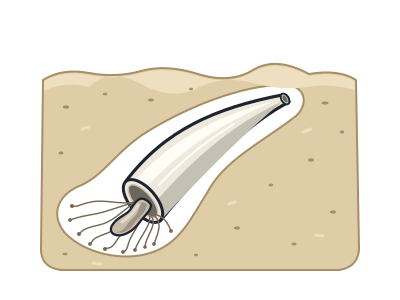
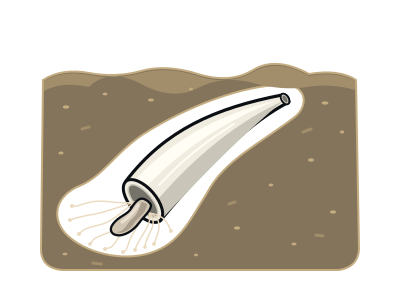
A tiny tusk-shaped mollusc that searches sand with sticky threads.
You and the tusk shell meet in the Two-sided animals branch, shown at about 580 million years ago (on 11 November, in a calendar from life's shared ancestor to today).
A mollusc in a miniature elephant-tusk shell, this animal probes sand with sticky feeding threads. Its wider family includes snails, clams, octopuses and chitons. But tusk shells form their own group. This is not a snail with a straightened shell, nor a tiny tooth lying on the seabed.
Its thin, white shell curves and narrows towards one end. Unlike an elephant’s tusk, it is a hollow tube, open at both ends. The animal lives buried in soft seabed material, usually sand. Its fine threads search the surrounding sand, collecting tiny food items with sticky tips and carrying them to its mouth.
Moving through sand takes a different tool: a muscular foot. The animal pushes this foot into the seabed, anchors it, then pulls its shell forwards. Inside, a toothed feeding organ crushes hard food before digestion. The threads gather the meal; the teeth help break it down.
No eyes
Tusk shells have no eyes.
Breathing without gills
Soft tissue lining the shell takes oxygen from seawater, without gills.
A swimming start
Young tusk shells swim freely before settling into the seabed.
Next to it on the tree
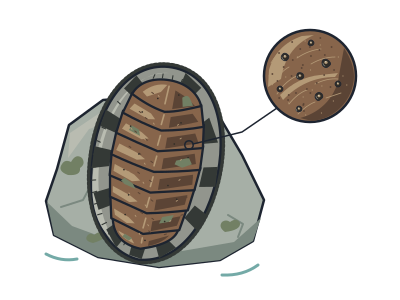
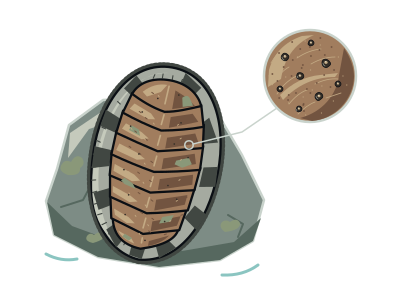
- Fuzzy chitonA mollusc with eight shell plates dotted with hundreds of tiny eyes made of mineral.
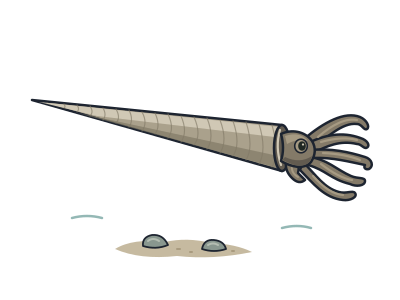
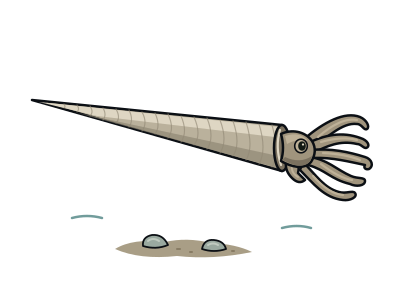
- EndocerasA genus of cone-shelled relatives of squid; large historical shell estimates approach car-length, while diet remains debated.
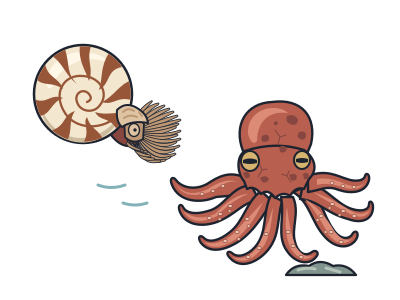
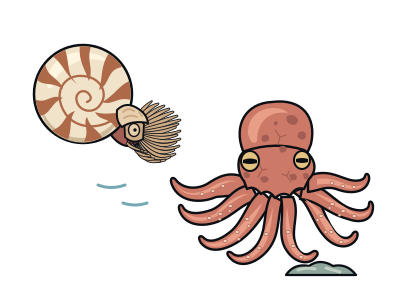
- CephalopodsMolluscs that became fast, clever hunters with arms around the mouth.
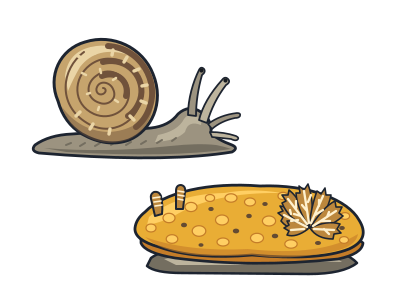
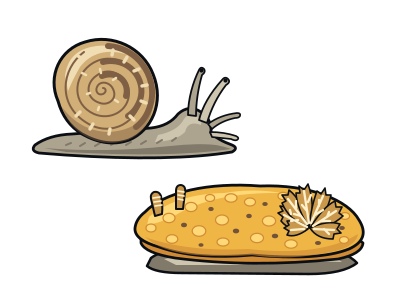
- Snails and slugsMolluscs that twist their bodies as larvae; the most varied mollusc group.
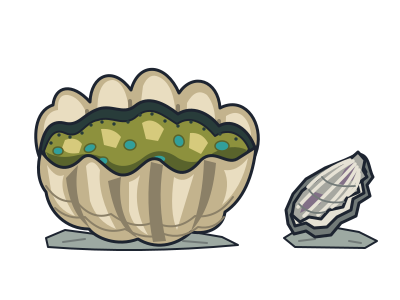
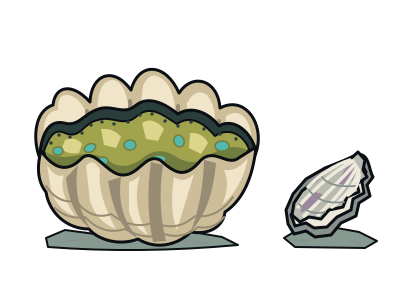
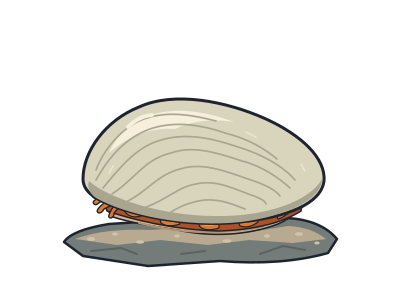
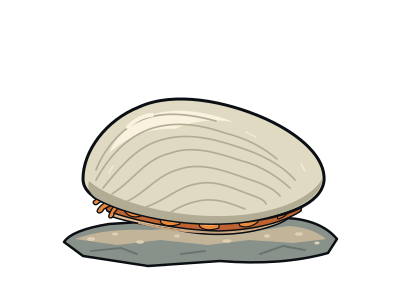
- Clams and oystersMolluscs with two hinged shells and no head.
- NeopilinaKnown only from 375-million-year-old fossils until found alive in the deep sea in 1952.
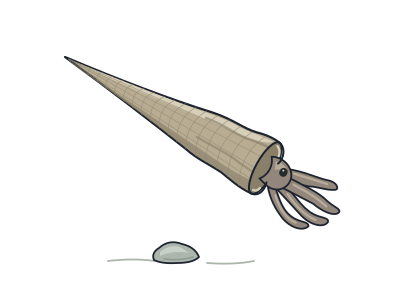
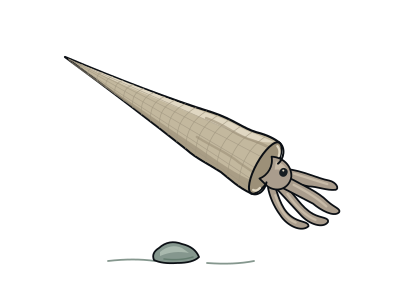
- OrthocerasA squid relative in a straight, pointed shell, sold everywhere as polished fossils.
- Gumboot chitonThe largest chiton, a reddish leathery slab as long as a shoe that hides its shell plates inside.