An extinct species
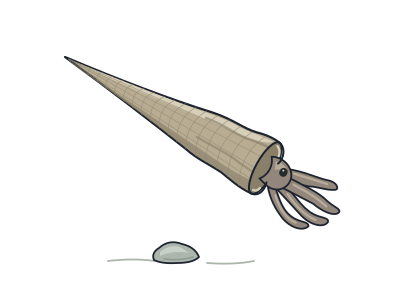
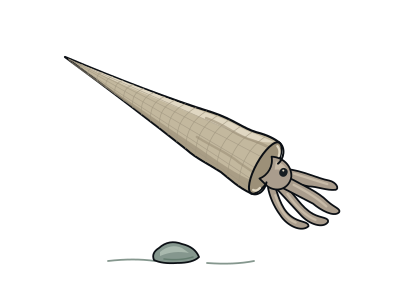
Orthoceras †
Orthoceras regulare
A squid relative behind a familiar fossil souvenir
Lived about 470–460 million years ago.
You and the orthoceras meet in the Two-sided animals branch, shown at about 580 million years ago (on 11 November, in a calendar from life's shared ancestor to today).
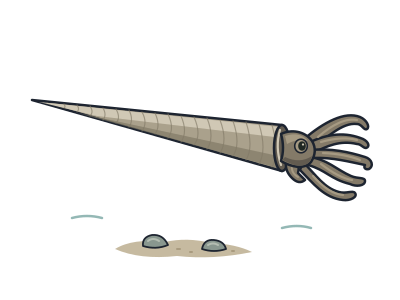
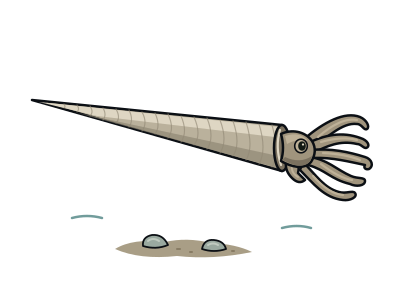
This squid relative lived inside a straight, pointed shell. Fossils sold under its name became familiar polished souvenirs, even reaching museum gift shops. But the label did not guarantee the identity. Many Moroccan fossils traded under that name belonged to other straight-shelled relatives, not this species.
It lived in the sea about 470 to 460 million years ago. True examples came from rocks around Sweden and the Baltic region. Fossils showed a slender shell with curved walls dividing its narrower end into chambers. The animal lived in the broad end; the smaller chambers were not separate homes for other animals.
Researchers inferred that gas in the chambers helped it float and balance. The preserved shell provided evidence for that explanation, but did not reveal every detail of the living animal. Its shell shape was much better established than the appearance of its soft body.
A delicate surface pattern
Fine lines crossed along and around the shell, making a net-like pattern.
Three identifying grooves
The adult living chamber had three lengthwise depressions and a slight waist, which helped specialists distinguish it from similar shells.
Forty fossil specimens
One specialist study examined 40 specimens, many preserving both internal chambers and the animal’s living chamber.
Next to it on the tree
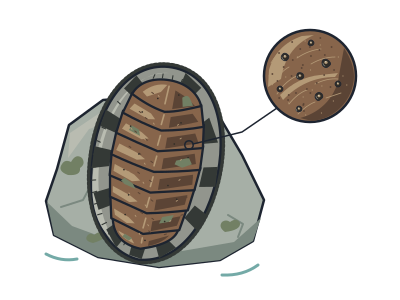
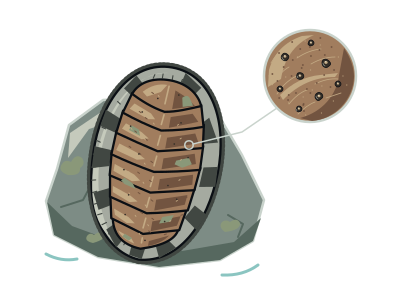
- Fuzzy chitonA mollusc with eight shell plates dotted with hundreds of tiny eyes made of mineral.
- EndocerasA genus of cone-shelled relatives of squid; large historical shell estimates approach car-length, while diet remains debated.
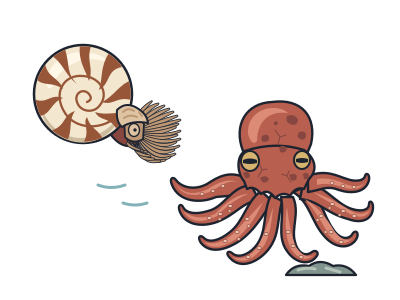
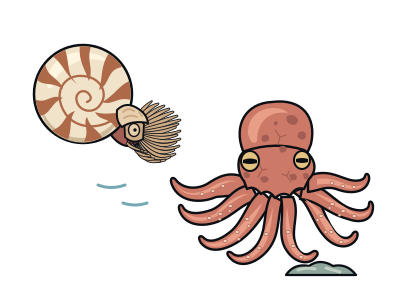
- CephalopodsMolluscs that became fast, clever hunters with arms around the mouth.
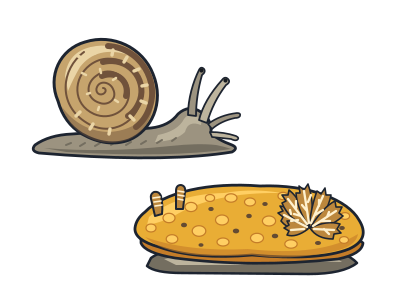
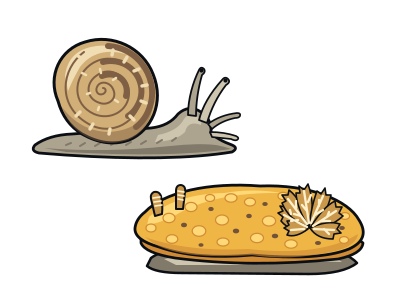
- Snails and slugsMolluscs that twist their bodies as larvae; the most varied mollusc group.
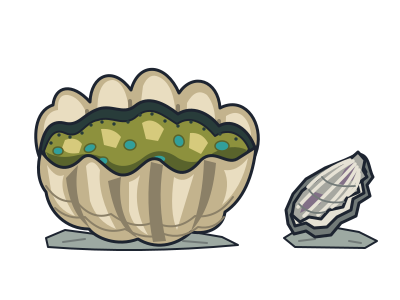
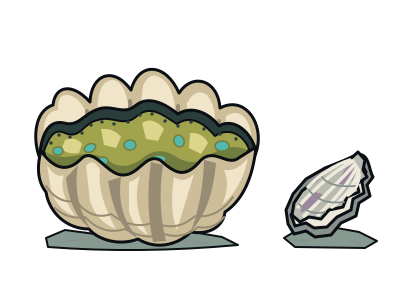
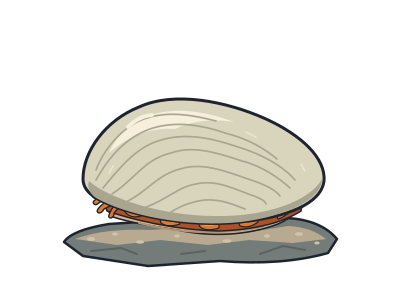
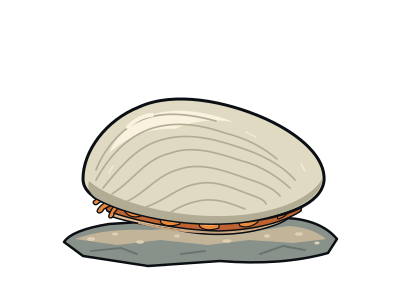
- Clams and oystersMolluscs with two hinged shells and no head.
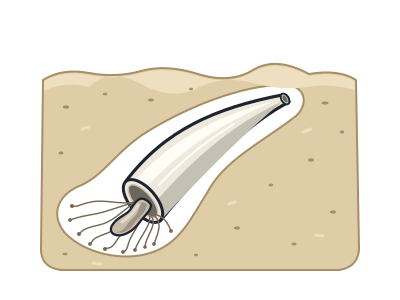
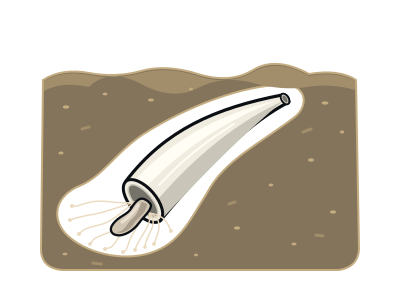
- Tusk shellA mollusc in a tiny elephant-tusk shell that probes sand with sticky threads.
- NeopilinaKnown only from 375-million-year-old fossils until found alive in the deep sea in 1952.
- Gumboot chitonThe largest chiton, a reddish leathery slab as long as a shoe that hides its shell plates inside.