A group of living things
Snails and slugs
Gastropoda
One family, many shapes—and an early twist
This branch is shown at about 480 million years ago; its age is a rough estimate.
You and snails and slugs meet in the Two-sided animals branch, shown at about 580 million years ago (on 11 November, in a calendar from life's shared ancestor to today).
Snails and slugs are molluscs with a twist—and they have more species than any other mollusc group. Early in development, the body region holding the internal organs turns by up to half a turn relative to the head and crawling foot. The shell, if present, turns with it. This movement is called torsion. It is separate from the spiral growth of a snail’s shell.
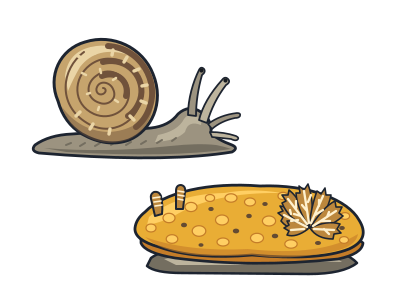
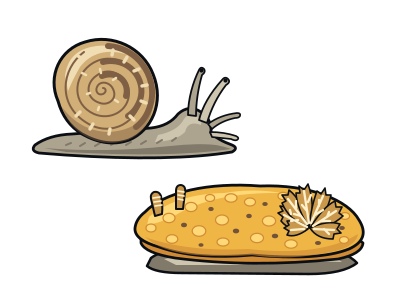
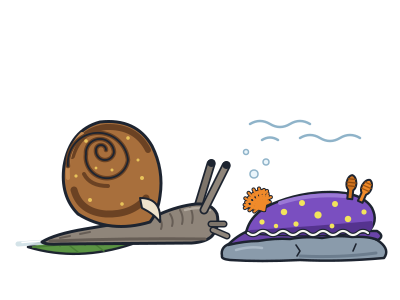
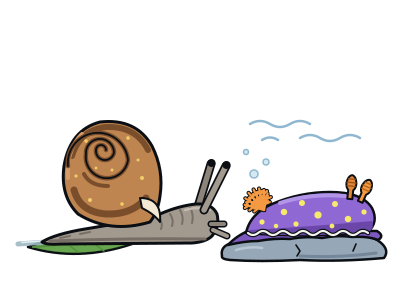
A garden snail and a sea slug may look very different, but both belong here. So do limpets, abalones and cowries. Slug-like bodies evolved separately in several branches of this family tree. That means “slug” describes a body shape, not one exclusive family branch.
Members live worldwide in oceans, freshwater and on land, including gardens, mountains and deserts. Their food is just as varied: different species eat algae, plants, decaying material or other animals. They are certainly not all leaf-eaters. The broad surface they crawl on is a muscular foot.
A ribbon of tiny teeth
Most feed with a radula: a ribbon-like tool covered in tiny teeth, often used like a file.
Hidden shells
Many land slugs still have a small shell beneath their skin.
Eyes on the upper pair
Garden snails have four retractable head tentacles. The longer upper pair carry two tiny eyes.
Inside snails and slugs
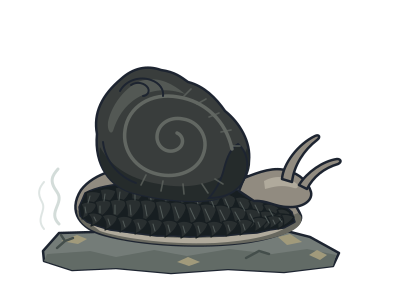
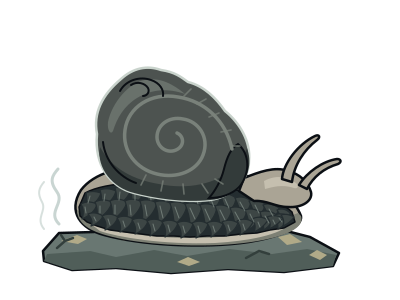
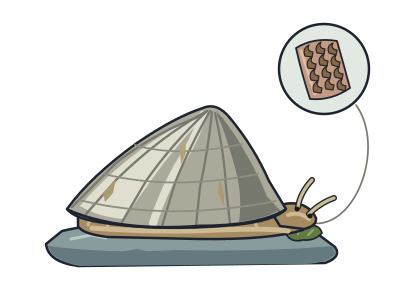
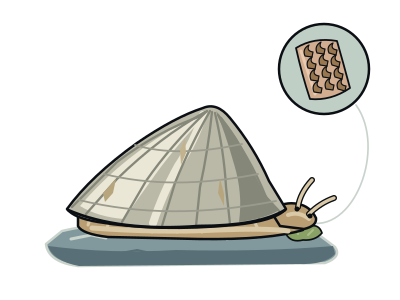
- Scaly-foot snailA deep-sea vent snail armoured with iron scales.
- Common limpetIts teeth are the strongest natural material known.
- Red abaloneA sea snail with an ear-shaped shell lined with rainbow mother-of-pearl.
- Sea snails and whelksThe biggest group of snails, including most seashells you find on a beach.
- Slugs, land snails and sea slugsSnails that often lost or shrank their shell, and some that moved onto land and breathe air.
Next to it on the tree
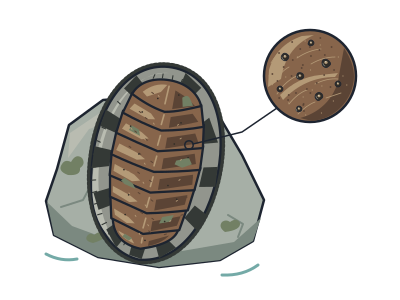
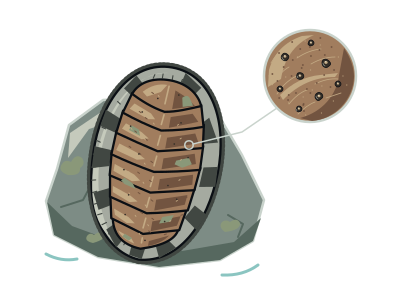
- Fuzzy chitonA mollusc with eight shell plates dotted with hundreds of tiny eyes made of mineral.
- EndocerasA genus of cone-shelled relatives of squid; large historical shell estimates approach car-length, while diet remains debated.
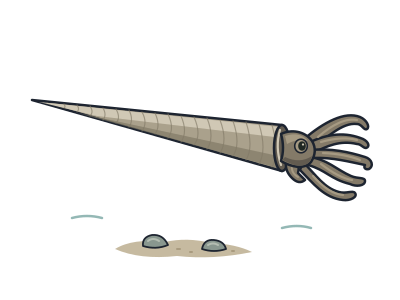
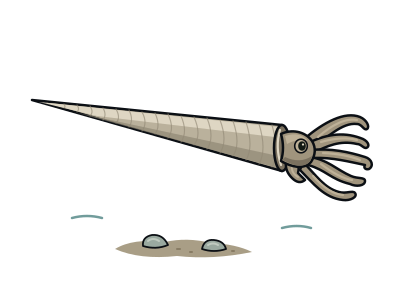
- CephalopodsMolluscs that became fast, clever hunters with arms around the mouth.
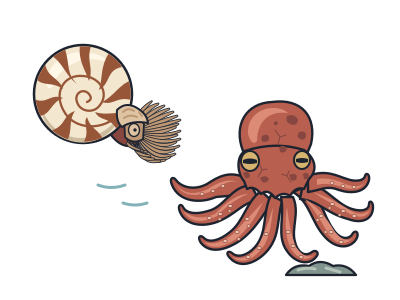
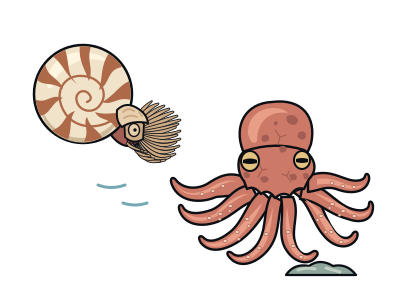
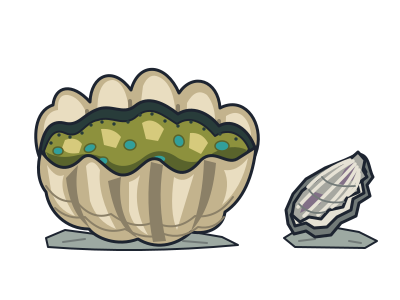
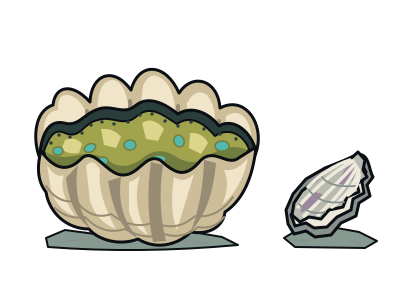
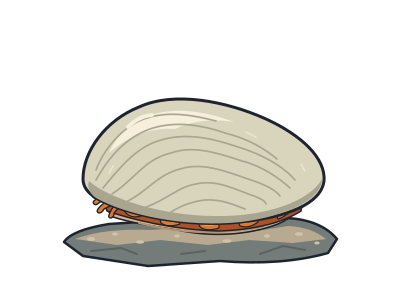
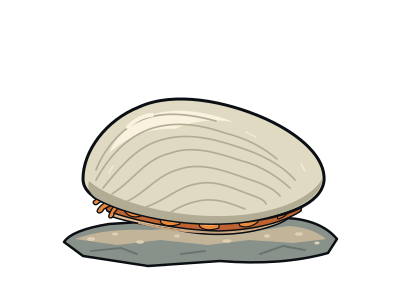
- Clams and oystersMolluscs with two hinged shells and no head.
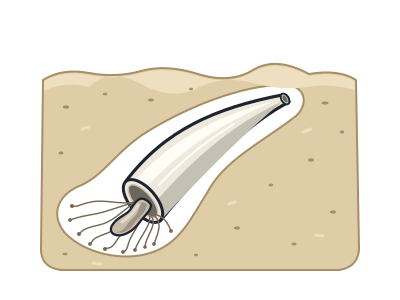
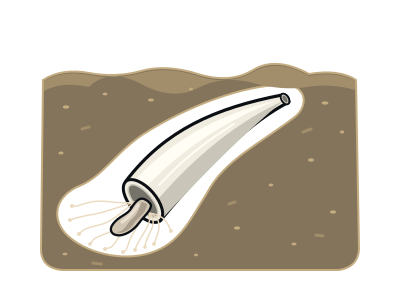
- Tusk shellA mollusc in a tiny elephant-tusk shell that probes sand with sticky threads.
- NeopilinaKnown only from 375-million-year-old fossils until found alive in the deep sea in 1952.
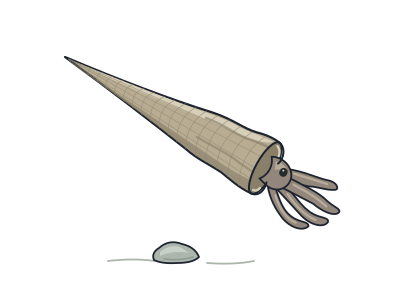
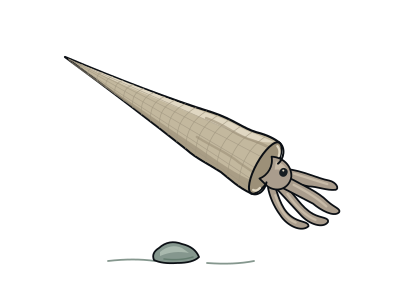
- OrthocerasA squid relative in a straight, pointed shell, sold everywhere as polished fossils.
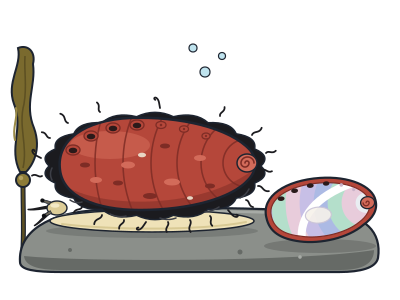
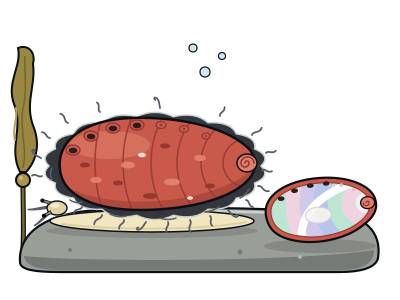
- Gumboot chitonThe largest chiton, a reddish leathery slab as long as a shoe that hides its shell plates inside.