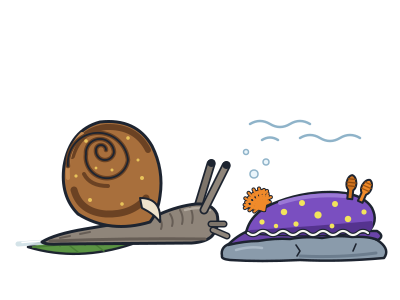
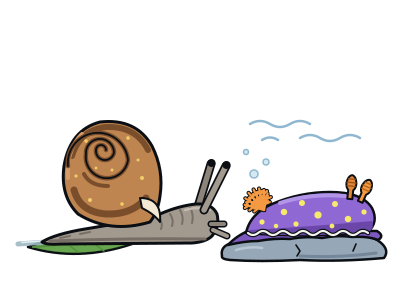
A group of living things
Slugs, land snails and sea slugs
Euthyneura
Snails that shrank or lost their shells, and some that evolved to breathe air.
This branch is shown at about 230 million years ago; its age is a rough estimate.
You and slugs, land snails and sea slugs meet in the Two-sided animals branch, shown at about 580 million years ago (on 11 November, in a calendar from life's shared ancestor to today).
A garden snail and a bright purple sea slug look nothing alike, but they belong to the same big branch of snails. Two big changes happened in this branch. First, many members shrank their shells, hid them inside the body or lost them completely, and this happened many separate times. Second, some moved into fresh water and onto land, and breathe air with a lung in place of the usual gill.
Slugs are not a separate kind of animal. They are snails that lost or shrank their shells. Some slugs still carry a small shell hidden inside the body. No snail is known to have evolved from a slug.
Air-breathing snails such as the garden snail and the great pond snail have no gill. Instead, the space under the mantle has become a lung. It opens to the air through a small breathing hole. Most sea slugs breathe with gills or through their skin. Most nudibranchs, the most colourful sea slugs, hatch with a tiny coiled shell and lose it as they grow up.
This is a very big group. Scientists estimate that it has more than 30,000 species, which is about four in every ten known snails and slugs. They live in the sea, in fresh water and on land.
Borrowed weapons
Some nudibranchs eat hydroids, which are small stinging relatives of jellyfish. They store the stinging cells in the finger-like growths on their backs and use them to defend themselves. Their bright colours are often a warning to stay away.
Pole to pole
Nudibranchs live in seas all over the world, from the Arctic to the Antarctic. They are found everywhere from rock pools to deeper than 700 metres, but warm, shallow reefs have the most kinds.
Taste and smell
Many members of this group have two pairs of tentacles on the head. The front pair is used mainly for taste and the back pair mainly for smell.
Inside slugs, land snails and sea slugs
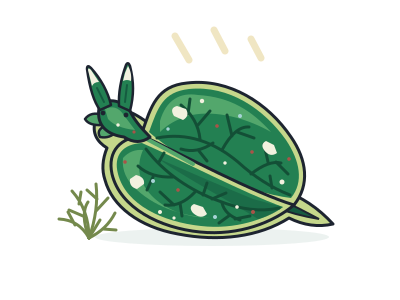
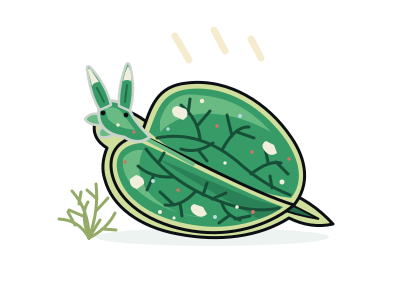
- Solar-powered sea slugSteals chloroplasts from the algae it eats and uses them to make food from sunlight.
- California sea hareA big sea slug whose simple nerves revealed how memories form.
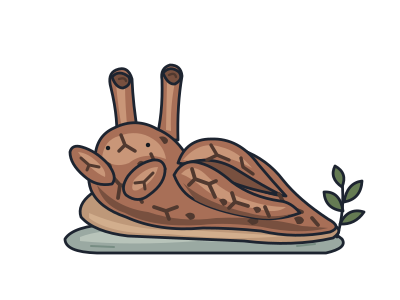
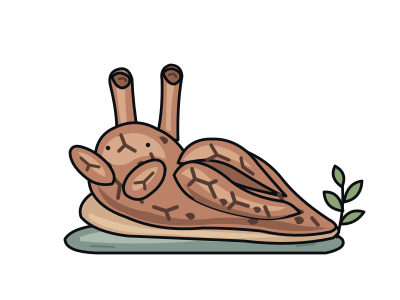
- NudibranchsShell-less sea slugs in dazzling colours, many wearing frilly gills on their backs.
- Land snails and slugsAir-breathing snails with eyes on the tips of their long tentacles.
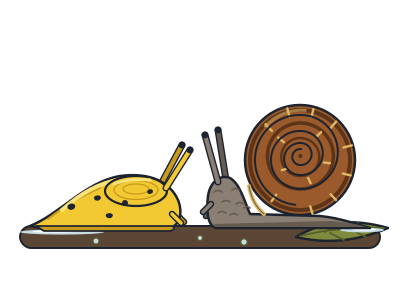
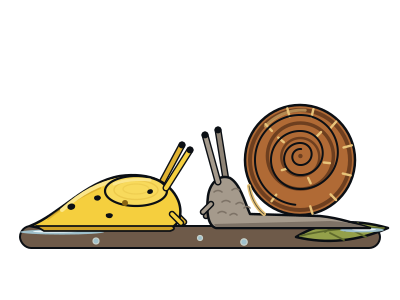
- Great pond snailA pond snail that comes to the surface to breathe and helps scientists study memory.
- Sea butterflyA tiny snail that flaps through the water on two wings, at risk as oceans turn more acidic.
Next to it on the tree
- Scaly-foot snailA deep-sea vent snail armoured with iron scales.
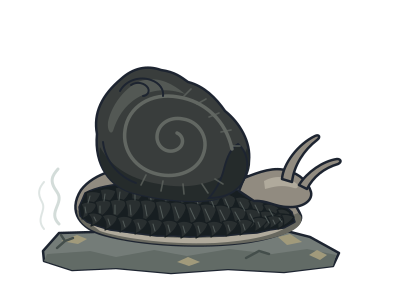
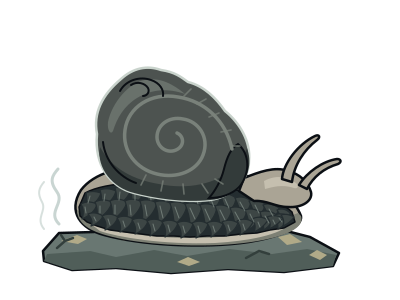
- Common limpetIts teeth are the strongest natural material known.
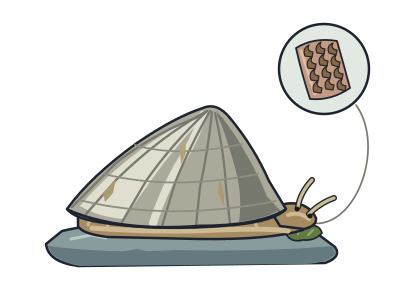
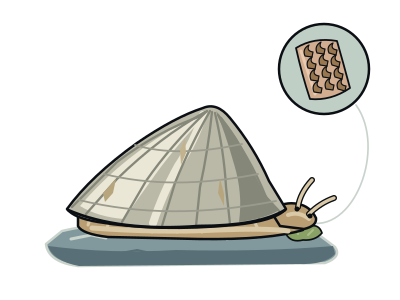
- Red abaloneA sea snail with an ear-shaped shell lined with rainbow mother-of-pearl.
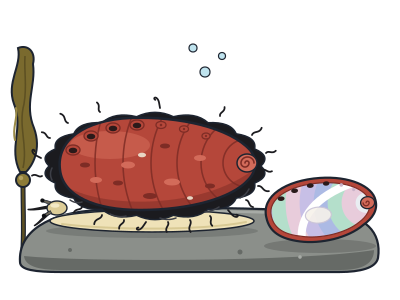
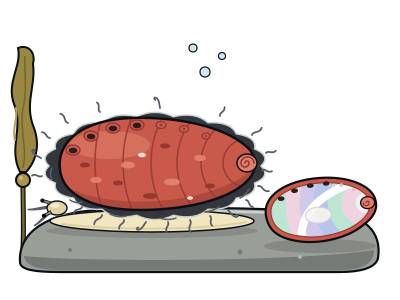
- Sea snails and whelksThe biggest group of snails, including most seashells you find on a beach.