A group of living things
Land snails and slugs
Stylommatophora
Air-breathing snails and slugs that carry their eyes on the tips of tentacles
This branch is shown at about 130 million years ago; its age is a rough estimate.
You and land snails and slugs meet in the Two-sided animals branch, shown at about 580 million years ago (on 11 November, in a calendar from life's shared ancestor to today).
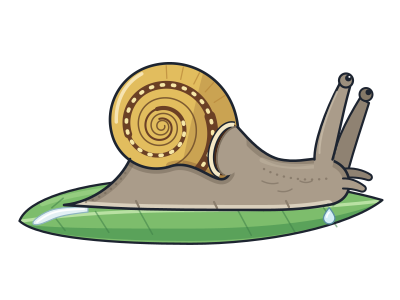
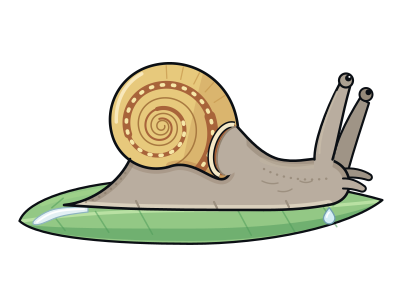
Look closely at a garden snail and you will see its eyes on the tips of its two long upper tentacles, like little lights on poles. That is the mark of this group, the biggest group of air-breathing snails and slugs on land. Their neighbour on the tree, the great pond snail, carries its eyes at the base of its tentacles instead. Sea hares and nudibranchs, which live in the sea, are also nearby on the tree.
Most have four tentacles that they can pull in. The long upper pair carry the eyes, and the short lower pair are for touch and smell. Their eyes mostly sense light, dark and shadows rather than sharp pictures. That works well enough, because most of them come out at night. They have no gills and breathe air with a lung instead.
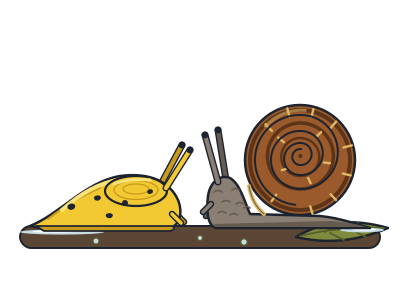
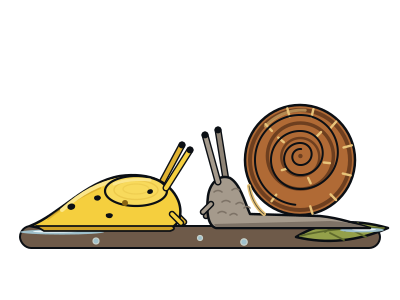
The slugs in this group are not a separate kind of animal. They are land snails whose shells shrank or disappeared, and this happened several separate times within the group. So a bright yellow banana slug, about as long as a real banana, is still a land snail at heart.
There are more than 20,000 known species. Every one is both male and female at once, but most still mate with a partner.
Thousands of tiny teeth
Most land snails and slugs eat with a jaw and a radula, a flexible ribbon covered in thousands of microscopic teeth. The ribbon scrapes food, and the jaw cuts off bigger pieces, such as bits of leaf.
A door made of slime
In dry or cold spells, some land snails seal their shell opening with an epiphragm, a temporary door of hardened mucus, and wait for better weather.
An official state slug
In 2024 California made the banana slug its official state slug. It is also the mascot of the University of California, Santa Cruz.
Inside land snails and slugs
- Garden snailCarries its house, glides on its own slime and has thousands of tiny teeth.
- Giant African land snailA large adult can be fist-sized; this giant land snail becomes a major invasive pest outside its native range.
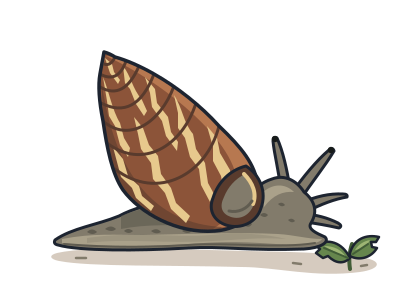
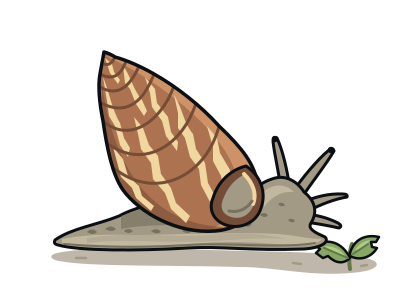
- Pacific banana slugA bright yellow slug as long as a banana that recycles leaves on the forest floor.
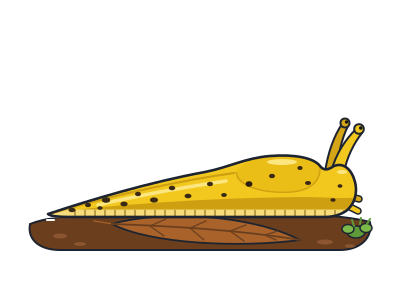
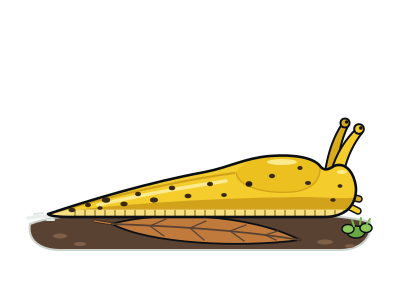
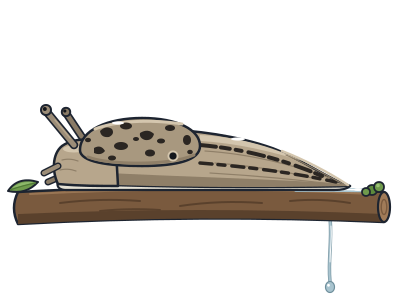
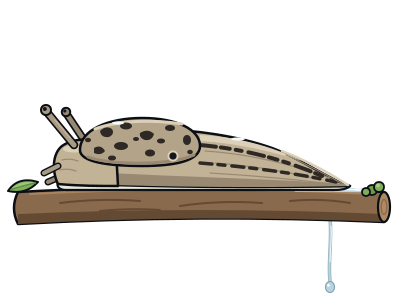
- Leopard slugA spotted garden slug that hunts other slugs and courts while hanging from a thread of slime.
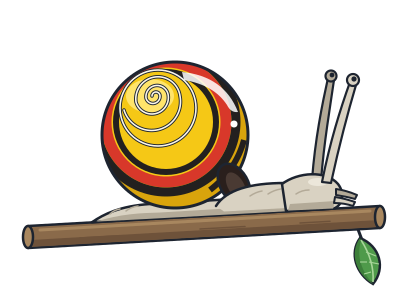
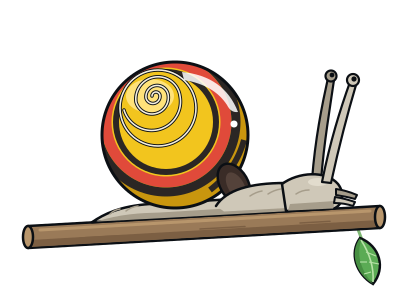
- Cuban painted snailPerhaps the most colourful land snail, its shell striped in yellow, red and black.
Next to it on the tree
- Solar-powered sea slugSteals chloroplasts from the algae it eats and uses them to make food from sunlight.
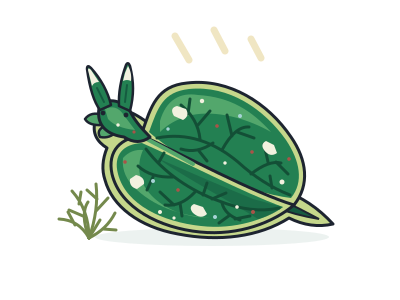
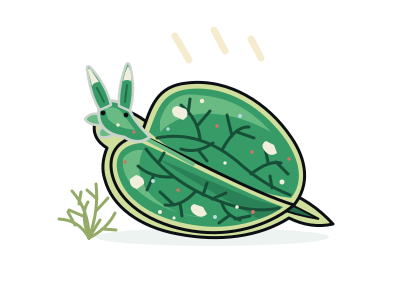
- California sea hareA big sea slug whose simple nerves revealed how memories form.
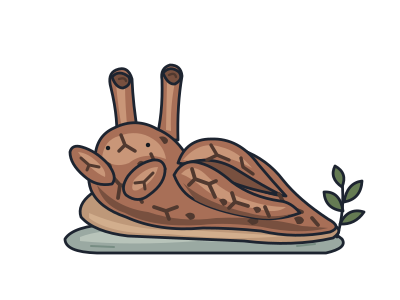
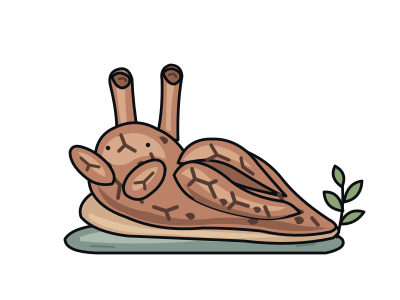
- NudibranchsShell-less sea slugs in dazzling colours, many wearing frilly gills on their backs.
- Great pond snailA pond snail that comes to the surface to breathe and helps scientists study memory.
- Sea butterflyA tiny snail that flaps through the water on two wings, at risk as oceans turn more acidic.