A species
Cuban painted snail
Polymita picta
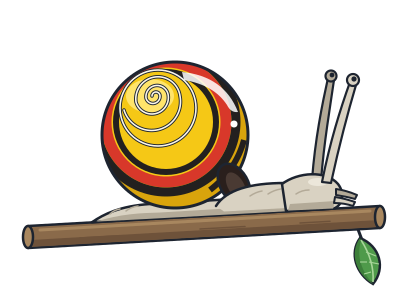
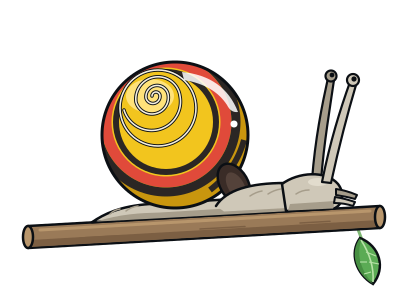
A tree-climbing snail with a glossy shell striped in yellow, red and black.
You and the cuban painted snail meet in the Two-sided animals branch, shown at about 580 million years ago (on 11 November, in a calendar from life's shared ancestor to today).
Perhaps the most colourful land snail on Earth, this little snail has a glossy shell that looks freshly varnished. Shells can be lemon yellow, white, red or brown, and many have pink or dark stripes that follow the spiral. They vary so much that there is no single 'correct' pattern. Yet it is a relative of the brownish garden snail found in many gardens.
It lives only in the far north-east of Cuba, mostly in coastal forest and scrub. Instead of staying on the ground, it climbs trees and shrubs. There it grazes on lichens, mosses and thin films of fungus on bark and leaves. Its shell is only about 2 centimetres long.
Nobody painted these colours on. They also do not seem to warn predators away. A rare bird of prey, the Cuban kite, feeds mainly on colourful tree snails, and these snails are thought to be among them. It makes a hole in the shell with its hooked beak and pulls the snail out.
Sadly, the snail's beauty puts it in danger. Poachers collect the shells for jewellery, even though Cuban law has protected the snail since 1943 and international trade is banned. Cuba lists it and the other painted snails in its group as critically endangered.
Two in one
Each snail is both male and female at once, but it still needs a partner to have young. During courtship, a snail pushes a small chalky 'love dart' into its partner.
Voted a winner
In 2022 it won a public vote for 'Mollusc of the Year' with about 10,000 votes. The prize was having its full set of genes read, to help scientists work out how its shell colours are made.
Named by their trim
Scientists have named several forms of this snail, told apart mainly by the colour of the shell's rim and spiral bands. One has pale rose markings, and another has neat black ones.
Next to it on the tree
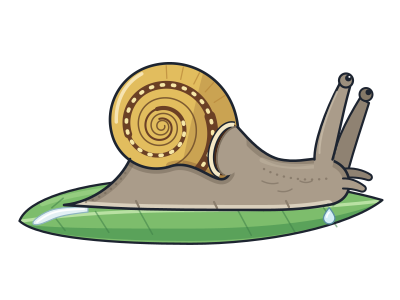
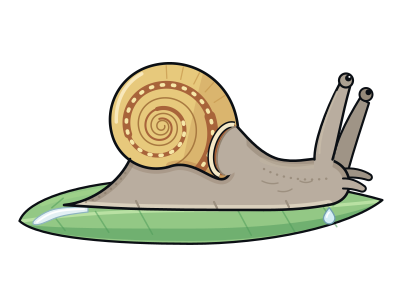
- Garden snailCarries its house, glides on its own slime and has thousands of tiny teeth.
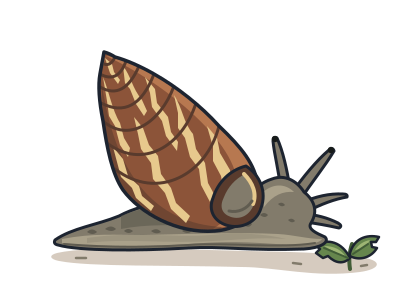
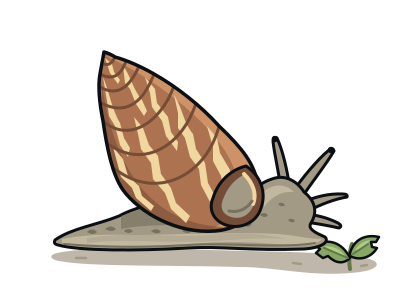
- Giant African land snailA large adult can be fist-sized; this giant land snail becomes a major invasive pest outside its native range.
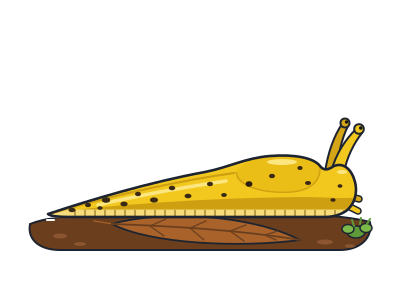
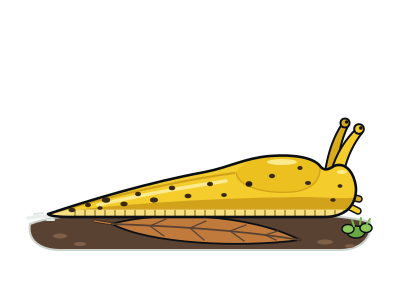
- Pacific banana slugA bright yellow slug as long as a banana that recycles leaves on the forest floor.
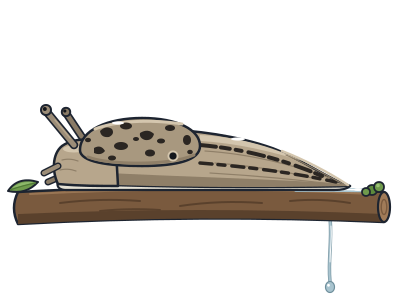
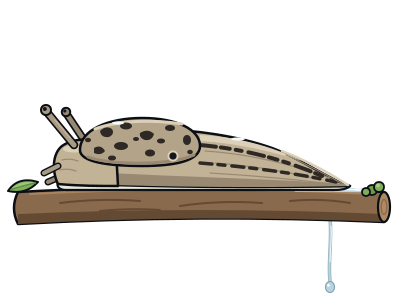
- Leopard slugA spotted garden slug that hunts other slugs and courts while hanging from a thread of slime.