A species
Leopard slug
Limax maximus
A spotted garden slug that hunts other slugs and mates hanging from a rope of slime.
You and the leopard slug meet in the Two-sided animals branch, shown at about 580 million years ago (on 11 November, in a calendar from life's shared ancestor to today).
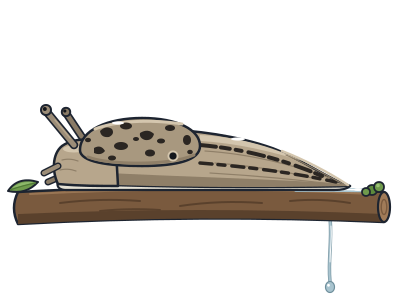
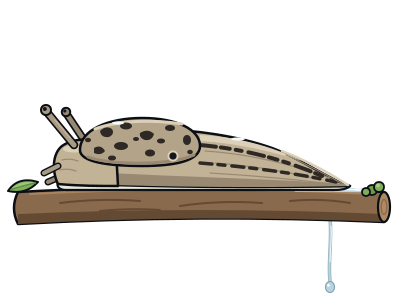
This spotted garden slug has two surprising habits. It hunts and eats other slugs, and pairs mate while hanging in mid-air from a rope of slime. Its name comes from the dark, leopard-like spots on its light brown or grey body. Adults are usually about 10 to 20 cm long, up to about as long as a pencil. That makes it one of the biggest slugs you will find in a garden.
On the tree it sits among the land snails and slugs, so the garden snail is a relative. The link is hidden inside its body. Under the mantle, the saddle-shaped shield behind its head, lies a thin leftover shell about 13 mm long.
Every leopard slug is both male and female. A pair circles each other, often for hours, then climbs a tree or other high spot. Wrapped together, they lower themselves on a thick thread of slime and swap sperm while they hang. Afterwards they climb back up, eating the thread as they go.
It feeds at night on dead plants, fungi, living plants and other slugs, then usually goes back to the same hiding crack. It comes from Europe and North Africa, but people have carried it to North America, Australia and other places.
Long life for a slug
Its eggs hatch in about a month, but the young take at least two years to grow up. A leopard slug can live for about 2.5 to 3 years, which is long for a slug.
Stripes in a week
Newly hatched leopard slugs are pale white. They grow their dark stripes within about a week.
Trouble for banana slugs
In the north-western United States, leopard slugs have been seen pushing out native banana slugs, a relative shown beside it on the tree.
Next to it on the tree
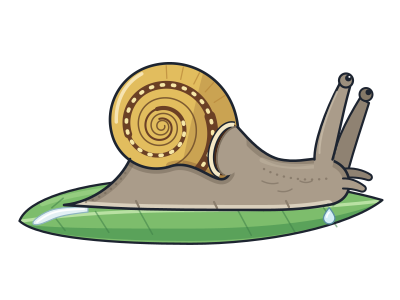
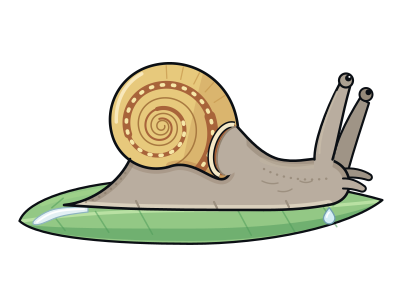
- Garden snailCarries its house, glides on its own slime and has thousands of tiny teeth.
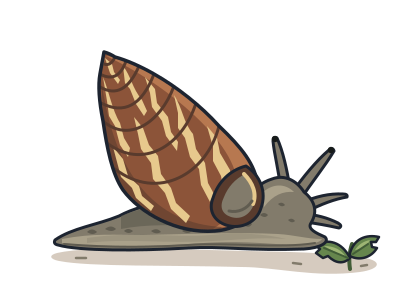
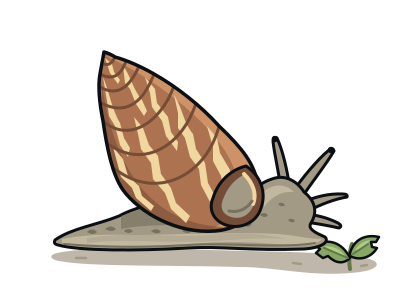
- Giant African land snailA large adult can be fist-sized; this giant land snail becomes a major invasive pest outside its native range.
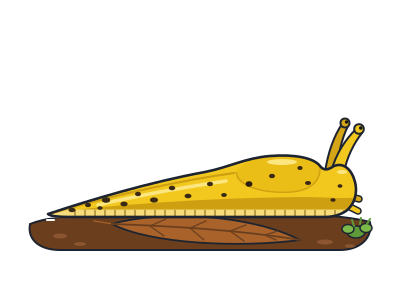
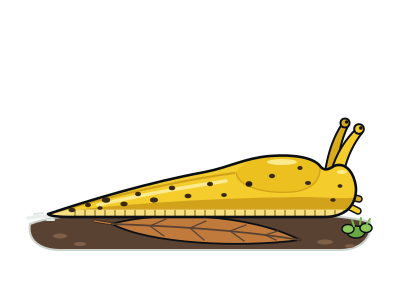
- Pacific banana slugA bright yellow slug as long as a banana that recycles leaves on the forest floor.
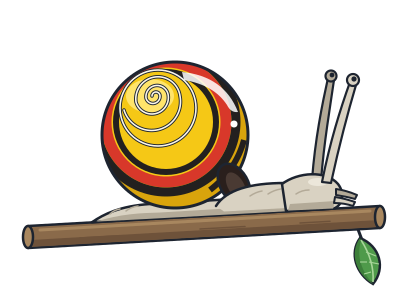
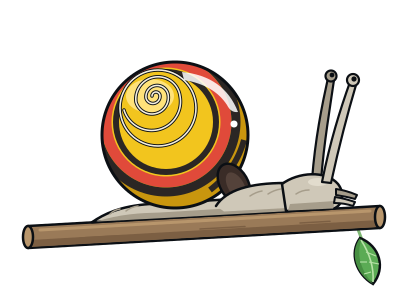
- Cuban painted snailPerhaps the most colourful land snail, its shell striped in yellow, red and black.