A species
Fuzzy chiton
Acanthopleura granulata
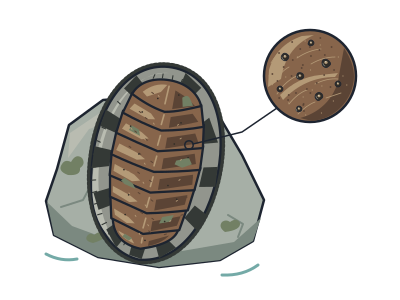
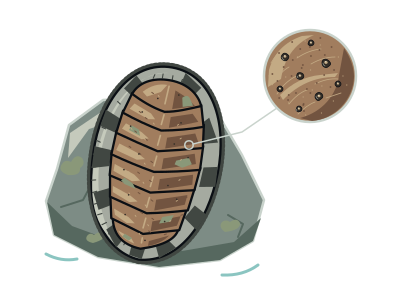
Eight shell plates, hundreds of tiny eyes.
You and the fuzzy chiton meet in the Two-sided animals branch, shown at about 580 million years ago (on 11 November, in a calendar from life's shared ancestor to today).
The fuzzy chiton is a mollusc, related to snails, clams and octopuses, but its armour does something surprising: it sees. Hundreds of tiny eyes sit in its eight shell plates. Their lenses are made of aragonite, a mineral also used in the shell. The whole eye is not stone: living light-sensitive cells sit beneath each lens. Chitons belong to their own group, rather than being a kind of snail.
These eyes form images, rather than simply noticing light and darkness. They pick out broad shapes, not the fine detail our eyes can see. When a dark object appears overhead, the animal can lower its body and clamp against the surface beneath it. Its protective covering doubles as a lookout.
Its low, oval body hugs hard surfaces around the Caribbean waterline, where tides cover and uncover the shore. Underneath, one broad, muscular foot lets it crawl slowly and grip firmly.
Fuzzy, but not furry
The grey rim around its shell has black markings and dense, hair-like spines. These spines give it its fuzzy appearance.
Flexible armour
The separate shell plates let it bend over uneven or sharply curved rocks.
No eyes on its head
Unlike familiar snails, it has neither eyes nor tentacles on its small head, which lies underneath the front of its body.
Next to it on the tree
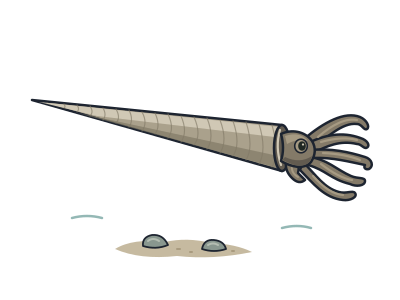
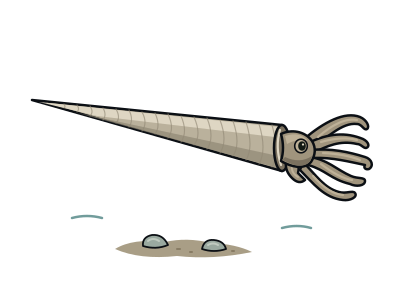
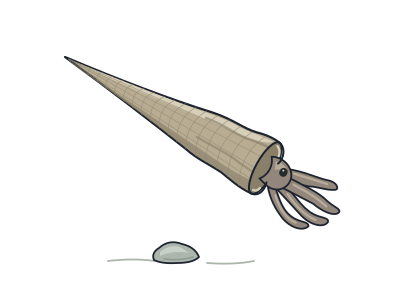
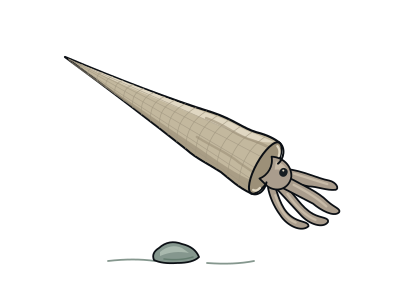
- EndocerasA genus of cone-shelled relatives of squid; large historical shell estimates approach car-length, while diet remains debated.
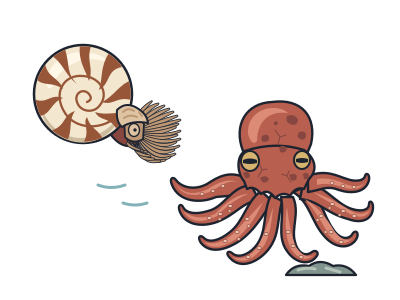
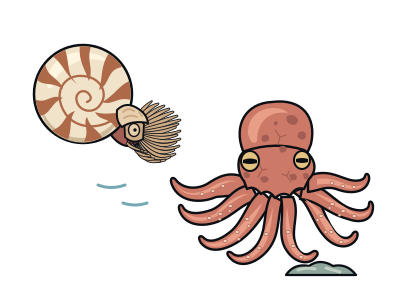
- CephalopodsMolluscs that became fast, clever hunters with arms around the mouth.
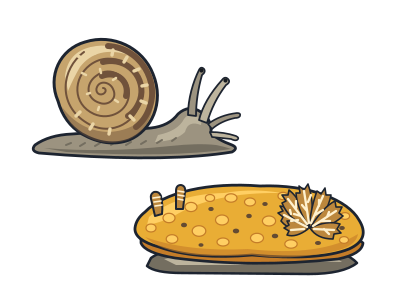
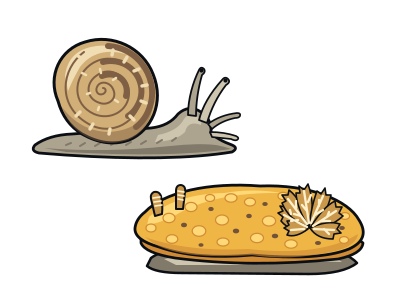
- Snails and slugsMolluscs that twist their bodies as larvae; the most varied mollusc group.
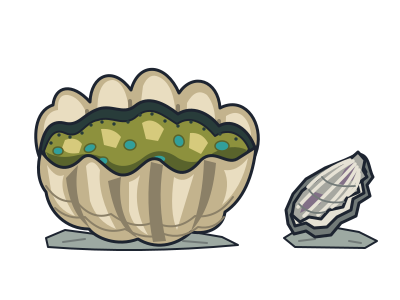
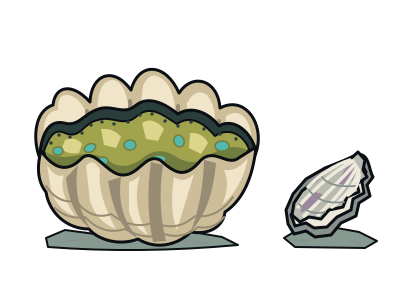
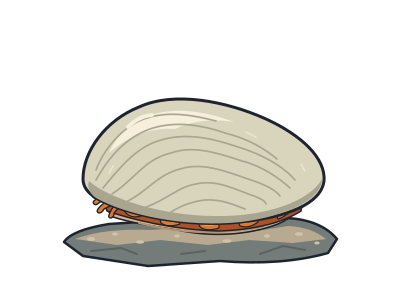
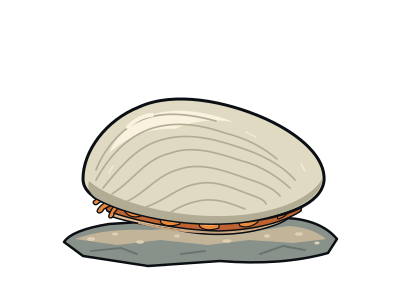
- Clams and oystersMolluscs with two hinged shells and no head.
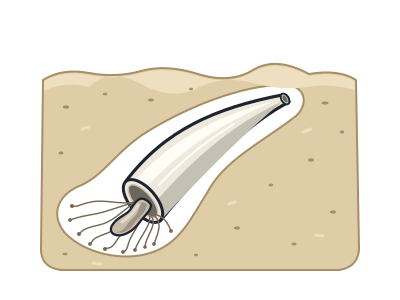
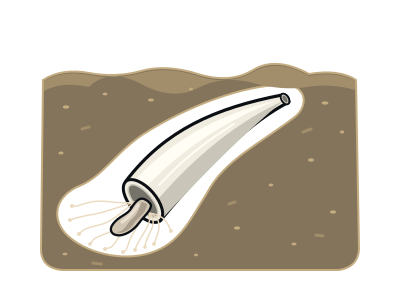
- Tusk shellA mollusc in a tiny elephant-tusk shell that probes sand with sticky threads.
- NeopilinaKnown only from 375-million-year-old fossils until found alive in the deep sea in 1952.
- OrthocerasA squid relative in a straight, pointed shell, sold everywhere as polished fossils.
- Gumboot chitonThe largest chiton, a reddish leathery slab as long as a shoe that hides its shell plates inside.