An extinct group
Rudists †
Hippuritida
Cone-shaped clams that built reef-like shell beds
Lived about 155–66 million years ago.
You and rudists meet in the Two-sided animals branch, shown at about 580 million years ago (on 11 November, in a calendar from life's shared ancestor to today).
Rudists were clams that built reef-like shell beds, not corals. Many looked like cones with lids, yet they belonged with familiar clams, oysters and mussels. They lived about 155 to 66 million years ago and disappeared in the mass extinction that also killed the non-bird dinosaurs.
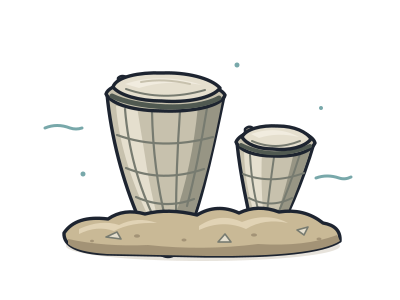
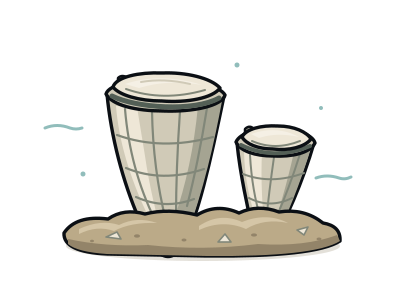
Fossil shells showed how the cone-and-lid design worked. In these forms, one shell half formed a large cone; the other was smaller and closed over it like a lid. A hinge joined the two halves, just as it did in other clams. The lid and cone belonged to one animal, not two.
They lived in shallow tropical seas. Some upright forms grew partly buried in the seabed, with only their tops exposed. Rudists gathered into dense shell beds, leaving fossil evidence of these unusual clam communities.
Sideways shells
Not every rudist stood upright. Some had horn-shaped shells that rested on their sides on the seabed.
A shell diary
One studied rudist shell preserved both daily and seasonal growth layers.
From sea to mountains
The animal in that study lived for more than nine years in a sea where mountains now stand in Oman.
Next to it on the tree
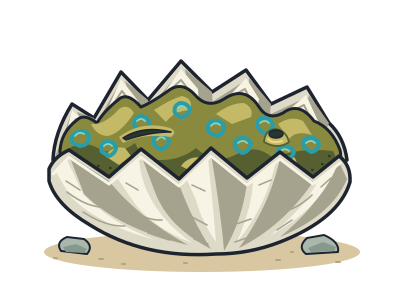
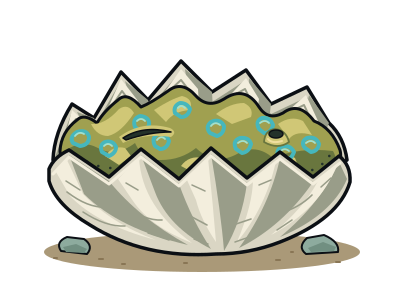
- Giant clamCan weigh over 200 kilograms and grows algae in its lips.
- Pacific oysterFilters about 50 litres of water a day.
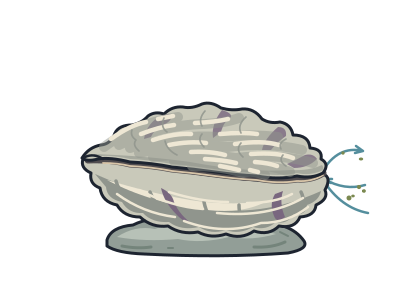
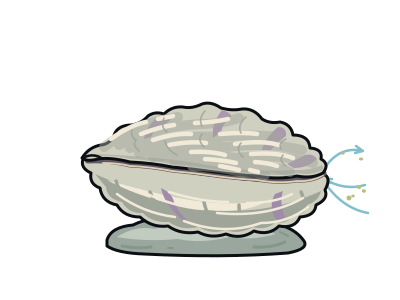
- Blue musselAnchors itself with super-strong threads that inspire underwater glues.
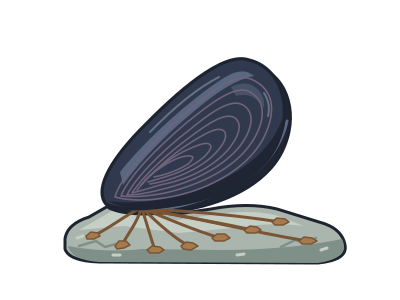
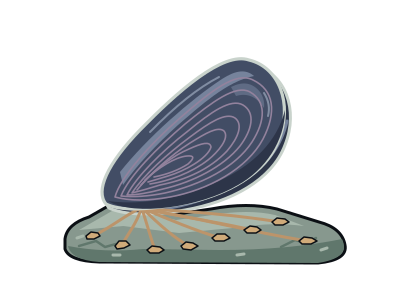
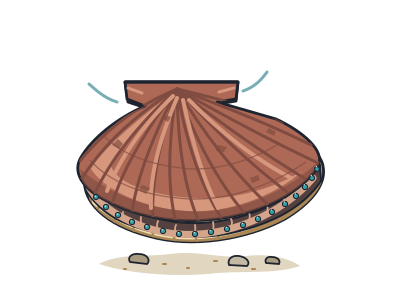
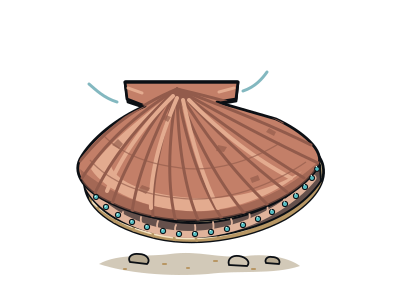
- Great scallopSwims by clapping its shells and watches with up to 200 tiny eyes.
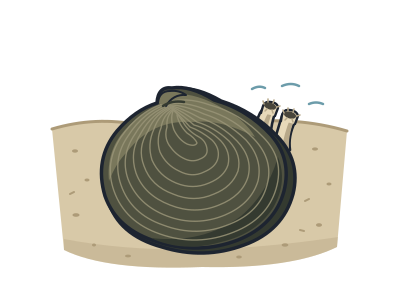
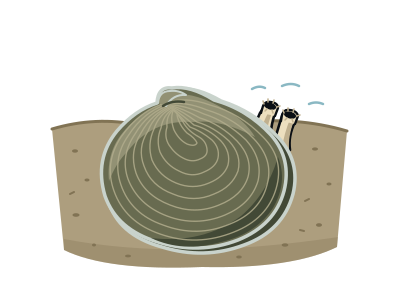
- Ocean quahogOne was 507 years old, the oldest animal whose age is known exactly.
- ShipwormA worm-like clam that bores through wooden ships and piers.
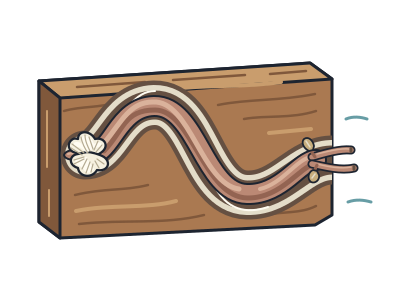
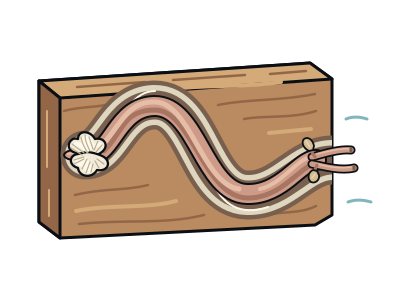
- GeoduckA giant burrowing clam whose neck is too big to fit in its shell; it can live 150 years.
- Freshwater pearl musselA river mussel that can live for over 100 years, and whose rare pearls once decorated royal crowns.
- Disco clamA clam that seems to flash like a disco ball, using light reflected from its lips.