A species
Ocean quahog
Arctica islandica
The clam that reached 507.
You and the ocean quahog meet in the Two-sided animals branch, shown at about 580 million years ago (on 11 November, in a calendar from life's shared ancestor to today).
An ocean quahog nicknamed Ming lived for 507 years: more than five centuries. It holds the documented age record for an individual animal, rather than a colony such as coral. This astonishing record belongs to a clam, a relative of oysters, mussels and scallops.
Together, these animals belong to a group called bivalves. Their shared body plan puts a soft body inside two hinged shell halves. The ocean quahog follows this family pattern, with a thick shell that can close completely to help protect the animal inside.
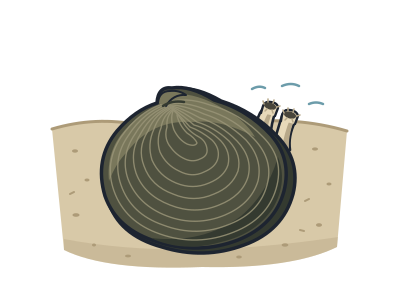
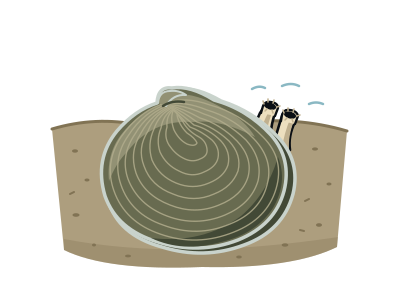
Its everyday life is mostly hidden beneath the seabed. Ocean quahogs live buried in sand or muddy sand in the cold North Atlantic. They draw water through tubes called siphons and feed on tiny algae. To encounter one without going underwater, look for an empty shell: these commonly wash onto beaches north of Cape Cod, on the eastern coast of North America.
A name from history
Ming’s nickname refers to the Chinese dynasty ruling when the clam began its life.
Young clams have hunters
Crabs, sea stars, cod and haddock are among the animals that eat young ocean quahogs.
Life begins in the water
Adults release eggs and sperm into the surrounding water, where they join to begin new life.
Next to it on the tree
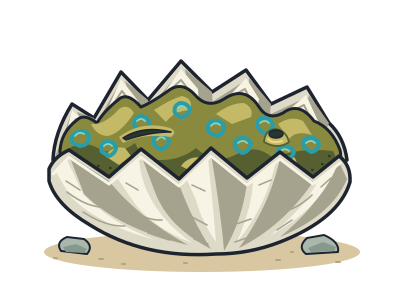
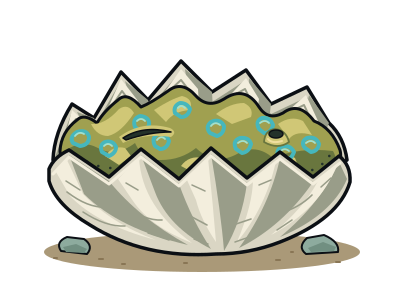
- Giant clamCan weigh over 200 kilograms and grows algae in its lips.
- Pacific oysterFilters about 50 litres of water a day.
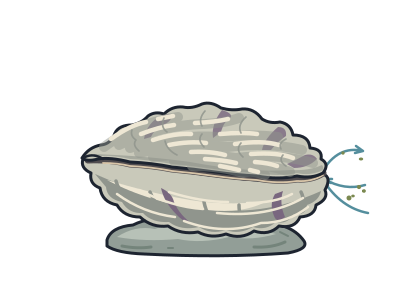
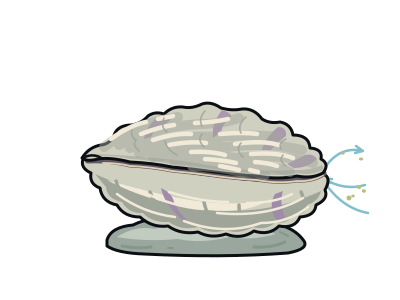
- RudistsCone-shaped clams that built reefs and vanished with the dinosaurs.


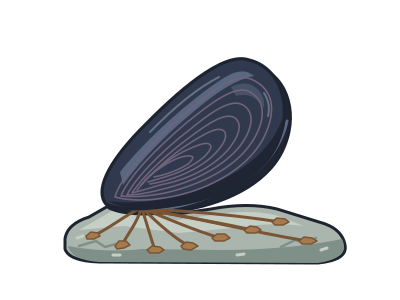
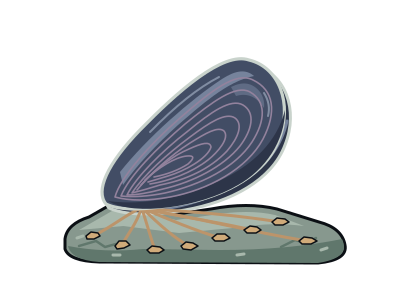
- Blue musselAnchors itself with super-strong threads that inspire underwater glues.
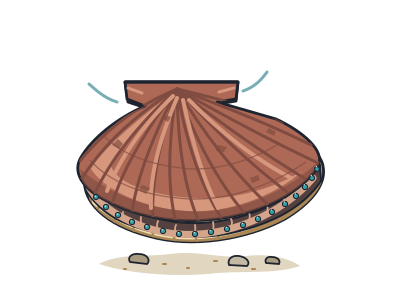
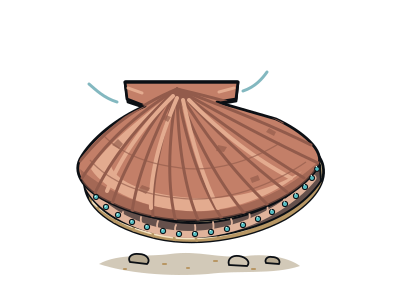
- Great scallopSwims by clapping its shells and watches with up to 200 tiny eyes.
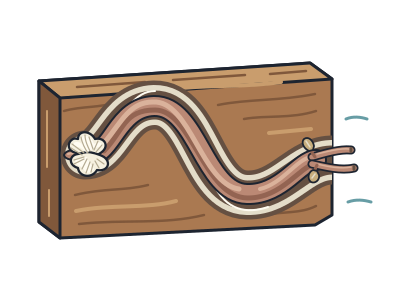
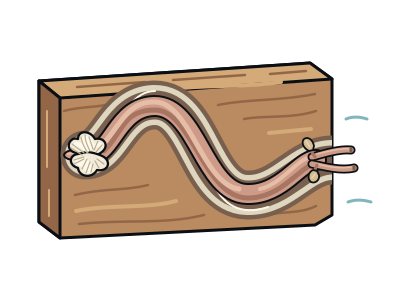
- ShipwormA worm-like clam that bores through wooden ships and piers.
- GeoduckA giant burrowing clam whose neck is too big to fit in its shell; it can live 150 years.
- Freshwater pearl musselA river mussel that can live for over 100 years, and whose rare pearls once decorated royal crowns.
- Disco clamA clam that seems to flash like a disco ball, using light reflected from its lips.