A species
Great scallop
Pecten maximus
A clam relative that swims by clapping its shells.
You and the great scallop meet in the Two-sided animals branch, shown at about 580 million years ago (on 11 November, in a calendar from life's shared ancestor to today).
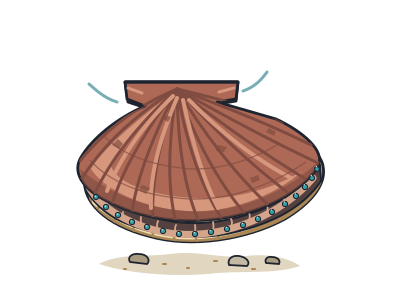
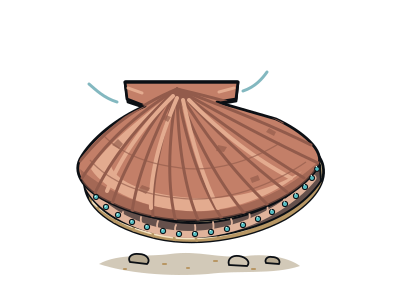
The great scallop swims by clapping its shells and has up to about 200 tiny eyes around its soft body edge. It belongs to the bivalves, the two-shelled group that includes clams, oysters and mussels. Unlike most clams, it can make a swimming escape. Rapid claps push out jets of water, carrying it a short distance away from predators such as starfish.
Those bead-like blue-green dots are real eyes, not shell markings. Each eye has a thin lens, but a curved mirror at the back does most of the focusing. The mirrors reflect blue light especially well, matching light available underwater.
Despite its swimming skills, this animal usually rests on the seabed. It makes a shallow hollow in sand or gravel and filters tiny drifting organisms from seawater for food. Look for it on northeast Atlantic seabeds, including around much of Britain and Ireland.
A bowl and a lid
The lower shell is bowl-shaped, while the upper shell is flat like a lid.
Rings record growth
Annual growth rings on the shell can help estimate its age.
Eggs and sperm
An adult can produce both eggs and sperm. Eggs are fertilised outside the body, in seawater.
Next to it on the tree
- Giant clamCan weigh over 200 kilograms and grows algae in its lips.
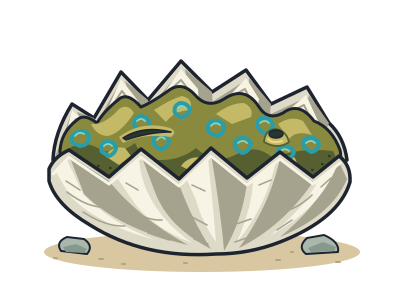
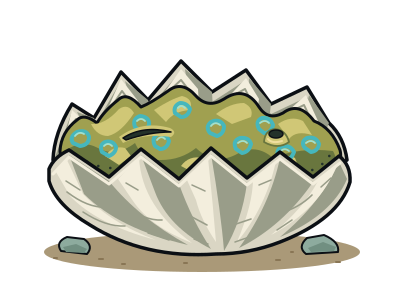
- Pacific oysterFilters about 50 litres of water a day.
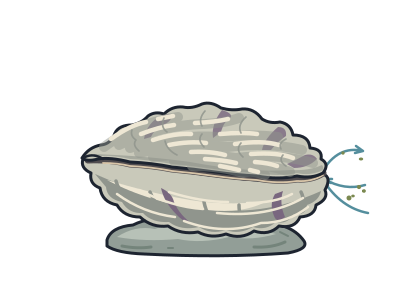
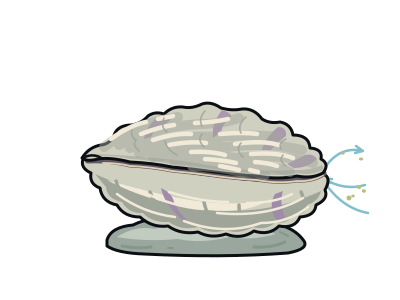
- RudistsCone-shaped clams that built reefs and vanished with the dinosaurs.
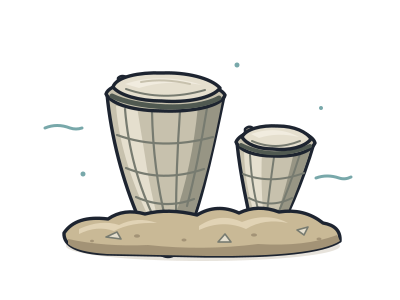
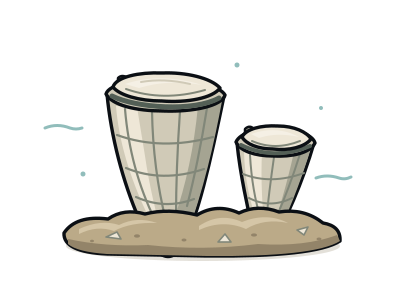
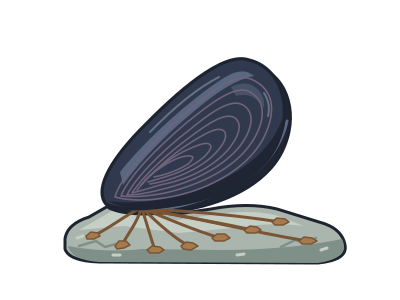
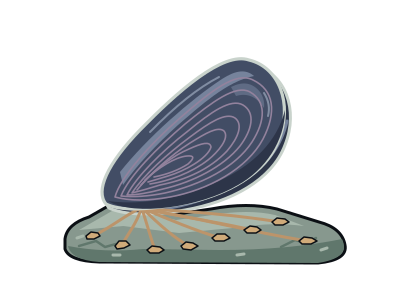
- Blue musselAnchors itself with super-strong threads that inspire underwater glues.
- Ocean quahogOne was 507 years old, the oldest animal whose age is known exactly.
- ShipwormA worm-like clam that bores through wooden ships and piers.
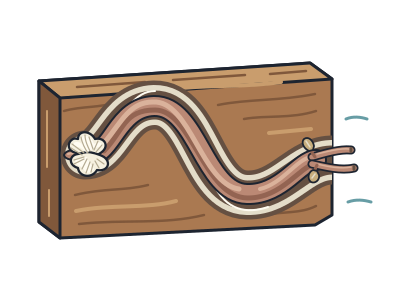
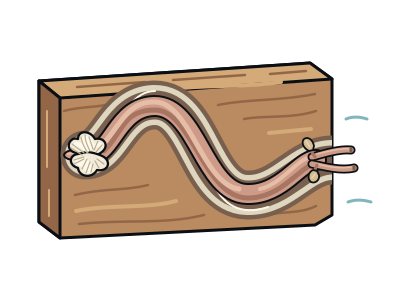
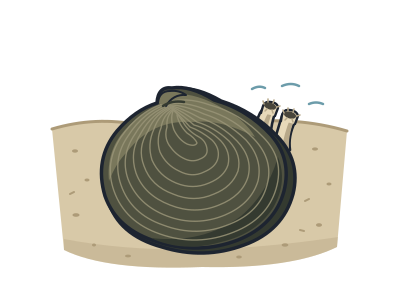
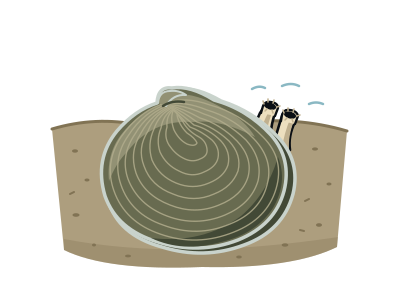
- GeoduckA giant burrowing clam whose neck is too big to fit in its shell; it can live 150 years.
- Freshwater pearl musselA river mussel that can live for over 100 years, and whose rare pearls once decorated royal crowns.
- Disco clamA clam that seems to flash like a disco ball, using light reflected from its lips.