A species
Shipworm
Teredo navalis
A worm-shaped clam with shells that drill into wood.
You and the shipworm meet in the Two-sided animals branch, shown at about 580 million years ago (on 11 November, in a calendar from life's shared ancestor to today).
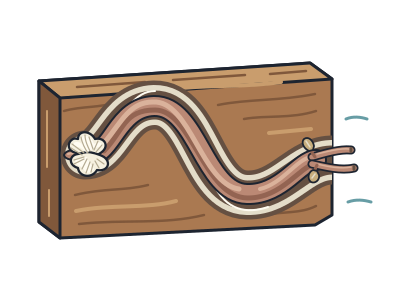
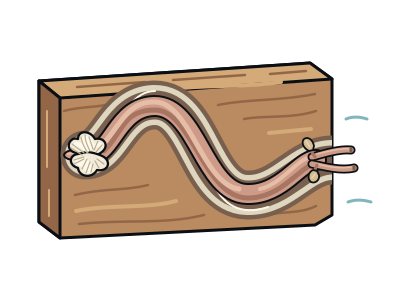
A shipworm may look like a worm, but it is a clam that bores through wooden ships and piers. It belongs to the same broad group of two-shelled animals as mussels and oysters, not earthworms. Its long, soft body hides a surprising pair of tools: two tiny shell halves. Fine ridges on these shells scrape away wood as it digs.
It does not need a ship to make a home. Natural driftwood also provides shelter. Once it settles into wood, it stays there for the rest of its life. It lines its tunnel with a chalky layer, keeping its body inside while two tubes reach out into the water.
These tubes, called siphons, handle the flow of water. One draws water in for breathing and feeding; the other carries water and waste out. Two paddle-shaped structures can shut the entrance when conditions become unfavourable. Helpful bacteria in its gills also contribute to its ability to digest wood.
A tiny front door
The original entrance hole can be only about half a millimetre wide, hiding a much larger tunnel inside.
A swimming start
Young shipworms spend part of their lives swimming freely before settling on wood.
Homes for others
After a shipworm dies, its tunnel can shelter other small animals.
Next to it on the tree
- Giant clamCan weigh over 200 kilograms and grows algae in its lips.
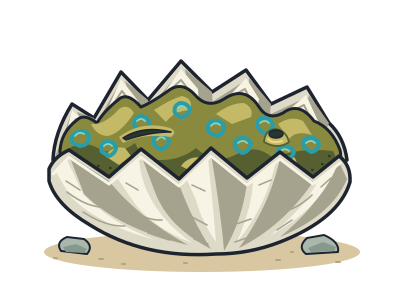
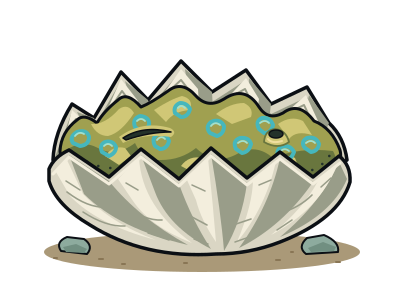
- Pacific oysterFilters about 50 litres of water a day.
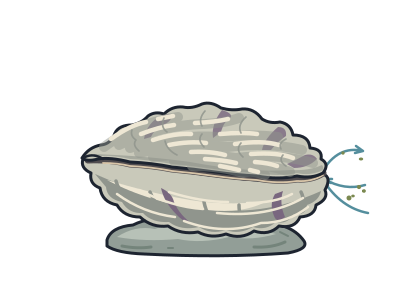
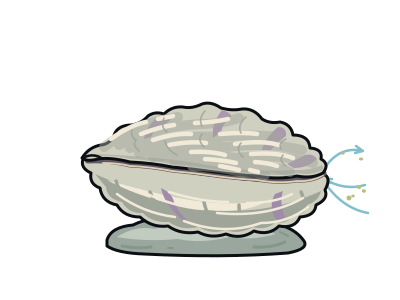
- RudistsCone-shaped clams that built reefs and vanished with the dinosaurs.


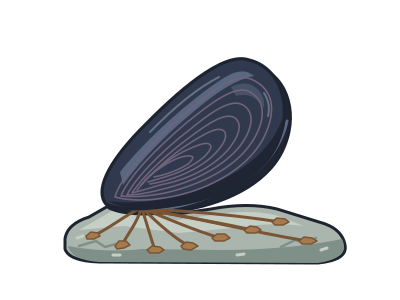
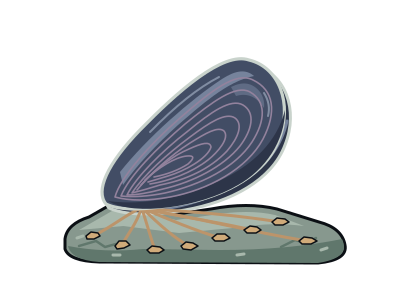
- Blue musselAnchors itself with super-strong threads that inspire underwater glues.
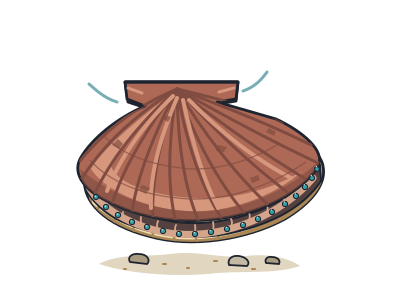
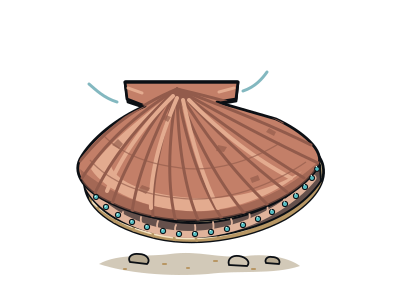
- Great scallopSwims by clapping its shells and watches with up to 200 tiny eyes.
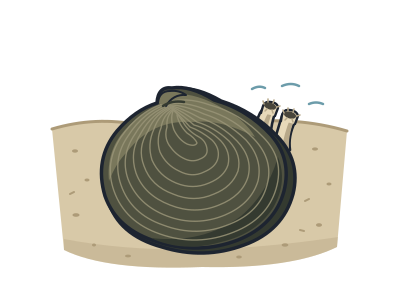
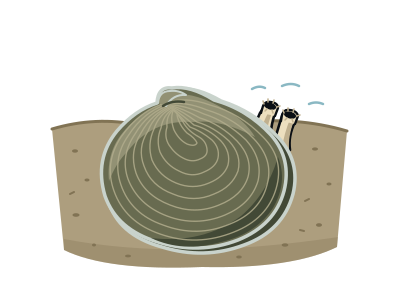
- Ocean quahogOne was 507 years old, the oldest animal whose age is known exactly.
- GeoduckA giant burrowing clam whose neck is too big to fit in its shell; it can live 150 years.
- Freshwater pearl musselA river mussel that can live for over 100 years, and whose rare pearls once decorated royal crowns.
- Disco clamA clam that seems to flash like a disco ball, using light reflected from its lips.