A species
Giant clam
Tridacna gigas
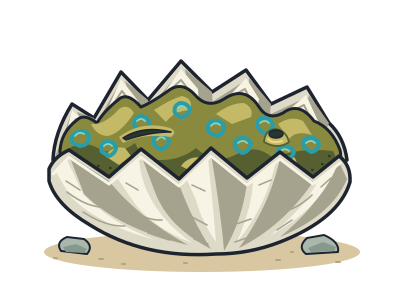
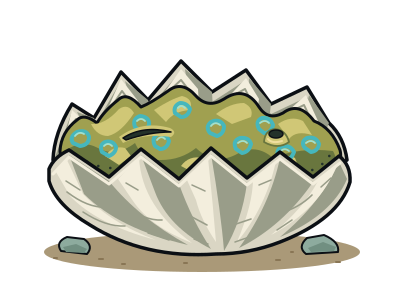
A giant cockle with algae-filled lips.
You and the giant clam meet in the Two-sided animals branch, shown at about 580 million years ago (on 11 November, in a calendar from life's shared ancestor to today).
Giant clams can exceed 200 kilograms, including their shells, and grow algae inside their fleshy ‘lips’. Yet this enormous animal belongs to the cockle family. It is the largest living animal with a shell made of two hinged halves.
Those colourful lips are not a mouth. They are part of a broad layer of flesh called the mantle. Algae living inside this tissue use sunlight to make food and share some with their host. But the clam does not rely on this partnership alone. It also filters tiny plants, animals and other food particles from seawater.
Its home is the warm, tropical Indo-Pacific, including the Great Barrier Reef. It lives on shallow reefs and in lagoons, where sunlight can reach its algae-filled flesh. Harvesting for meat and shells is its main threat. Heavy collecting over many decades has greatly reduced its numbers across much of its range.
Never quite closed
Fully grown giant clams cannot completely shut their shells.
Swimming youngsters
Young giant clams swim and feed in the water before settling onto the seabed.
A zigzag edge
The thick shell opening has four or five large triangular projections.
Next to it on the tree
- Pacific oysterFilters about 50 litres of water a day.
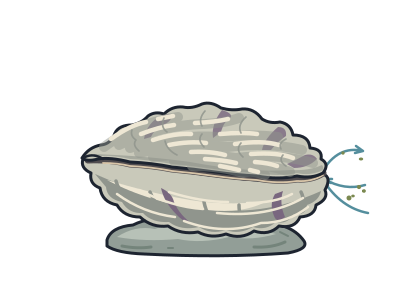
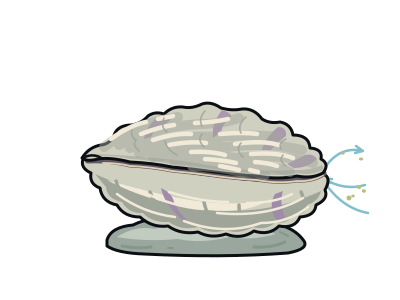
- RudistsCone-shaped clams that built reefs and vanished with the dinosaurs.
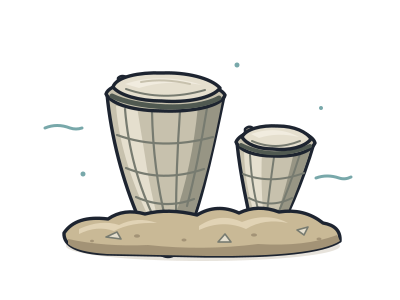
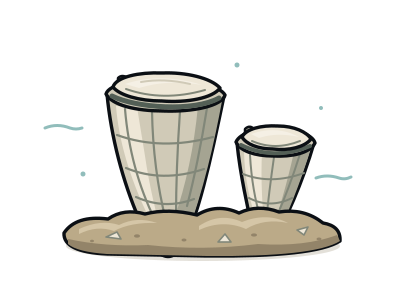
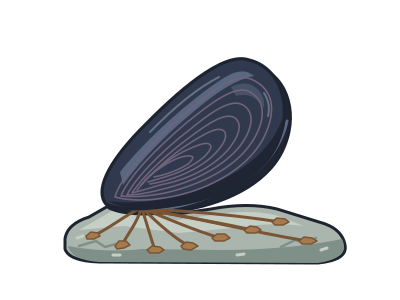
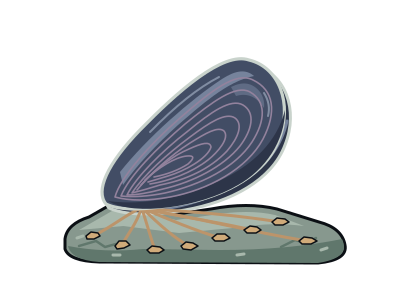
- Blue musselAnchors itself with super-strong threads that inspire underwater glues.
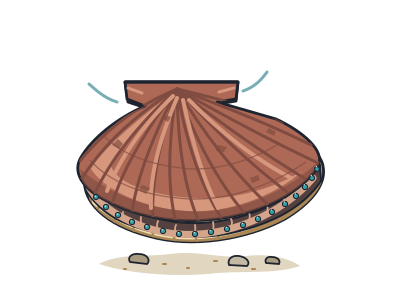
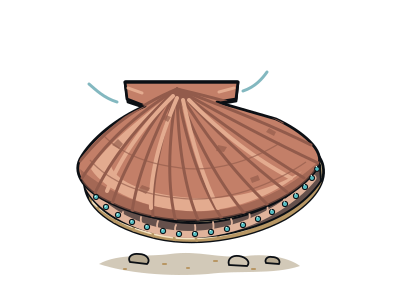
- Great scallopSwims by clapping its shells and watches with up to 200 tiny eyes.
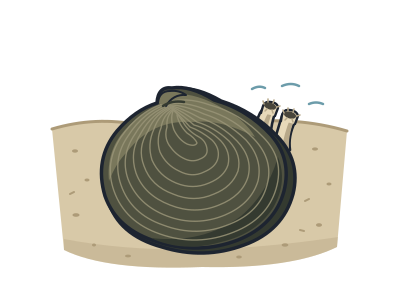
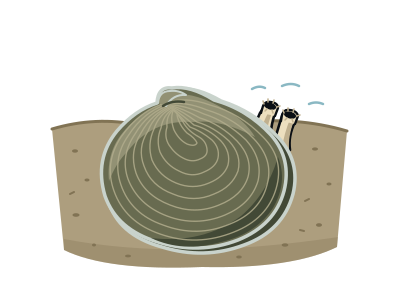
- Ocean quahogOne was 507 years old, the oldest animal whose age is known exactly.
- ShipwormA worm-like clam that bores through wooden ships and piers.
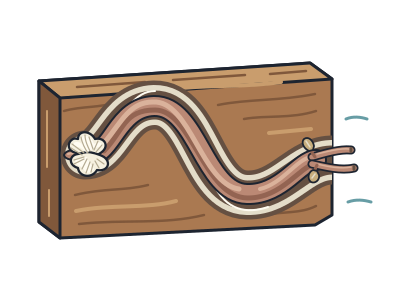
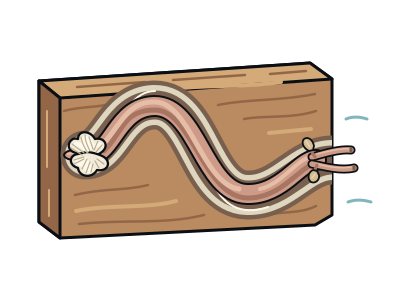
- GeoduckA giant burrowing clam whose neck is too big to fit in its shell; it can live 150 years.
- Freshwater pearl musselA river mussel that can live for over 100 years, and whose rare pearls once decorated royal crowns.
- Disco clamA clam that seems to flash like a disco ball, using light reflected from its lips.