A species
Blue mussel
Mytilus edulis
Strong threads, tiny glue patches, a firm underwater grip.
You and the blue mussel meet in the Two-sided animals branch, shown at about 580 million years ago (on 11 November, in a calendar from life's shared ancestor to today).
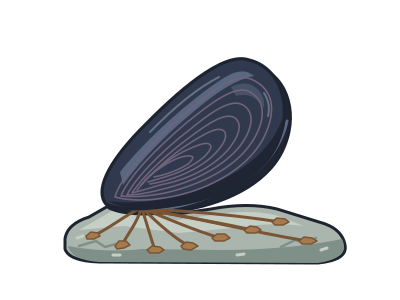
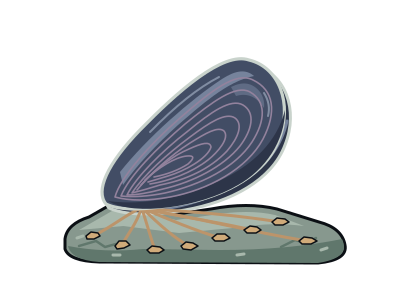
A blue mussel anchors itself with strong threads that have inspired scientists developing underwater glues. Like its clam, oyster and scallop relatives, it is a bivalve. These are soft-bodied animals enclosed by two hinged shell halves. The mussel’s remarkable anchoring system reaches out between those shells.
A muscular foot makes the threads and attaches them to rocks or neighbouring mussels. Each thread ends in a small, disc-shaped patch of natural glue. This sticks underwater: it is not a suction cup. The familiar mussel ‘beard’ is a bundle of these anchoring fibres, not hair or seaweed.
Joined by their threads, blue mussels can form extensive beds, even on sand or mud rather than rock. They feed by filtering tiny drifting organisms and particles of dead material from the water. Their crowded beds also provide shelter for other animals and surfaces where algae can grow.
Not fixed forever
Young mussels can use their threads to change position after settling.
Atlantic neighbours
Their native range centres on the North Atlantic, along both European and North American coasts.
Wild and farmed
People harvest blue mussels for food from both wild populations and farms.
Next to it on the tree
- Giant clamCan weigh over 200 kilograms and grows algae in its lips.
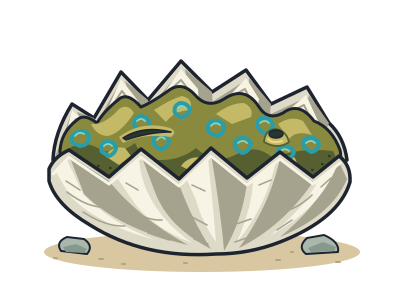
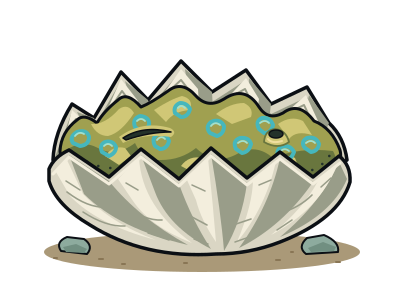
- Pacific oysterFilters about 50 litres of water a day.
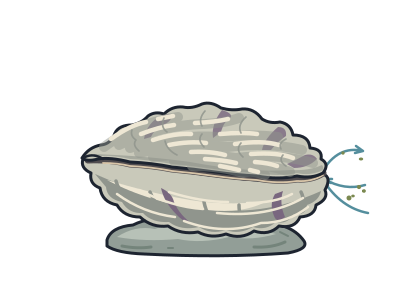
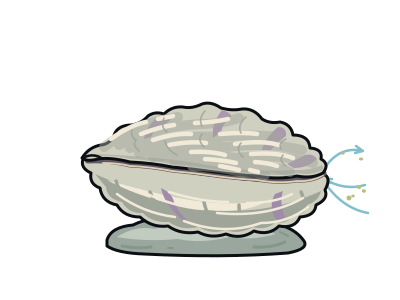
- RudistsCone-shaped clams that built reefs and vanished with the dinosaurs.


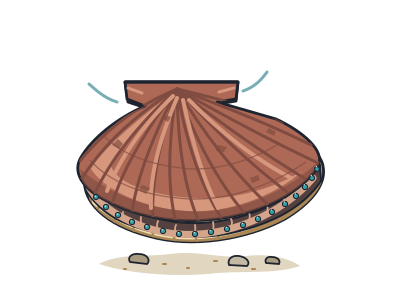
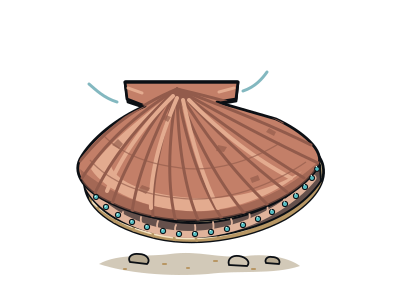
- Great scallopSwims by clapping its shells and watches with up to 200 tiny eyes.
- Ocean quahogOne was 507 years old, the oldest animal whose age is known exactly.
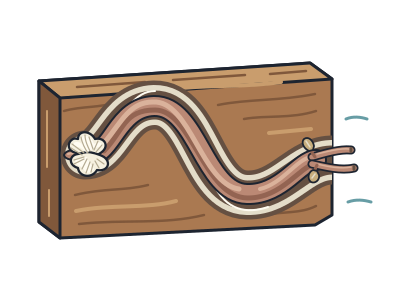
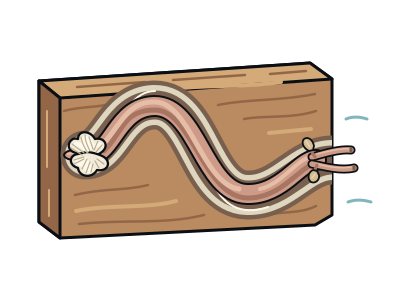
- ShipwormA worm-like clam that bores through wooden ships and piers.
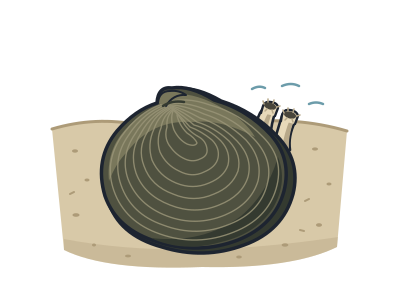
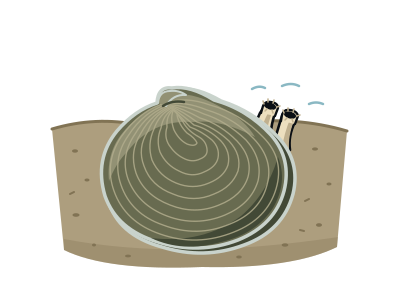
- GeoduckA giant burrowing clam whose neck is too big to fit in its shell; it can live 150 years.
- Freshwater pearl musselA river mussel that can live for over 100 years, and whose rare pearls once decorated royal crowns.
- Disco clamA clam that seems to flash like a disco ball, using light reflected from its lips.